Utah’s Ongoing Struggle with Measles Outbreaks
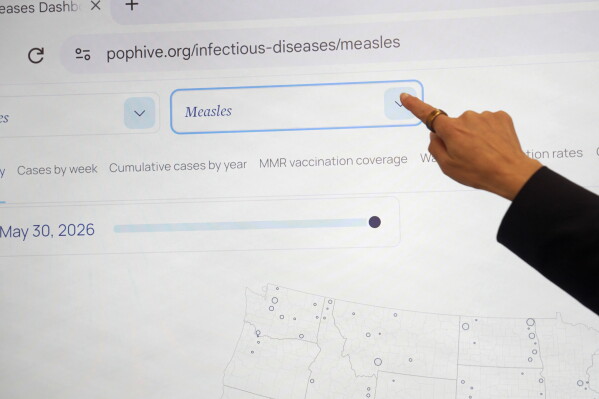
Utah has been battling measles outbreaks over the past year, raising concerns about whether the United States can maintain its measles-free status. Since the state’s first outbreak on June 20, 2025, over 680 individuals have fallen ill. Unlike outbreaks in Texas, South Carolina, and Arizona, Utah’s spread has been challenging to contain in one region, affecting undervaccinated communities across nearly every county. Measles infections have been reported in healthcare facilities, large retail stores, restaurants, and youth sporting events. In February, a state high school wrestling championship exposure led to at least 46 cases among attendees.
Measles ranks among the most contagious diseases in medicine. Symptoms include a distinct rash, high fevers, severe cough, ear infections, and diarrhea. Although most people recover, some—such as young babies, pregnant individuals, and those with compromised immune systems—are at higher risk of severe complications like pneumonia, brain swelling, blindness, or even death. Even those who are healthy may face long-term issues, including a rare but fatal degenerative brain disease that appears roughly a decade after infection. The measles vaccine is safe and provides 97% protection after two doses.
Despite a slowdown in recent weeks, state epidemiologist Leisha Nolen expresses concern about the potential resurgence as schools open and colder weather arrives in the fall. “It’s still here, it’s still transmitting,” she noted. “We just need those few cases to hit the wrong community and it could flare up really big again.”
Impact of Dropping Vaccination Rates in Utah
The worst spread has occurred in the southwestern part of Utah, where 265 individuals have contracted the vaccine-preventable disease since last summer. Measles infections have impacted 22 out of 29 counties in the state. The rural northeast, including Daggett, Duchesne, and Uintah counties—known as the “tricounty” health region—has seen a significant decline in childhood vaccination rates. More than 16% of the region’s kindergarteners missed their measles vaccines last school year, according to state data. Statewide, 12.8% of students lack vaccination, falling short of the 95% rate necessary to prevent outbreaks.
The TriCounty Health Department reported 74 measles cases this spring, following virus transmission at the youth wrestling tournament that spread within schools and households. Sydnee Lyons, the department’s public information officer, noted a rise in vaccine hesitancy. Despite the high number of cases, local and state health officials deem TriCounty’s response a success. Efforts focused on mitigating spread, with unvaccinated students excluded from in-person classes and those infected advised to isolate. Their call to care for neighbors encouraged more vaccinations.
Cyndie Mattinson, TriCounty’s infectious disease specialist, recounted a parent expressing concern about judgment for having unvaccinated children. A school nurse reassured the parent, leading to a positive conversation about community help and resources.
Re-evaluation of U.S. Measles Status
Utah’s prolonged fight with measles might influence the United States’ ability to retain its measles-free designation. Public health officials consider measles eliminated when a country halts continuous local transmission for at least a year. As of June 18, the national measles case count reached 2,104, nearing last year’s record.
While Utah fought measles for a year, it’s uncertain if the initial clusters relate to the major outbreak on the Utah-Arizona border detected in August, Leisha Nolen stated. Most cases since have originated within the state. International health experts will convene in November to decide if the U.S. and Mexico have lost their measles elimination status. Canada lost its status last year due to ongoing outbreaks.
In Utah, doctors continue to reassure anxious patients and advocate for improved public health policies. Dr. Ellie Brownstein, president-elect of the state chapter of the American Academy of Pediatrics, opposed a bill to ease school vaccine waivers. Though unsuccessful, she acknowledges the lack of a cultural reckoning over measles’ resurgence. “I don’t know that we get it to end,” Brownstein remarked. “I don’t know that we’re going to get this genie back in the box because there’s enough people out there to spread it.”
The Associated Press Health and Science Department is funded by the Howard Hughes Medical Institute’s Department of Science Education and the Robert Wood Johnson Foundation. The AP solely holds responsibility for this content.