Potential Sightings of Northern Lights During Independence Day Weekend
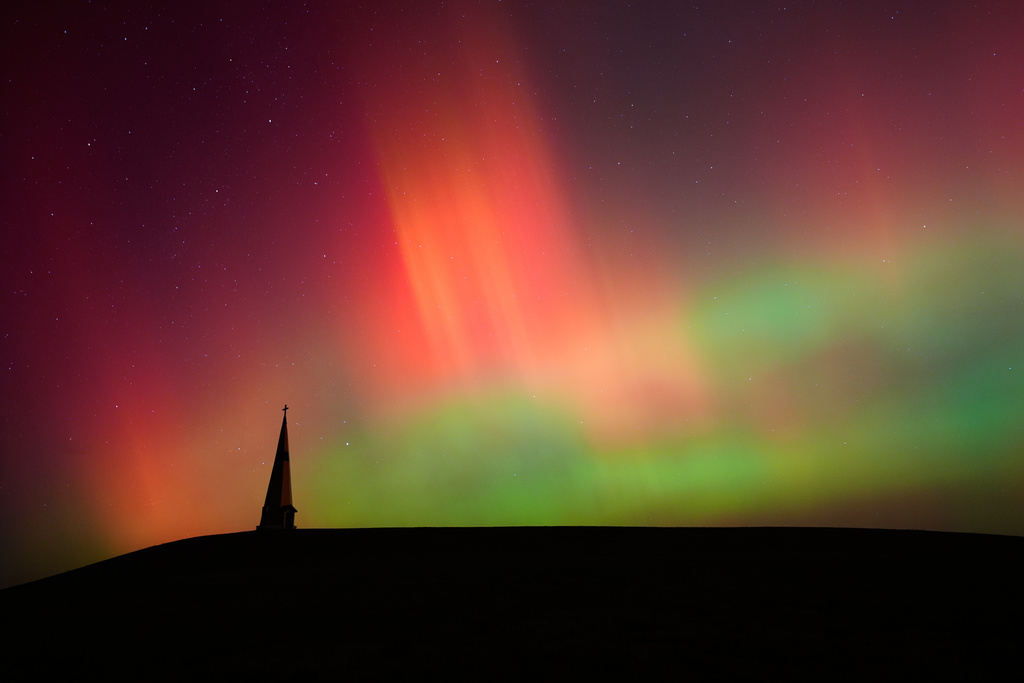
The upcoming Fourth of July weekend may offer more than traditional fireworks, as nature could provide its own spectacular display through the northern lights. According to forecasts, certain regions might observe these lights on Friday night.
The National Oceanic and Atmospheric Administration’s Space Weather Prediction Center (SWPC) has been monitoring two significant sunspot groups. One of these caused a solar flare with a classification of X1. Service coordinator Shawn Dahl described the event as quick yet powerful. Although this flare is within the highest category of solar flares, X, the ‘1’ indicates it is at the lower end of that scale.
Initially, it was uncertain if the associated coronal mass ejection (CME) was directed toward Earth. However, by Wednesday, the SWPC confirmed that this CME is expected to affect Earth, potentially increasing geomagnetic activity. The right alignment of the embedded magnetic field could lead to moderate geomagnetic storms, creating a chance for seeing the northern lights on the evening before Independence Day.
Where to See the Northern Lights
If geomagnetic conditions align as forecasted, northern areas of the U.S. may witness the aurora. Described as G2-level geomagnetic storms, they could bring the northern lights visibility down to regions like New York and Idaho, according to the SWPC. Residents in parts of Washington, Oregon, Idaho, Montana, North Dakota, South Dakota, Minnesota, Wisconsin, Michigan, Vermont, New Hampshire, New York, and Maine might experience this celestial event. While Alaska is also included in this list, it frequently has some likelihood of aurora sightings.
Further predictions from the University of Alaska Fairbanks extend the viewing possibility slightly southward, including states such as Wyoming, Nebraska, Iowa, Illinois, Indiana, Ohio, Pennsylvania, and Massachusetts. Here, the aurora might be visible on the northern horizon.
Timing and Visibility
The timing of geomagnetic activity could affect visibility. If storm activity peaks before sunset, natural light might overshadow the aurora. Forecasts suggest geomagnetic conditions could intensify around 2 a.m. EDT and persist throughout the day, possibly allowing northern lights to appear for a few hours after sunset.
Should the ideal conditions not materialize, the northern lights may not be visible. For updates, you can check the SWPC’s forecasting on their website. To improve your chances of seeing the aurora, focus on the northern horizon. If visibility issues arise, your phone’s camera could capture the scenes more effectively, thanks to its sensitivity to light.
© 2026 Nexstar Media Inc. All rights reserved. This content cannot be published, broadcast, rewritten, or redistributed.