Intensified Conflict Between U.S. and Iran Threatens Fragile Ceasefire in Persian Gulf
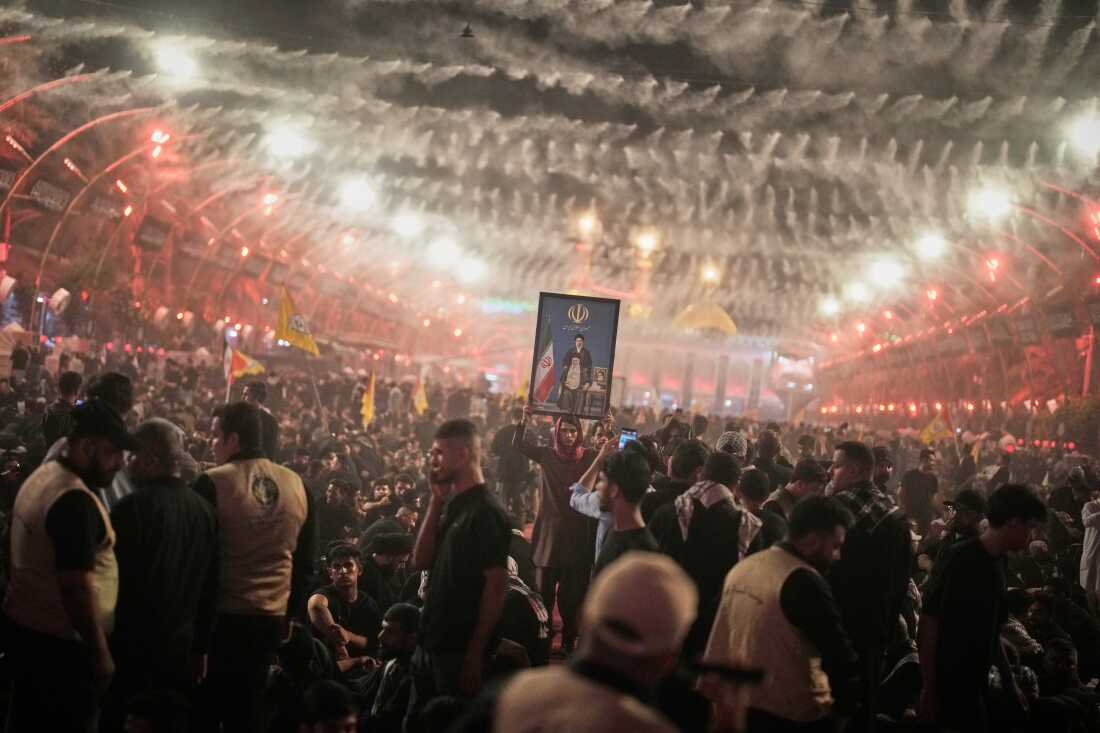
A portrait of Iran’s Supreme Leader, Ayatollah Mojtaba Khamenei, and his late father, Ayatollah Ali Khamenei, was held by mourners awaiting the funeral procession for the elder Khamenei. The event took place outside the Imam Hussein Shrine in Karbala, Iraq, on Wednesday, July 8, 2026.
The United States launched new airstrikes against Iran early Thursday. Tehran responded by targeting Bahrain, Kuwait, and Qatar, threatening an interim deal aimed at ending the war in the Persian Gulf. The strikes occurred after U.S. President Donald Trump said Iranian attacks on ships in the Strait of Hormuz ended the fragile ceasefire.
The U.S. military attacked various sites after Iran targeted merchant vessels off the coast of Oman, causing Iranian retaliation. Thursday’s attacks were larger, with sirens sounding in Bahrain, home to the U.S. Navy’s 5th Fleet. There was no immediate word on damage in the Gulf countries. Kuwait’s military reported actively intercepting drones and missiles. Iran’s Revolutionary Guard claimed responsibility for attacks on Bahrain and Kuwait.
The U.S. military’s Central Command stated it struck 90 targets across Iran, including an airport runway and missile launchers. It aimed to degrade Iran’s ability to threaten navigation freedom in the strait, through which significant world oil and gas trade passed before the war began with U.S. and Israeli attacks on February 28.
Iranian state media reported explosions at several locations, including Bushehr, home to Iran’s nuclear complex, and southern port cities Chabahar, Konarak, Bandar Abbas, and Sirik. In Khuzestan province, three fatalities were reported after Wednesday’s strikes killed nine. A firefighter died at an airport attack in Iranshahr.
For the first time since April, U.S. strikes targeted Iranian bridges. State media noted a Golestan province railway bridge strike, while two bridges on the Mashhad route were hit, ahead of Ayatollah Ali Khamenei’s burial on Thursday.
Trump warned that U.S. retaliation would escalate if Iran attacked shipping again.
With attacks repeatedly risking the ceasefire, Trump’s recent comments added to uncertainty, pushing oil prices higher after his remarks. Renewed conflict may disrupt Middle Eastern stability and halt Strait of Hormuz energy shipments.
Negotiations for a permanent peace were set to begin after Khamenei’s funeral, aiming to lessen tensions. Talks expected to address reopening the strait and Tehran’s nuclear program.
Iranian Deputy Foreign Minister Kazem Gharibabadi dismissed Trump’s remarks as an acknowledgment of failed U.S. policy. Hard-liners within Iran seek control over the strait, vital to global fuel shipments, as pragmatists push for a peace deal to lift sanctions and boost the economy.