Tensions Rise Over Control of the Strait of Hormuz
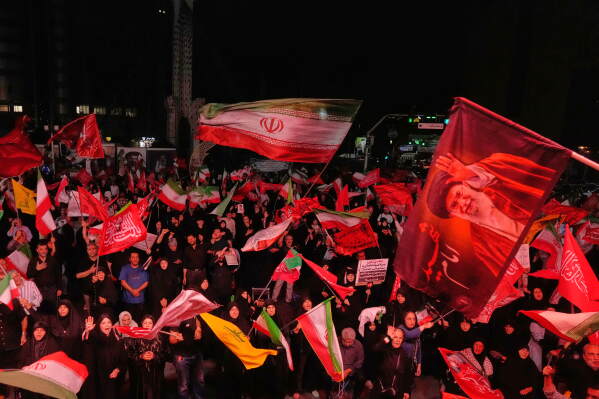
The conflict over the control of the Strait of Hormuz centers on its strategic significance for Middle East oil and natural gas supplies. Iran has claimed the right to manage the terms of transit for ships in the strait under a temporary ceasefire agreement. This move has increased its leverage over the United States. Iran has threatened and attacked vessels not adhering to its preferred routes.
On Monday, former President Donald Trump announced a blockade on Iran. Claiming control over the strait, he stated that the U.S. would charge ships fees for safe passage. This mirrors Iran’s earlier actions and escalates tensions between the two nations.
The U.S. and Iran have ramped up attacks against each other, increasing the risk of a return to full-scale conflict.
Historically, the Strait of Hormuz, which flows along Iran and Oman’s coastlines, has been an international waterway. However, following attacks by the U.S. and Israel, Iran asserted sovereignty, disrupting energy markets and causing price spikes.
Claims and Control
Iran’s Revolutionary Guard, responsible for the country’s missile arsenal, insists Tehran controls the strait. In contrast, the U.S. claims the title of “Guardian of the Hormuz Strait.” This dispute has persisted despite the United Nations Convention on the Law of the Sea of 1982, which states no nation can claim international waters. Notably, while neither the U.S. nor Iran have ratified this convention, it is widely recognized as customary international law.
Both countries wield significant influence due to their strategic positions and capabilities. The U.S. has a powerful navy, while Iran’s geographic location allows it to disrupt commerce effectively. Maritime crossings through the strait have declined by about 52% recently, highlighting the tensions.
Iran’s Strategy
Iran’s ability to impact shipping in the strait provides it with economic leverage. Earlier in the conflict, it leveraged this by attacking ships and demanding fees for passage. The fear of Iranian attacks has deterred shipping traffic.
Following an interim ceasefire, Iran required ships to register with the Persian Gulf Strait Authority. It also directed ships to use a route near its coast, avoiding a central path it mined, and one closer to the Omani coast where U.S. military guided ships.
The UK Maritime Trade Operations Center reported multiple attacks on ships along these routes, intensifying the situation.
Agreement and Disagreements
The U.S. and Iran have different interpretations of the interim agreement regarding the strait. U.S. officials state the agreement was to reopen the strait while finalizing a war resolution. Meanwhile, Iran claims it had the authority to manage traffic and terms for a period without incurring fees.
The interim agreement specifies Iran should permit safe passage without charges for a short term and engage with Oman on future management.
U.S. Fee Proposal
Recently, the U.S. declared it would charge a 20% fee on cargo passing through the strait, aimed at covering security costs. This plan reflects Iran’s previous stance, which the U.S. had opposed.
Calls to impose fees breach global norms on free navigation in international waters. Marc Weller, an international law expert, notes that fees are possible when commensurate with services provided, as seen with Chile in the Strait of Magellan. However, high fees, like $2 million per vessel, are deemed inappropriate.
The International Maritime Organization awaits further details on the U.S. proposal but maintains its anti-toll stance. Meanwhile, Iran’s Foreign Minister Abbas Araghchi highlighted Trump’s support of tolls, suggesting a fairer fee system by Iran.