Impact of Senator Lindsey Graham’s Legacy on U.S. Foreign Policy
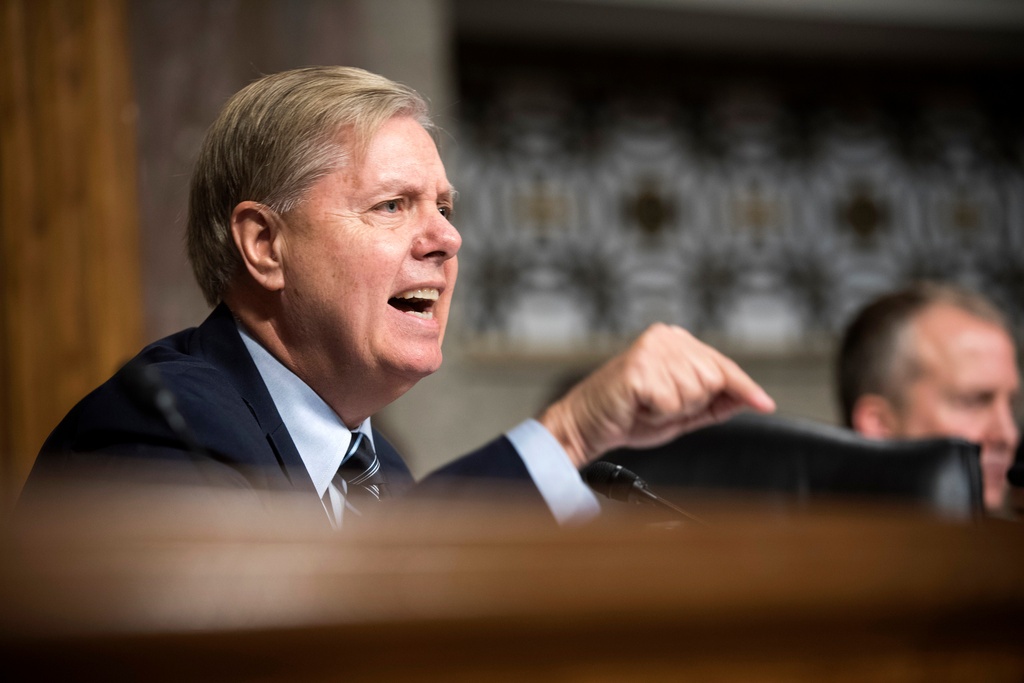
The unexpected passing of Senator Lindsey Graham from South Carolina has left a significant gap in the U.S. Senate. His role went beyond any specific policy and instead centered on his unique ability to bridge traditional Republican foreign policy with the current administration’s populist stance.
Graham stood out as a key advocate for military interventionism. He managed to portray persistent conflict as both a moral and practical necessity. His efforts emphasized the interconnectedness of threats from Moscow and Tehran, viewing them as parts of a single adversarial coalition. He worked closely with Secretary of State Marco Rubio, encouraging President Trump to adopt a stronger stance on countries like Iran and Russia.
Graham treated the Kremlin and Iran as components of an anti-Western alliance where weakness towards one emboldened the other.
Graham’s focus on these threats used a simplified narrative of good versus evil. This approach allowed him to equate diplomatic caution with appeasement. His advice to Israeli leaders on Iran’s nuclear program reflected his belief that military action, if necessary for regional stability, was a logical policy conclusion.
The ongoing conflict between the U.S. and Iran in 2026, marked by the breakdown of the Islamabad Memorandum of Understanding, demonstrates the challenges of the “Graham Doctrine.” President Trump ended a ceasefire recently, highlighting the fleeting impact of previous diplomatic efforts.
Graham’s absence will be felt deeply. He had a talent for repackaging aggressive policies as responsibilities aligned with alliance interests. This often involved positioning the demands of allies as core American interests, effectively shifting U.S. foreign policy priorities.
With his passing, a political scramble has ensued to fill his Senate seat. Potential candidates like Nancy Mace and Ralph Norman are considering bids, but none possess Graham’s comprehensive understanding or influence. This could lead to a shift in the hawkish approach, with younger figures potentially stepping in without Graham’s capacity to influence the foreign policy establishment.
The Trump administration faces a messaging challenge amid the 2026 conflict. Graham had skillfully framed the administration’s foreign policy with a veneer of traditional American values, which now risks being stripped away. Without him, President Trump’s remarks and actions, like “Operation Epic Fury,” lack the moderating institutional explanations they once had.
It would be premature to assume a weakening of the Trump-Netanyahu alliance; their relationship is transactional and robust. Yet, the political viability of this alliance in Washington is now uncertain. Graham played a crucial role in presenting this cooperation as principled statesmanship rather than reactionary policy.
The future challenge lies in determining whether the machinery of intervention can still appear prudent without Graham. The hawks have lost their primary advocate who shaped their aggressive strategies into a perception of conventional diplomacy.
Charbel A. Antoun is a journalist focused on U.S. foreign policy, particularly in the Middle East and North Africa.