Inflation’s Impact on Generation Z: An Analysis
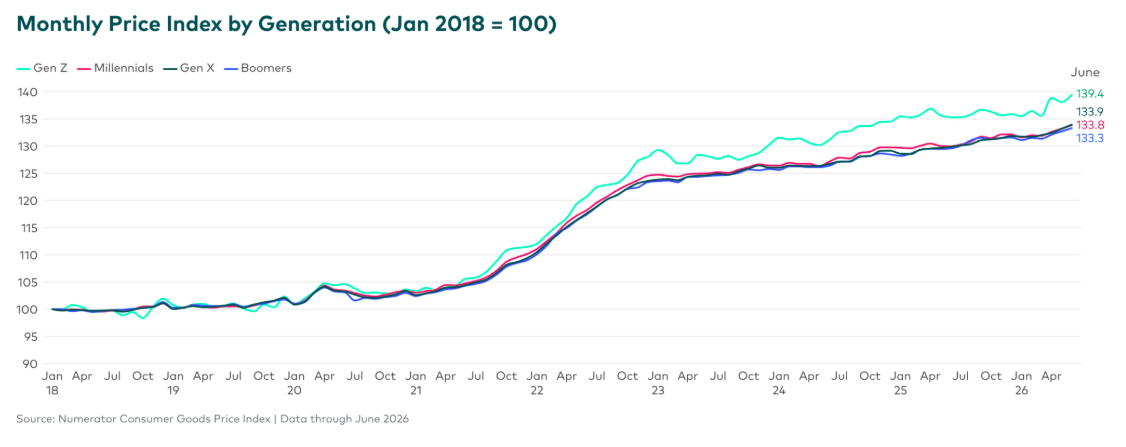
Generation Z is facing a unique inflation challenge, as revealed by recent data from the consumer data and tech company Numerator. On Monday, Numerator released the June 2026 Consumer Goods Price Index, highlighting how Gen Z – individuals born between 1997 and 2012 – are experiencing higher inflation rates for everyday household goods. Prices for the items Gen Z purchases have increased by 39.4 percent since January 2018, compared to the 33.8 percent national average.
Numerator’s senior economist, Paul Stanley, provided insights to Newsweek, explaining that various factors contribute to Gen Z’s heightened inflation experience. Quick-service restaurant inflation is a significant driver, with Gen Z and low-income consumers spending more at these establishments. Prices in quick-service restaurants have risen by 54 percent, significantly above the overall market increase of 33.8 percent. Stanley noted that low-income consumers have limitations in offsetting rising costs, as they already rely heavily on value retailers and private label brands.
Hakan Yilmazkuday, a professor of economics at Florida International University, corroborated Numerator’s findings, emphasizing the disproportionate financial burden on Gen Z consumers. By depending on verified household transactions rather than survey-modeled weights, Numerator’s data delivers valuable insights into the inflation experiences of younger buyers.
The financial strain is palpable, with Gen Z reporting heightened stress over personal finances in the U.S. Many Americans, facing mounting everyday expenses, have turned to personal loans, as highlighted by LendingTree. This financial pressure intersects with reports of a developing El Niño event, which could cause continued increases in food prices according to the World Meteorological Organization (WMO) and the National Oceanographic and Atmospheric Administration (NOAA).
Gen Z’s Consumer Preferences Expose Them to Inflation
Data from the restaurant management app Menumiz shows Gen Z, currently aged between 14 and 29, is more inclined to eat out frequently. As of now, 71 percent of Gen Z individuals plan to increase their dining out frequency through 2026, the highest among any generation. Gen Z also spends more per meal, averaging $51 for dine-in and $36 for takeout or delivery. As menu prices ascend steadily, increasing around 0.2 percent monthly according to the National Restaurant Association, Gen Z’s dining habits render them particularly vulnerable to inflation.
Inflation’s impact extends beyond dining choices. Yilmazkuday noted that the inflation index tracks core consumer categories like groceries, household goods, and health and beauty products. Gen Z’s purchasing habits in these areas amplify their exposure to price increases.
Traditionally, consumers respond to retail price hikes by altering purchasing behaviors, such as switching brands or shopping locations. However, Yilmazkuday points out younger consumers may be less inclined to make such adjustments, intensifying the financial hit from rising costs.
Household Item Prices Continue to Rise
According to Numerator’s June 2026 index, prices for everyday household goods have climbed for three straight months, up by 0.70 percent in June following increases in May and April. Compared to a year ago, June’s prices are up by 3.4 percent. Analysts noted that while lower gas prices offered some relief in June, the broader inflation issue remains unchanged, heavily impacting lower-income households.
Numerator’s data, derived from 200,000 representative U.S. households who use the Receipt Hog mobile app, captures consumer spending patterns and price changes across various categories. The data focuses on everyday items like groceries and excludes major spending categories such as housing and healthcare. Using the Fisher Price Index calculation, Numerator’s findings align closely with official inflation indicators, achieving a 0.93 correlation with the government’s PCE Food & Beverage measure.