Leadership Changes in Ukraine’s Military Amid Protests and Strategic Shifts
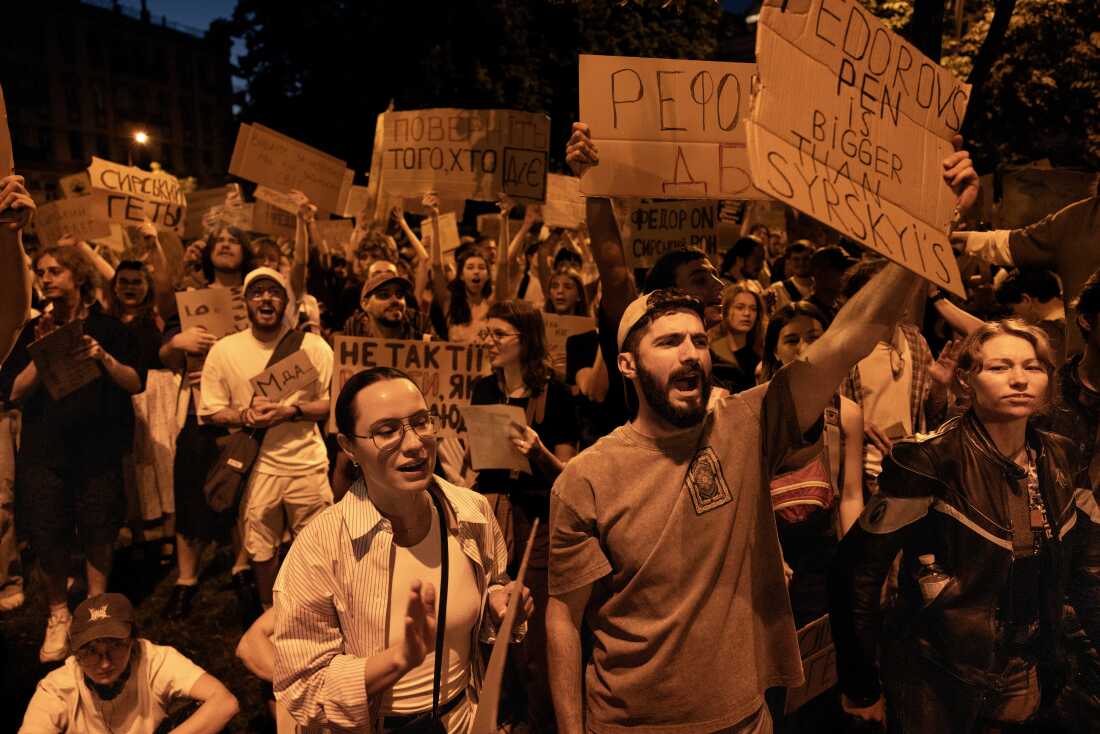
Protests emerged in Kyiv as President Volodymyr Zelenskyy made significant changes in Ukraine’s military leadership. He dismissed Mykhailo Fedorov, the defense minister known for advancing technology in the military, and appointed Mykhailo Drapatyi as the new commander of Ukraine’s armed forces.
The appointment followed a week of nationwide protests focusing on Ukraine’s military strategy in the ongoing conflict with Russia. Drapatyi, replacing Gen. Oleksandr Syrskyi, addressed the nation with a message of responsibility and commitment to those on the front lines.
The 43-year-old Drapatyi, perceived as a reformer, represents a younger generation of military leaders with a focus on technology. His initiatives include the ‘drone line,’ a tactic involving drones for surveillance and attack near the front lines. He replaces Syrskyi, who was seen as a traditional military strategist.
President Zelenskyy acknowledged Syrskyi’s achievements, noting his role in defending Kyiv and liberating parts of northeastern Ukraine in 2022. Despite these efforts, Zelenskyy opted for changes, reflecting a shift in military strategy.
The protests following Zelenskyy’s decision to dismiss Fedorov highlighted his popularity and strategic shift towards a drone-focused approach. Fedorov had led efforts to deploy drones strategically, disrupting Russian supplies and defending against attacks in Ukraine.
Syrskyi’s removal came amid tensions with Fedorov regarding priorities. The generational divide between tech-driven initiatives and traditional military practices became apparent. Military analyst Rob Lee noted that while Syrskyi acknowledged the role of drones, he was less eager to adopt rapid reforms championed by Fedorov.
Fedorov criticized the military establishment for slow adoption of technology, calling for deep structural changes to effectively counter an adversary with similar issues. This ongoing tension underscores the evolving nature of modern warfare.
Syrskyi, a commander appointed in February 2024, was part of the Soviet-trained hierarchy that still influences Ukraine’s military culture. Known for his rigorous adherence to military doctrine, he resigned after certain contentious military campaigns.
Drapatyi, who previously gained recognition in 2014 during the conflict over Mariupol, brings a focus on accountability and learning from younger soldiers. As he assumes leadership, Drapatyi praised Fedorov’s initiatives for quick strategic decision-making.
Despite the changes, Russia remains steadfast in its operations, with Kremlin spokesperson Dmitry Peskov stating that leadership changes in Ukraine may not alter the situation on the ground. Meanwhile, countless civilians have suffered due to the ongoing conflict.
Protests continue as demonstrators demand Fedorov’s reinstatement. Zelenskyy has offered Fedorov a different role in enhancing the tech sector, which Fedorov has declined, remaining firm on his demand to serve as defense minister.
Protester and veteran Dmytro Koziatynskyi emphasized the ongoing efforts to restore Fedorov’s position, indicating the significant impact of these leadership changes on Ukraine’s future military strategy.