Trump Administration’s Contrasting Legal Tactics in Venezuela
The Trump administration is employing divergent legal tactics regarding Venezuela’s two most influential figures. A federal judge has scheduled a trial for June 1, 2027, for former Venezuelan President Nicolás Maduro and his wife, Cilia Flores. They face drug trafficking charges and have been detained in a Brooklyn jail since their capture in a January raid. Both have entered not guilty pleas.
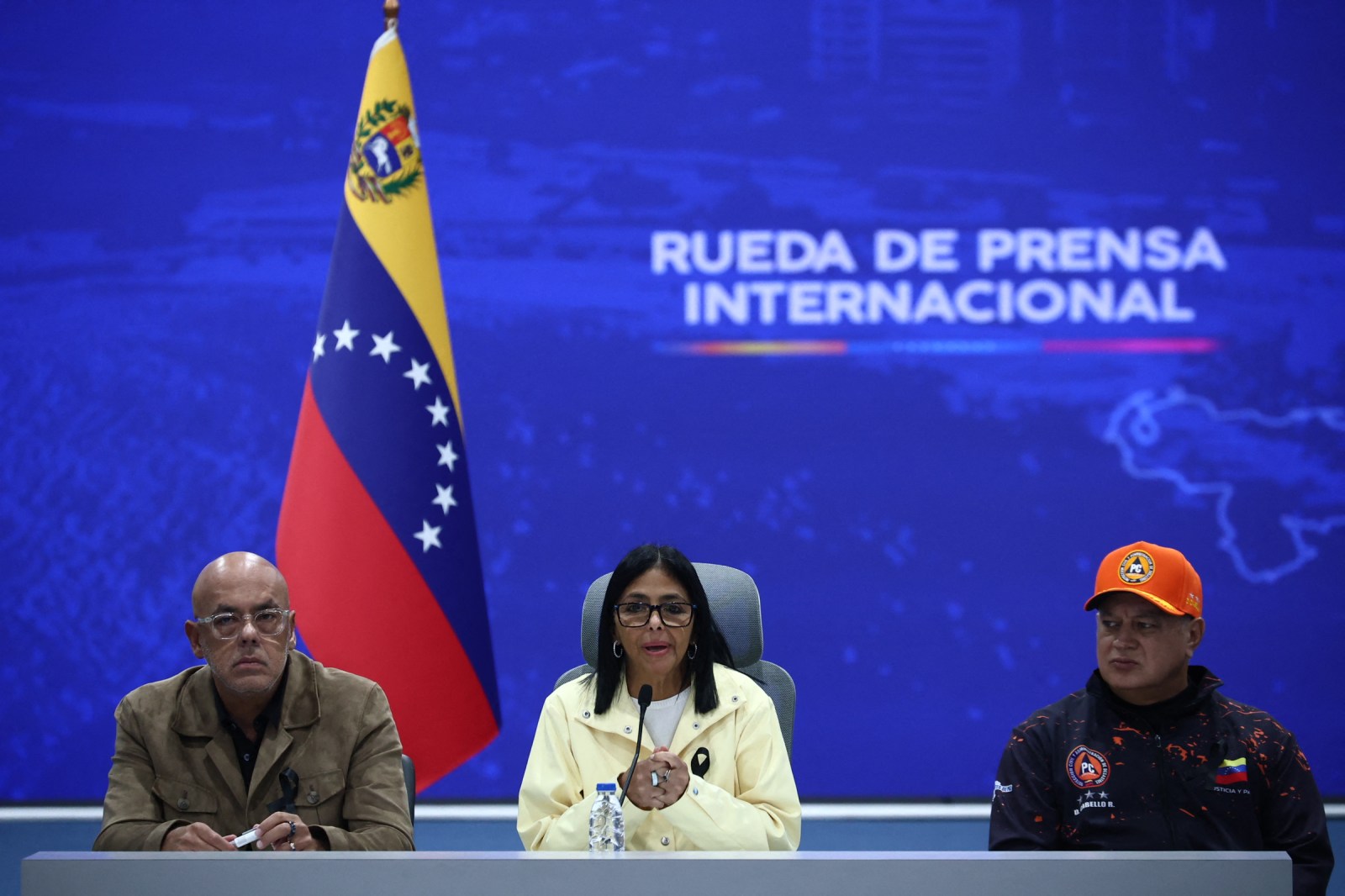
In contrast, the administration has informed a federal court in Florida that Delcy Rodríguez, whom Washington recognizes as Venezuela’s acting president, is exempt from a $314 million civil judgment related to the torture of three Americans once detained in Venezuela. The Justice Department argues that Rodríguez cannot be held accountable in U.S. courts as the recognized head of state.
This dual approach signals a Venezuela policy moving in opposing directions. On one hand, the administration lauds Maduro’s removal as a foreign policy success, while simultaneously shielding his successor’s government, which is also accused of oppressive actions mirroring Maduro’s regime.
The Policies and Their Implications
Benjamin Gedan, a senior fellow at the Stimson Center, highlighted the competing priorities. Trump expresses interest in rising oil production and opportunities for U.S. businesses in Venezuela’s energy sector. He supports Delcy Rodríguez, the unelected leader of Venezuela.
Meanwhile, Secretary of State Marco Rubio advocates for a political transition in Venezuela, pushing for negotiations between the government and the democratic opposition. Despite opposition preparations for negotiations, the U.S. government resists elevating the opposition’s most prominent leader, María Corina Machado, as they focus on maintaining stability with Rodríguez’s leadership.
Domestic and International Challenges
Analysts have noted that the legal recognition of Rodríguez as head of state raises questions about stability. Laura Dib, director at the Washington Office on Latin America, argued that the Venezuelan Supreme Court’s ‘forced absence’ term lack a constitutional basis, with elections ostensibly due by July 2 but not scheduled.
The U.S.’s alignment with Rodríguez rather than Maduro has strategic motivations. As Dib states, the approach gambles on short-term stability while risking the entrenchment of authoritarian rule. The handling of these diplomatic maneuvers mirrors challenges faced elsewhere, particularly when compared to scenarios like Iran’s ongoing conflict.
Energy Assets and Economic Prospects
The administration’s strategy has commercial dimensions too. Delegations led by Energy Secretary Chris Wright and Interior Secretary Doug Burgum have sought to explore Venezuela’s vast oil reserves, with sanctions eased to facilitate U.S. company involvement. However, Dib warns of the country’s complexities, pointing to bureaucracy, opaque tax systems, and a corrupt judiciary as barriers to prosperity.
Additionally, recent earthquakes have exacerbated economic challenges, displacing thousands and raising doubts about disaster response. How these events affect public perceptions and potential financial inequities remains a crucial factor. The administrative narrative aiming to portray the Venezuelan model as successful faces criticism and tangible setbacks.