American Sentiment on AI Data Centers and Their Impacts
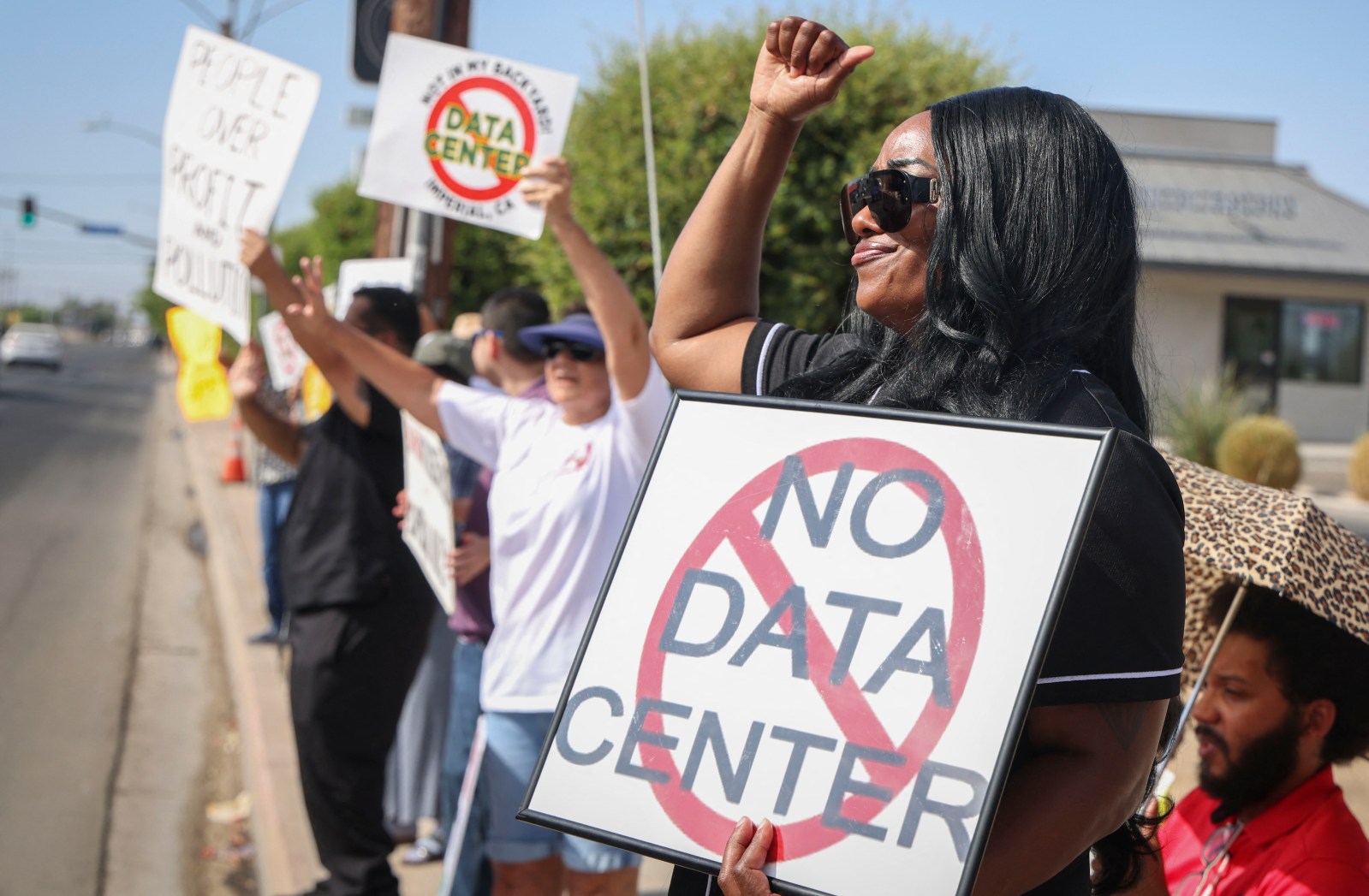
According to a recent poll by Emerson College, 63% of U.S. voters are against the construction of AI data centers within or near their communities. This marks a significant rise of 21 percentage points from December 2025. The swift change in attitude highlights the growing discontent with a technology initially heralded for its potential to bring economic benefits. Increasing concerns include higher electricity bills and the threat of diminishing water supplies.
Public Opinion on AI Data Centers
The Emerson College poll surveyed 1,100 likely 2026 voters between July 19 and 20. It found that a majority of Americans, 63%, expressed concern about artificial intelligence, while only 14% felt excited. About 22% were neutral. Awareness of data centers needed for AI and machine learning models is high, with 62% of Americans interacting with such technologies several times a week, according to Gallup. Skepticism increases with higher educational achievement; 79% of those with postgraduate degrees and 72% with college degrees oppose AI data centers. Among high school graduates, opposition rose to 37%, showing increased concern across education levels.
Only 27% of U.S. voters favor AI data centers being built nearby, while 10% remain neutral. A Redfin survey echoes this sentiment: 53% of respondents opposed local data centers, compared to 34% in favor. Generational differences show 65% of baby boomers and 60% of Gen Xers opposing these centers, in contrast to 42% of Gen Zers and 43% of millennials.
A real estate agent shared the story of a client concerned about data center proximity, indicating neighborhood apprehensions.
Concerns center on increased noise, traffic, and resource use. Data centers may negatively impact neighborhood character, despite differing opinions on this perception.
Grassroots Opposition and Legislative Action
The Data Center Opposition Report documented the rise of local opposition groups, numbering at least 430 across 40 states. Within three months, 192 new groups emerged. Membership has surged sevenfold since December.
State leaders are responding to these issues. New York enacted a one-year statewide halt on hyperscale data centers to address environmental concerns. Other states are considering or have proposed similar measures. Maine’s 18-month moratorium was vetoed, while Virginia failed to pass a temporary ban. Oregon imposed restrictions on data centers accessing tax breaks, pending further impact studies. Illinois proposed the POWER Act to enforce environmental and community-benefit requirements.
Economic Benefits vs. Local Concerns
Despite growing concerns, data centers offer community benefits. A Redfin analysis revealed significant growth in education spending in Virginia’s Loudoun and Prince William Counties, home to many data centers. Loudoun County, with the highest number, reported data centers as the largest source of personal property tax revenue. Over 15 years, personal property tax revenue per resident increased by 639% in Loudoun and by 349% in Prince William. Corresponding education spending rose by 82% in Prince William and 77% in Loudoun.
A report from the Federal Reserve Bank of St. Louis highlighted the positive economic impacts of AI construction in local economies.