Keiko Fujimori Inaugurated as President of Peru Amid Political Shifts
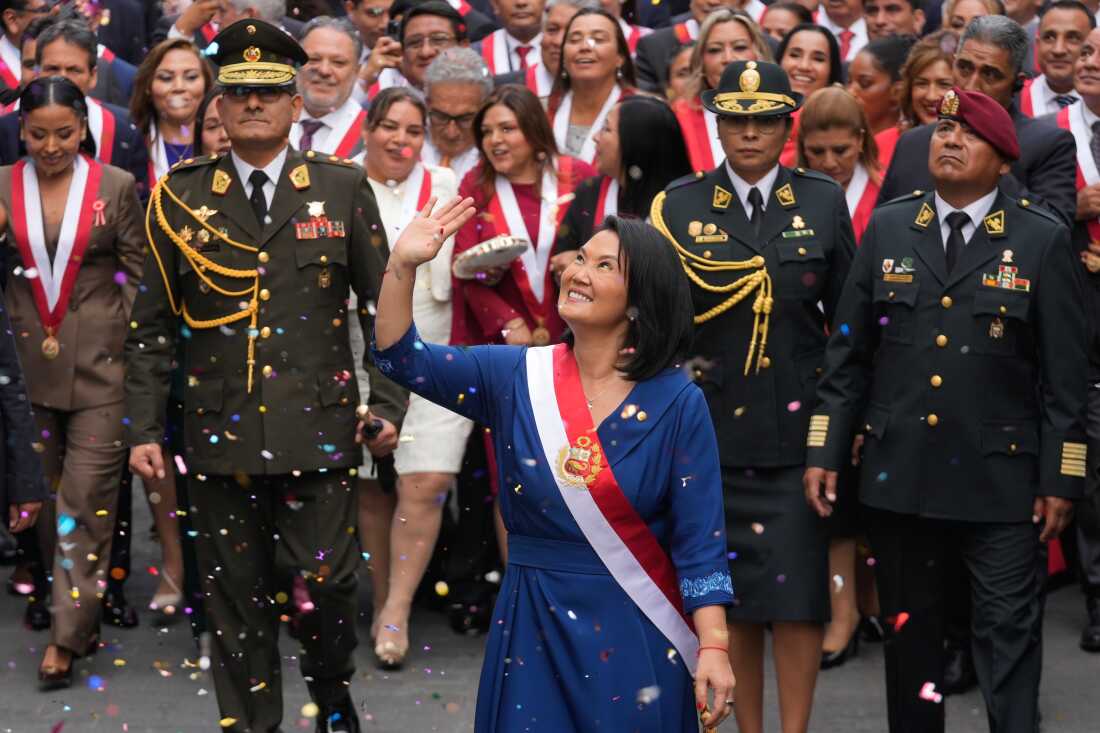
Keiko Fujimori has assumed the presidency of Peru after narrowly winning the June presidential runoff by fewer than 50,000 votes. Her victory indicates a regional shift in South America toward conservative leadership. Fujimori, a four-time presidential candidate and leader of Peru’s largest political party, is now the ninth president in a decade. At 51, she aims to stabilize Peru’s politics, reduce crime, and stimulate economic progress.
Challenges Ahead for a New Leadership
Over the past ten years, only three Peruvian presidents have been elected through popular vote. The others succeeded their predecessors who resigned or were removed by congress amid corruption issues. Fujimori’s Popular Force party, together with Popular Renovation, will occupy half the senate seats, limiting the opposition’s capacity to unseat her.
Focus on Security and Infrastructure
Fujimori’s campaign focused on enhancing national security and tackling extortion rackets. She promised to advance infrastructure by facilitating government-private partnerships. As a response to crime, she intends to adopt policies similar to those of Salvadorean President Nayib Bukele and build a megaprison inspired by El Salvador’s Cecot penitentiary. Plans include reforms to protect judges’ identities in criminal proceedings and a temporary military-led security operation in crime-affected areas.
Further, Fujimori aims to improve social services to combat malnutrition in rural areas and announced a 15% hike in the minimum wage. She also plans to prepare the nation for the effects of El Niño, a weather event that increases ocean temperatures, causing coastal flooding.
“My goal is not only to administer the state,” Fujimori stated. “My main objective is to narrow the enormous social deficit that affects millions of Peruvians.”
Political Tensions Persist
Opposition leaders are pressing for a reversal of recent laws they argue hinder efforts against organized crime, such as those reducing preventive arrests and complicating the confiscation of criminal assets. They also call for an investigation into the deaths of 50 civilians during anti-government protests in late 2022 and early 2023. Opposition lawmakers protested during Fujimori’s inauguration, displaying photos of the deceased, with bereaved families refusing to recognize her leadership.
A Divided Nation
Fujimori garnered strong support in Lima and the Pacific coast, yet faced opposition from the highland regions with larger Indigenous populations, who favored leftist Roberto Sanchez. Although Sanchez alleged irregularities in overseas vote counting, electoral authorities dismissed his claims. Despite political challenges, Peru maintains economic stability with a conservative fiscal policy and low benchmark interest rates. However, disparities in living standards between coastal and highland communities persist.
Fujimori’s victory mirrors broader conservative gains in Latin America, alongside Abelardo de la Espriella in Colombia and José Antonio Kast in Chile. These successes reflect growing concerns around crime, immigration, and economic sluggishness, marking a conservative resurgence since the 2025 inauguration of U.S. President Donald Trump.