Henrique Capriles on Venezuela’s Political Transition
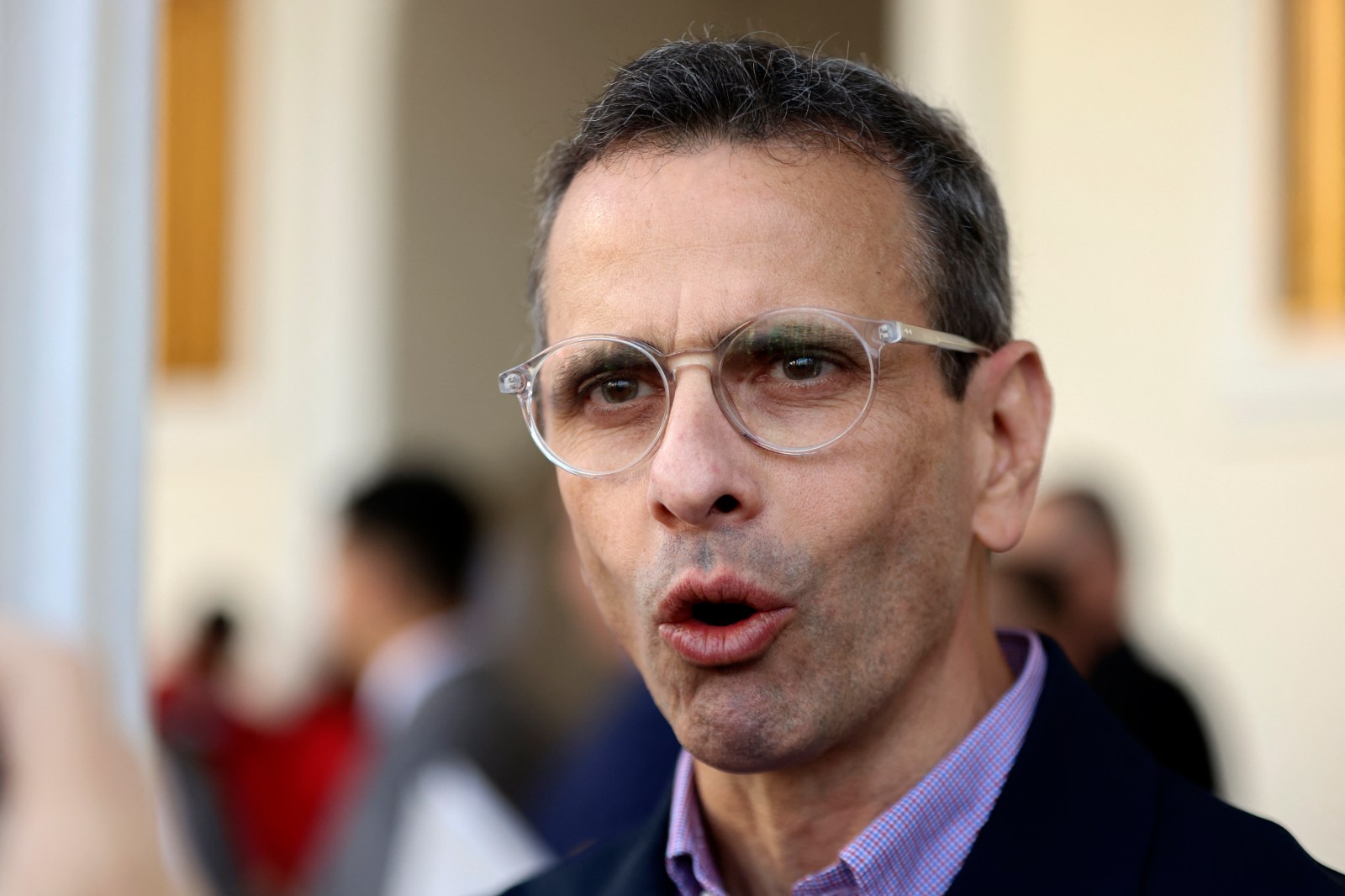
Henrique Capriles, a prominent figure in Venezuelan politics, has had two attempts to win the presidency. He came closer than most to defeating the prevailing Chavismo at the polls. Six months into a U.S.-supported power shift in Caracas, Capriles offers a distinct perspective on Washington’s role.
Although U.S. President Donald Trump’s public statements on provisional Venezuelan leader Delcy Rodríguez ranged from threats to open praise, Capriles notes the need to separate Trump’s rhetoric from his administration’s actions. “I don’t get carried away by President Trump’s statements,” Capriles stated in an interview. He highlighted the unpredictability of Trump’s messaging, with statements often changing within days.
Following an operation on January 3 that led to the capture of President Nicolas Maduro, Trump warned Rodríguez of severe consequences if she failed to cooperate. Yet, later, his tone shifted to commendation, even as Washington intervened on her behalf in federal court. Capriles doesn’t view Trump’s comments as indicative of a policy shift, but as a pattern of unpredictable communication.
“Venezuelans credit President Trump for ousting Maduro. We couldn’t achieve that through elections,” Capriles said, referencing the controversial 2024 election where Maduro claimed victory despite opposition candidate Edmundo González being the apparent winner.
The January 3 operation, named Operation Absolute Resolve, involved U.S. Special Forces capturing Maduro and his wife, Cilia Flores, from a secure location in Caracas. This followed months of military pressure framed by the Trump administration as an anti-narcotics effort. Venezuelan officials reported 83 dead and over 112 injured in the operation.
Maduro and Flores were flown to New York, pleading not guilty to narco-terrorism and related charges. A federal judge set their trial for 2027, albeit with potential schedule changes.
Capriles believes the operation might not have occurred if Maduro had conceded victory in the 2024 election. He suggests that a peaceful transition with Edmundo González taking office would have altered international relations, especially with the U.S.
Despite escalating tensions through 2025, Capriles didn’t expect Washington to execute a military operation to remove Maduro. He perceives Trump’s move as a bold gamble that succeeded, asserting that this change in leadership introduced Delcy Rodríguez as Venezuela’s interim president.
The Sovereignty Question
U.S. involvement in Venezuela’s transition has faced criticism. Colombian President Gustavo Petro labeled it an assault on Latin American sovereignty and warned of a humanitarian crisis. An investigation deemed Rubio as a powerful figure in Venezuelan decisions, influencing personnel changes and pressuring softer statements regarding U.S. actions.
Capriles dismisses the notion that Venezuela surrendered its sovereignty. He argues the sovereignty rhetoric favors whoever holds power, not the people. He does not view the current arrangement as a permanent surrender of self-determination but as a transition phase.
Critics have questioned the economic implications of U.S. involvement. Reports estimate over $13 billion in revenue from Venezuelan oil sales has accrued to the U.S., with only a small portion reaching Venezuela. Capriles acknowledges this but underscores the importance of democracy and voting in Venezuela’s future.
The Three-Phase Plan
Marco Rubio announced a three-phase plan for Venezuela, focusing on stabilization, recovery, and transition. This plan included starting formal talks with the opposition on August 1.
However, internal divisions within the opposition emerged. Nobel laureate María Corina Machado and Edmundo González boycotted the talks, feeling excluded. Despite differing strategies, Capriles believes Machado’s voice is essential in any transition discussion.
Capriles distinguishes Rodríguez’s administration as a temporary measure, emphasizing her role as a placeholder rather than a legitimate leader. Furthermore, political friction exists within the ruling apparatus, particularly between Chávez loyalists and Rodríguez’s allies.
An Earthquake Complicates Recovery
Venezuela faced unexpected trials as twin earthquakes struck its La Guaira region, causing significant loss of life and displacement. This disaster hit just as the interim government sought to stabilize and attract investment.
The earthquakes disrupted economic expectations and introduced uncertainty about recovery timelines. Capriles noted the catastrophe brought Venezuelans together, reducing political polarization.
“In the earthquake, it didn’t matter if you were Chavista or not,” Capriles observed, highlighting the crisis’s unifying effect.
For Venezuela to reconcile politically, Capriles stresses the need for accountability and strong institutions, not retribution. A robust judicial system is vital to avoid past mistakes and ensure justice.