Record Low Water Levels in Lake Powell and Lake Mead Signal Crisis
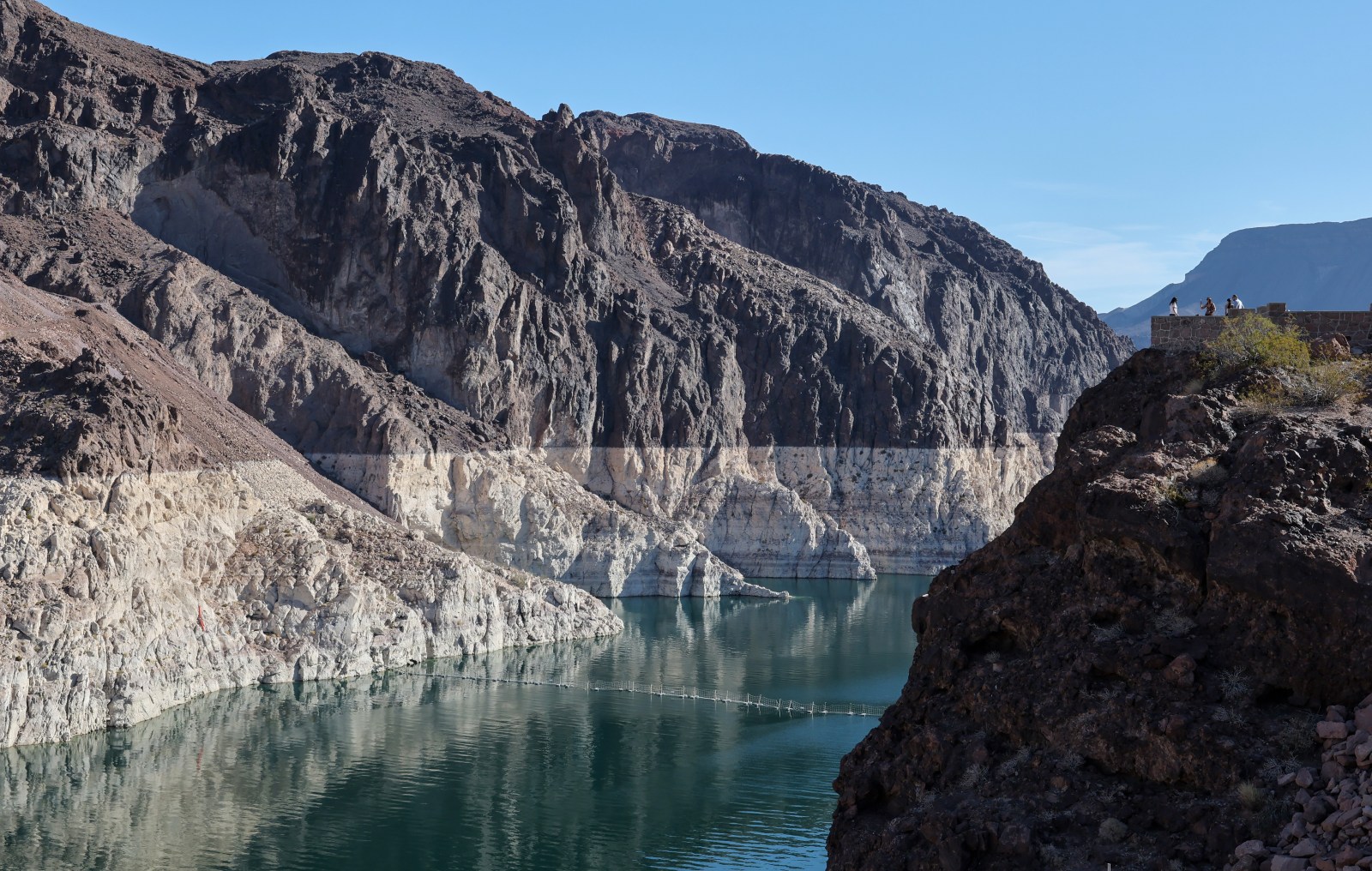
Lake Powell and Lake Mead, the United States’ two largest reservoirs, are at their lowest combined level ever recorded. This situation marks a significant development in the ongoing water supply crisis affecting the western regions, as highlighted in a recent report.
Record Low for Combined Storage
On July 12, these reservoirs fell to a combined storage of 12,675,509 acre-feet, setting a new low compared to the prior record of 12,677,161 acre-feet on March 14, 2023. An acre-foot is the volume of water needed to cover an acre of land to a depth of one foot. On that date, Lake Powell’s surface elevation measured 3,524.32 feet above sea level, holding 5,505,869 acre-feet, while Lake Mead was at 1,042.77 feet, with 7,169,640 acre-feet.
The last instance of such low combined water levels was May 23, 1957. At that time, Lake Mead held all 12,668,000 acre-feet before Lake Powell started filling.
Interconnected Reservoir System
Despite often being regarded separately, these reservoirs must be seen as a connected storage system. Lake Powell is part of the Upper Colorado River Basin, while Lake Mead belongs to the Lower Basin. Together, they form a massive reservoir system along the Colorado River, separated by the Grand Canyon, with minimal consumptive needs in the middle.
Accelerating Storage Loss Through 2026
Since March, the storage depletion has been rapid, with around 16,000 acre-feet per day lost from the reservoirs. Only in May did the rate decrease to about 11,000 acre-feet daily, due to contributions from Rocky Mountain snowmelt and supplemental releases into Lake Powell.
From January to mid-July, the monthly depletion rates varied, with daily averages such as 2,626 acre-feet in January and 16,661 in early July. Until spring runoff in 2027, the report anticipates each day will set a new record low for storage.
Importance of the Colorado River
The Colorado River is a critical water source in North America. It provides essential resources such as water supply, hydropower, and recreation across seven U.S. states and Mexico. A significant portion, 70 percent, supports agriculture, while up to 40 million people depend on it for municipal use.
Scientists warn that by 2028, water levels could decline to a point where normal operations, including deliveries and power generation, are unfeasible. Such a scenario would trigger a “system crash,” jeopardizing infrastructure and the vast economies reliant on the river.
Upcoming Management Decisions
This new low in water storage coincides with federal discussions on the next phase of Colorado River management. Plans under consideration could reduce water usage in Arizona, California, and Nevada by up to one-fifth by 2027, with further cuts possible. Arizona’s Governor has described extreme reductions to her state’s allocation as unacceptable.
Several key agreements regarding the river’s operation are set to expire at the end of the year, emphasizing the importance of upcoming decisions. As of a recent Sunday, data showed Lake Mead at 27 percent of its capacity and Lake Powell at 22 percent.