Growing Influence of Democratic Socialism in U.S. Politics
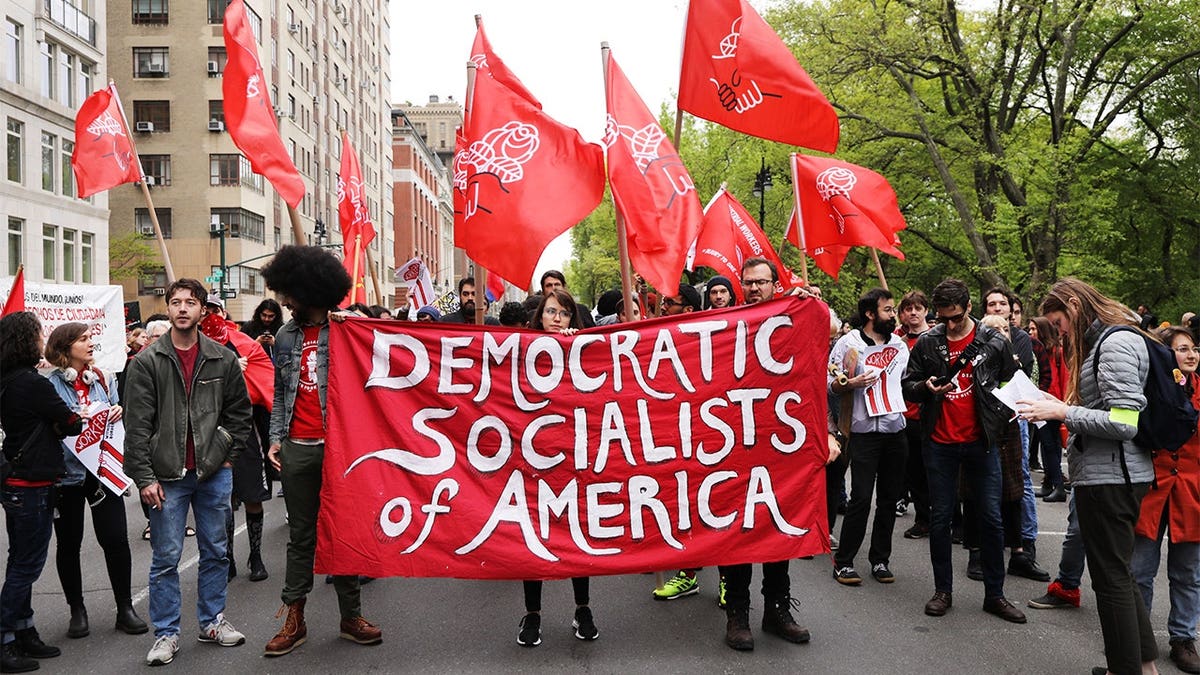
A recent CNN poll reveals a notable shift among Democrats and Democratic-leaning adults, with about one-third now identifying as “democratic socialists.” This marks a significant change as groups like the Democratic Socialists of America (DSA) gain increased influence nationally.
The data, shared with Fox News Digital, shows 34% of Democrat-leaning respondents considering themselves democratic socialists. Overall, 15% of all respondents identified this way. Most of these respondents were younger than 45 and predominantly White, as per CNN.
This emerging trend sparks concerns about the growing impact of socialism and the DSA in American politics. The poll, conducted by SSRS alongside CNN, also notes that those identifying as democratic socialists tend to have less formal education and earn under $100,000 annually.
Interestingly, democratic socialists exhibit a high motivation to vote, with 66% showing extreme motivation this year, compared to 57% of other Democrats. This comes as democratic socialists achieve notable election victories over the past year.
For instance, Zohran Mamdani, a DSA-backed candidate, was elected mayor of New York City, along with similar wins in Seattle. On a federal level, DSA-backed candidates secured Democratic primaries in New York, Pennsylvania, and Colorado. Furthermore, Abdul El-Sayed, endorsed by the DSA, is a strong contender for the U.S. Senate nomination in Michigan.
“Americans have every reason to be concerned when influential forces within the Democrat Party push radical ideas.” – Mike Marinella
The rise of the DSA raises alarm due to its platform advocating radical reforms within the American governance system. Proposals include abolishing ICE, defunding the police, eliminating the Senate, and restructuring the executive and judicial branches to subordinate them to Congress.
Other proposals call for mass amnesty, unrestricted migration, and voting rights extensions. The platform also includes economic policies like a 32-hour workweek, Medicare-for-all, eliminating student debt, and implementing universal rent control.
Republican National Committee spokesperson Natalie Baldassarre commented, warning that the Democratic Party’s embrace of these policies might backfire in critical upcoming elections. She stated that most Americans do not support such extreme ideologies.
The DSA and Democratic National Committee have been approached for comments. The assessment underscores a shifting political landscape with potential implications for upcoming elections.