California’s Persistent Delays with High-Speed Rail Project
Significant Missed Deadlines
California’s High-Speed Rail Authority has faced ongoing setbacks in its attempt to buy trains, resulting in serious consequences. These failures were a major reason federal authorities rescinded $4 billion in funding over a year ago. Although over a year and a half have passed since the initial deadline, the authority still cannot specify when they expect to award the contract. The deadline remains “TBD.”
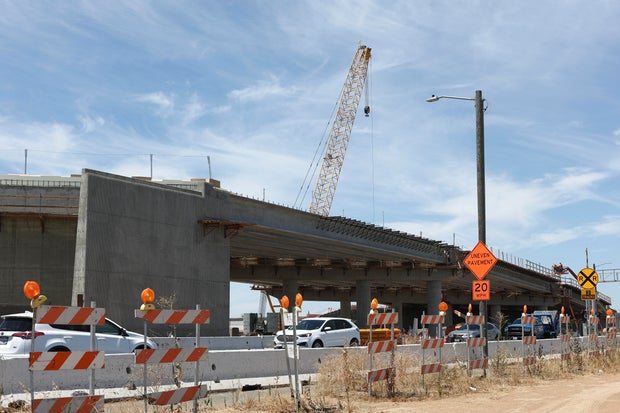
Approved by voters in 2008, the high-speed rail project originally aimed to connect San Francisco and Los Angeles in under three hours using electric trains capable of reaching speeds up to 220 mph. Currently, there is no direct route between these cities, leading to travel times of 10.5 to 12 hours. However, the project now focuses on a middle section — a flat 171-mile stretch between Merced and Bakersfield. This area was selected because construction was anticipated to be simpler, avoiding tunnel drilling. If completed, the high-speed rail is expected to reduce the current train ride duration by half.
The Withdrawal of Federal Funding
In July 2025, the Trump Administration withdrew $4 billion in federal funding, citing the state’s inability to lay any tracks despite spending $15 billion over 16 years. Transportation Secretary Sean Duffy highlighted that federal funds required delivering results. Purchasing trains was identified as a crucial milestone, and authorities deemed the project could not meet this required timeline.
Governor Gavin Newsom condemned the removal of funding as punishing California politically, prompting State Attorney General Rob Bonta to file a lawsuit against the decision. However, within six months, California dropped its lawsuit. The High-Speed Rail Authority disclosed no reasons but expressed hope to coordinate efforts with the federal government, labeling the administration “not a reliable partner.” Yet, investigation by CBS California showed that the authority itself failed to meet its own deadlines for train purchases.
Continuing Delays in Train Procurement
The grant agreement during the Biden administration required the execution of a trainset contract by December 31, 2024, which California did not meet. Months later, officials terminated funding and pointed to the missed deadline as evidence the project could not adhere to necessary milestones. The rail authority acknowledged missing the deadline but provided no explanation for delays. It referred to public records, none of which acknowledged the delay.
The Impact on Legal Arguments and Project Timeline
In December 2025, the authority assured a federal judge it would execute a train contract by December 1, 2025, claiming it would keep the project on track. However, they missed this revised deadline too, canceling the crucial board meeting. Missing this revised deadline affected California’s legal argument that it could meet future deadlines. After failing both original and revised deadlines, the state had essentially proved the federal government’s stance that the project was off-track. Shortly thereafter, the lawsuit quietly disappeared without public explanation.
The State’s Response and Further Developments
In January 2026, Governor Newsom claimed California was “finally laying the tracks” for the high-speed rail system, but construction had not actually begun. Rather, a railhead—a logistics depot—had been built to facilitate future track installation. Inspector General Ben Belnap confirmed that high-speed rail track, as defined, had not been laid. Six months later, in June, the state had still not begun track installation, despite approving a team to build the track.
The authority released its 2026 business plan projecting service by 2033, but left the train procurement status blank. Belnap expressed accountability concerns over the repeated missed milestone, warning that purchasing trains was crucial for track and system testing.
Adjustments and Internal Challenges
In August 2023, the board approved the trainset procurement, framing contracting a manufacturer in 2024 as essential for adhering to federal grants and project timelines. The plan required delivering two prototype trains in 2028 for testing, followed by more deliveries for passenger service by 2030.
However, changes initiated by CEO Ian Choudri in 2024, specifically altering trainset specifications, were blamed for delays. These modifications brought concerns during board meetings, as changing the design might require canceling the procurement altogether. Ultimately, the deadline passed without finalizing a train contract, and Choudri avoided interview requests, pointing to publicly available information instead.
Ongoing Delays and the Posing Risks
The missing deadlines have compressed the timeline for testing and certification before projected operations around 2033, risking further delays. The authority’s 2025 report projected delivery and starting passenger service by 2032, indicating increased urgency.
Federal officials identified the train procurement delay among key findings, further assessing no viable path to complete the segment by 2033. A U.S. Senate Commerce Committee even accused state leaders of misusing federal funds and gross mismanagement in light of repeated missed deadlines.
Remaining Questions and Unclear Future
CBS California Investigates questioned the authority extensively on train procurement delays. They sought explanations for the two missed deadlines and queried whether the project could still meet scheduled timelines. The authority neither answered nor provided updated procurement details, only defending compliance with agreements.
Senator Adam Schiff criticized the removal of federal funds, advocating for responsible taxpayer spending and urging partnership to meet California’s transportation needs. Meanwhile, Senator Alex Padilla denounced the Trump administration’s actions as politically motivated and pledged to fight for reinstating funds.