The Supreme Court’s Political Role and Public Perception
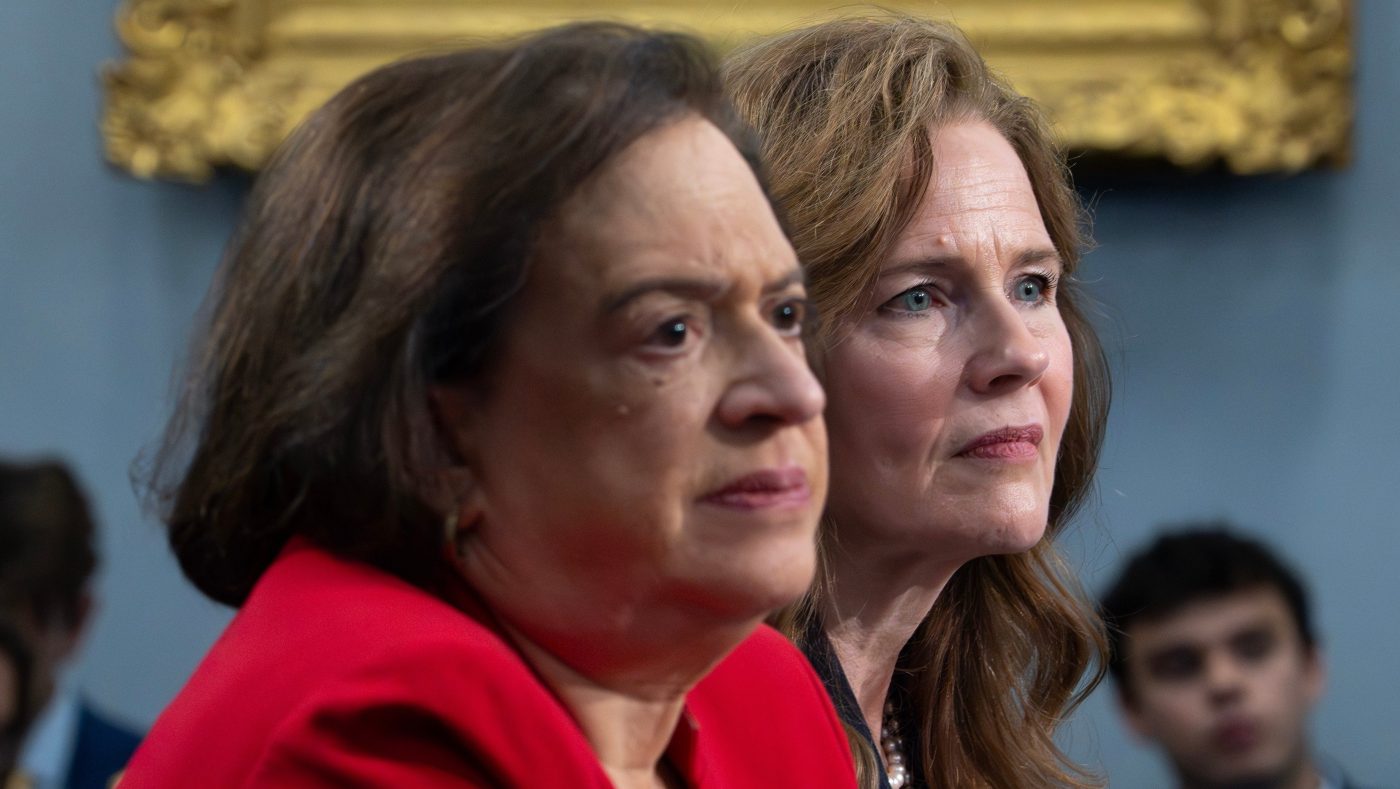
Supreme Court Justices Amy Coney Barrett and Elena Kagan recently testified during a hearing on Capitol Hill. This invites reflection on the Court’s dual role as both a legal and political institution. Political scientist Robert Dahl underscored the Court’s political nature, suggesting Americans struggle with accepting this duality. A recent poll supports this theory, revealing over half of Americans disapprove of the Court’s performance, with many viewing its decisions as ideologically driven.
This perception mirrors historical criticisms, likening the current Court’s partisanship to contentious periods, such as the Taney Court’s era with the Dred Scott decision. The comparison highlights concerns about the Court’s trajectory. Princeton scholar Paul Krugman voiced this sentiment, claiming the Court’s actions undermine U.S. democracy by consolidating power in the executive branch.
Arguments regarding the Court’s increased political involvement date back to analyses like Sen. Sheldon Whitehouse’s review of the 2017-2018 term. He noted deviations from conservative principles to favor partisan Republican outcomes. Such shifts challenge the public’s trust, exacerbated when justices publicly disavow political motivations, despite evident ideological splits in their decisions.
In dissents and opinions, justices often reveal internal political divisions. Justice Ketanji Brown Jackson, for instance, criticized recent decisions as politically motivated, opposing Justice Samuel Alito’s denouncement of her views as trivial. Historical context shows such conflicts are not new, as seen in Justice Antonin Scalia’s reaction to the legalization of same-sex marriage.
Though the public rarely reads court opinions, they perceive the predictable ideological lines in landmark decisions. Chief Justice John Roberts and Justices Neil Gorsuch and Amy Coney Barrett encourage viewing the Court as nonpartisan, a portrayal met with skepticism by the public.
This combination of denial and lack of transparency does little to restore faith in the Court. For genuine reform, a candid acknowledgment of the Court’s political influence is necessary, allowing Americans to critically evaluate its unique political role.
Austin Sarat serves as the William Nelson Cromwell Professor of Jurisprudence and Political Science at Amherst College. This article is under copyright protections.