The Role of Creative Reuse Centers in Promoting Sustainable Art Practices
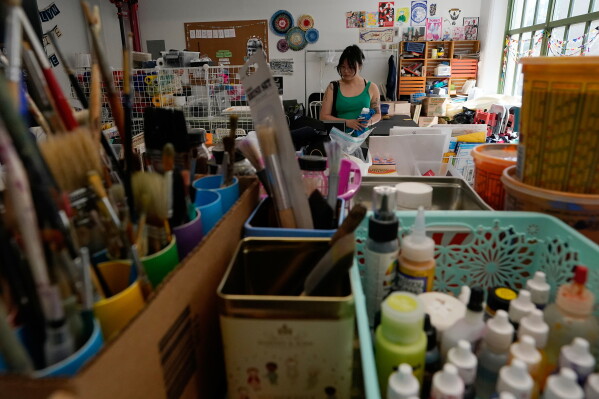
Charlene Catalano discovered a ball of green-and-white yarn for crocheting a winter scarf at Brooklyn Creative Reuse instead of a major retail store. This purchase, along with gently used crochet kits, hooks, labels, and other supplies, cost her $6. Catalano observed the current trend of rising art supply costs due to increased interest in crafts, appreciating the affordable selection available at the reuse center.
Brooklyn Creative Reuse is among the numerous creative reuse centers across the U.S. These centers aim to keep art supplies out of landfills by offering donated arts and crafts materials at discounted prices, functioning similarly to thrift stores. These centers enable artisans to purchase needed items like ribbons and fabric scraps without buying excessive amounts.
Art supplies, often sold in bulk, can outlast intended projects, leading to waste. When discarded, they can release harmful chemicals and microplastics into the environment. Reuse centers combat this issue by saving thousands of pounds of materials from landfills monthly. According to Julian Silverman, a materials scientist at New York’s Fashion Institute of Technology, visiting a large warehouse with varied materials inspires creativity.
How Reusing Art Supplies Benefits the Environment
Secondhand shopping at reuse centers reduces the cost of art, offering supplies at affordable prices. For instance, Brooklyn Creative Reuse prices most items at $3 per pound, while other centers price items individually. Reusing supplies also conserves resources required for manufacturing new products, such as water and energy. Silverman noted that producing one gallon of paint consumes about 13 gallons of water.
Packaging further contributes to environmental concerns, as art supplies often feature excessive wrapping. Reusable center Scraplanta Creative Reuse in Atlanta collects around 7,000 pounds of materials each month, reselling them to diverse customer groups such as teachers, parents, and students.
“We see value in that half bottle of paint or glue that’s still usable,” explained Jonelle Dawkins, executive director of Scraplanta. Discarded synthetic bristles on paintbrushes can take centuries to degrade, while plastic handles require nearly a thousand years. Disintegrating paints release microplastics and heavy metals into the environment.
Environmental scientist Zoie Diana from Barnard College explained that while art paints contribute to pollution, they are a smaller source compared to roads, buildings, and boats. Diana encouraged artists to focus on controllable environmental factors without feeling guilty about their creativity.
Practical Steps for Sustainable Art
Principles of sustainable art include purchasing only necessary supplies and donating unused materials. Proper cleaning techniques, like wiping paintbrushes with a rag to remove old paint, prevent microplastics from entering water systems. Artists can also find programs for recycling paints.
Silverman, the materials scientist, suggested innovative methods for repurposing household items, such as converting onion skins and beets into colorful inks for tie-dye projects. Upcycling old makeup into paints and inks is another creative possibility.
Artist and teacher Rosina Morelli was inspired by Brooklyn Creative Reuse to sort through her materials, preferring donation over disposal. “I’m happy to donate, not buy, so others can benefit from my unused supplies,” Morelli emphasized.
The Associated Press Health and Science Department receives support from the Howard Hughes Medical Institute’s Department of Science Education and the Robert Wood Johnson Foundation. The AP’s climate and environmental coverage receives financial support from multiple foundations. The AP maintains responsibility for all content, adhering to its standards found at AP.org.