Trump Administration Faces Legal Pushback Over New Tariffs
Twenty-five states have initiated legal action against the Trump administration, challenging the latest tariffs imposed on imports. These states argue that the tariffs serve as a substitute for import taxes previously invalidated by the Supreme Court in February.
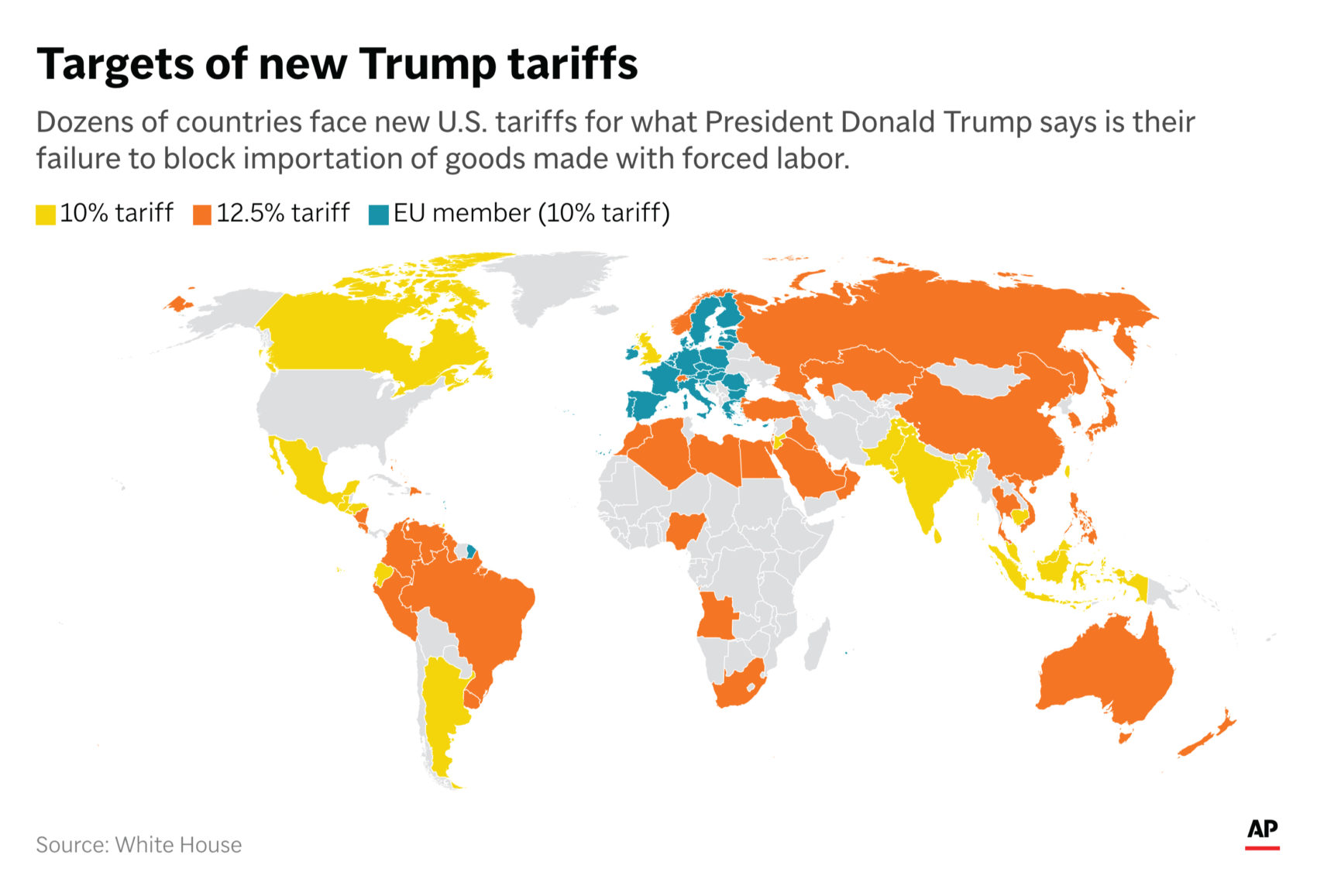
Last month, the United States enforced tariffs reaching double digits on imports from 59 countries and the European Union. The administration cited insufficient efforts by these entities to combat forced labor in their supply chains as the reason for the tariffs. This new tariff policy came into effect as the temporary tariffs, implemented after the Supreme Court’s ruling, expired.
New York Attorney General Letitia James criticized the administration’s approach, stating that the administration is attempting to raise taxes on families and businesses illegally. This move comes after President Donald Trump, who champions high tariffs for reviving American manufacturing, reversed years of U.S. trade policy that preferred lower tariffs. By invoking the 1977 International Emergency Economic Powers Act (IEEPA), the President previously imposed tariffs on nearly all countries, declaring the national trade deficit a crisis. However, the Supreme Court determined the IEEPA did not grant authority to enforce such tariffs, necessitating refunds for importers.
Seeking to recover lost revenue, Trump implemented temporary 10% tariffs worldwide, which expired on July 24. Now, the administration has applied tariffs under Section 301 of the Trade Act of 1974. This statute allows the President to impose import taxes and sanctions against nations engaging in unfair trade practices. During his first term, Trump utilized Section 301 to levy significant tariffs on China, which successfully withstood legal challenges.
The administration’s use of Section 301 aims to enforce tariffs between 10% and 12.5% on countries accounting for 99% of U.S. imports. White House spokesman Kush Desai emphasized that these measures, rooted in legal authority, target unfair trade practices that harm U.S. commerce. He noted that failure by foreign countries to prohibit imports made with forced labor burdens American commerce and workers, necessitating action. These tariffs, considered legally robust, continue to be a tool for addressing these issues.