FIFA’s Leadership and the Uncertain Path Ahead for Gianni Infantino
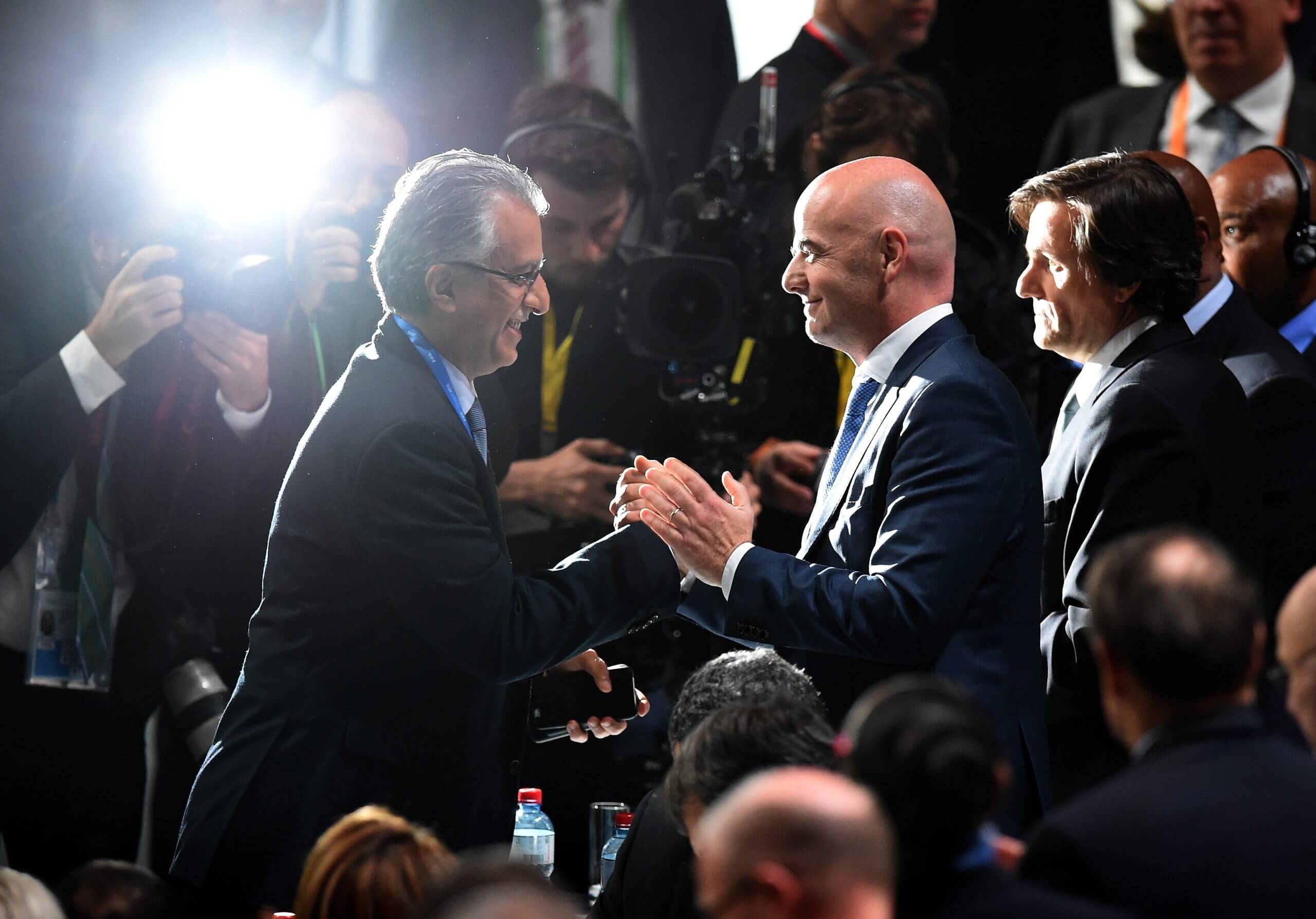
Gianni Infantino, in his closing speech at the 2026 FIFA Congress in Vancouver, revealed his plan to stand for re-election as FIFA president. He appeared confident that the election would be uncontested, allowing him to serve a third term until 2031. His enthusiasm was evident on social media, where he stated, “The journey goes on!”
At that time, FIFA’s future seemed secure. Recently, however, attempts to sell a 21% stake in FIFA’s commercial operations have created instability. UEFA’s public loss of confidence in Infantino’s leadership has exacerbated the situation. Some advisers and allies have also distanced themselves.
Infantino’s previously unchallenged path to re-election is no longer certain. FIFA’s presidential election, set for March 17, now faces unpredictability.
FIFA’s Presidential History
FIFA has seen few presidents since its first, Robert Guerin, took office in 1904. Infantino is only the ninth president and the third since the mid-1970s following Joao Havelange and Sepp Blatter, whose terms spanned over 40 years. Following Blatter’s resignation, amid corruption charges, FIFA limited presidential terms to 12 years in 2016, the year Infantino, a former UEFA executive, assumed leadership with ambitious plans.
Infantino managed to circumvent the 12-year cap by arguing his first three-year term should not count, potentially extending his tenure to 15 years with a re-election next spring.
FIFA conducts elections every four years, aligning them with the Congress following a men’s World Cup. Past elections in 2019 and 2023 highlighted Infantino’s dominance as no votes were necessary. Member associations endorsed him by acclamation.
The last meaningful vote took place in 2016. Infantino defeated four contenders at an Extraordinary Congress in Zurich. Sheikh Salman Bin Ibrahim Al Khalifa was the runner-up. Infantino’s win came after Michel Platini’s disqualification from the race due to alleged corruption.
The Election Process
A FIFA presidential election lasts a year from one Congress to the next. Candidates must have engaged in association football for two of the last five years and pass an eligibility check by a FIFA committee.
Importantly, candidates need support from at least five member associations by a set deadline, this year on November 18. No association can endorse more than one candidate. Recently, several associations, including Wales and England, withdrew support from Infantino.
To succeed, a candidate must significantly exceed the minimum requirement. A simple majority of 50%+1 of the 211 associations, or 106 votes, is needed to win if there are two candidates. Every association vote holds equal importance.
Infantino gained popularity by appealing to smaller nations. However, opposition from three influential confederations, including UEFA, is challenging. UEFA’s 55 votes, combined with AFC’s 46 and Concacaf’s 35, could potentially defeat Infantino if their members vote uniformly. Qatar, an AFC member, recently reaffirmed support for Infantino.
Presidential elections often rely on support within confederations. However, bloc voting is not permitted in the secret ballot. In 2016, despite public backing, Sheikh Salman gained only 88 votes, failing to win majority support.
When more than two candidates compete, a two-thirds majority is needed initially, with subsequent rounds narrowing the field. Infantino won in 2016 after two rounds with 115 votes.
Looking Ahead to the Next Presidential Election
The next presidential vote was scheduled during the 2026 Congress to occur in Morocco in March 2027. This decision holds strategic significance for Morocco, which aims to host the 2030 World Cup final. Infantino has traditionally received robust support from CAF, the African football governing body. Previously, the election was held in Kigali, Rwanda, in 2023 where Infantino won by acclaim.
The March election is now under threat. An emergency FIFA Council meeting could be called for two reasons. First, if a majority of the 37 Council members become dissatisfied with Infantino. Second, if one-fifth of member associations request it. UEFA has sufficient votes to force such a meeting, potentially leading to a no-confidence vote against Infantino.
In the coming weeks, the trajectory of FIFA’s leadership will become clearer. The next election for FIFA president is no longer a predictable affair for Infantino.