Study Reveals Trends in ICE Arrests During Trump’s Second Term
Overview of ICE Arrest Data
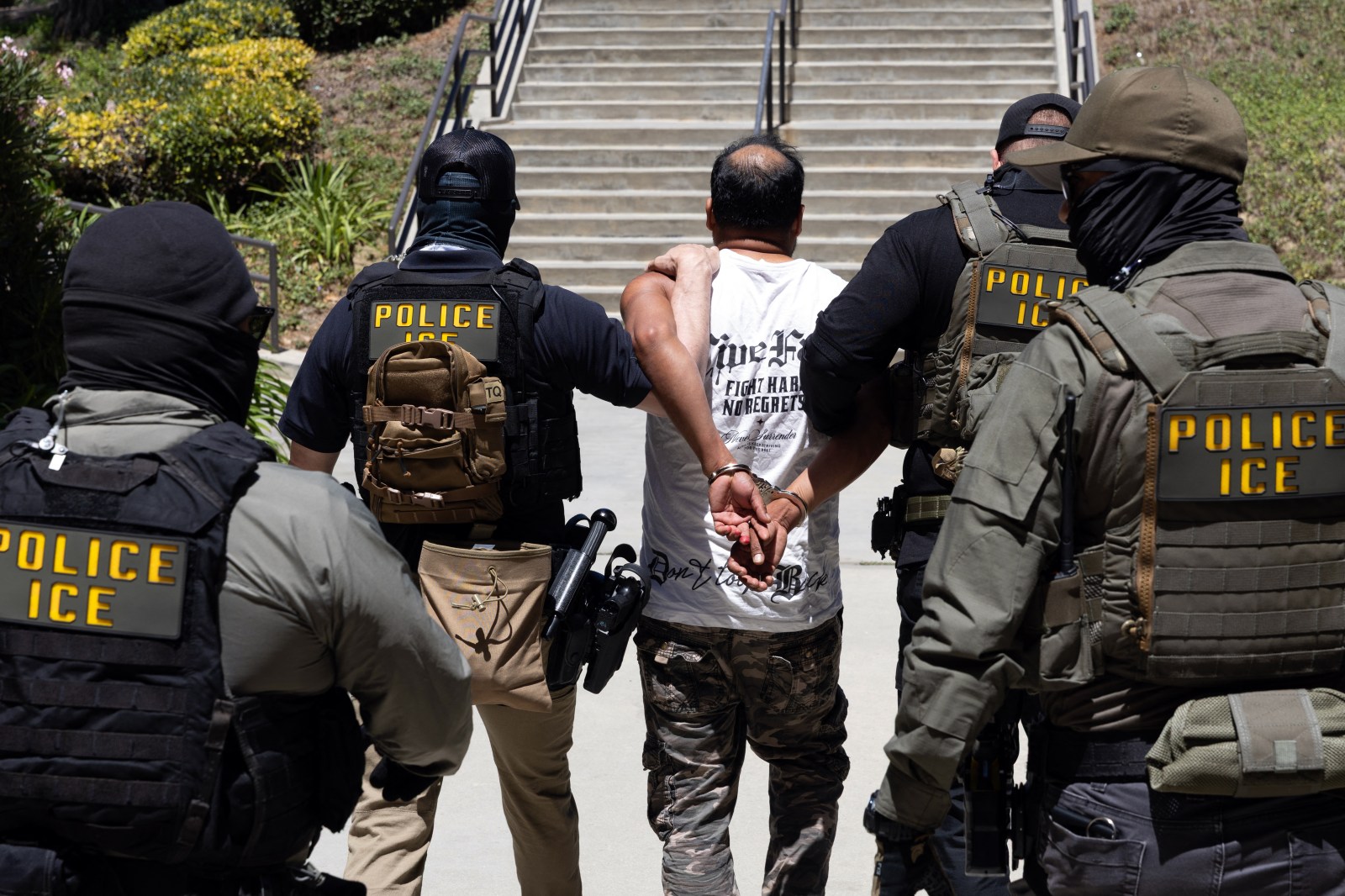
Recent research published in the Proceedings of the National Academy of Sciences analyzed a decade of data on arrests by U.S. Immigration and Customs Enforcement (ICE). The study reveals that during President Donald Trump’s second term, only one-third of individuals arrested by ICE had prior criminal convictions. This finding marks a noticeable decrease compared to previous administrations.
Despite this trend, the Trump administration had emphasized targeting serious offenders, including those convicted of murder, sex offenses, and drug trafficking, as part of its immigration enforcement strategy.
DHS Response
A Department of Homeland Security (DHS) spokesperson commented on the study, stating that the department “cannot verify the veracity of this data.” The spokesperson argued that many arrested individuals classified as noncriminals might include “terrorists, human rights abusers, gangsters and more,” who lack criminal records in the U.S.
“Entering the country illegally is itself a crime,” the spokesperson emphasized.
According to DHS, 70% of those arrested had criminal convictions or pending charges in the U.S., which does not account for additional international criminal warrants.
What The Data Reveals
Covering about 1.6 million arrests from October 2015 to March 2026, the study provides substantial insights into ICE’s arrest patterns. Findings indicate that 34% of arrests in Trump’s second term involved individuals with prior criminal convictions, a decline from 52% during Biden’s final year and substantially lower than 70% in Trump’s first year and 79% during Obama’s last year.
Lead author Chloe East highlighted the disparity between the actual enforcement data and the narrative advocating for removing individuals who commit crimes as essential for public safety.
Surge in Arrests and Shift in Enforcement Tactics
ICE arrests increased markedly at the start of both Trump presidencies. The first 14 months of Trump’s initial term saw an average of 436 daily arrests, up 43% from Obama’s final year. In Trump’s second term, arrests averaged 952 daily, a significant rise from Biden’s last year.
Researchers attributed the decline in arrests of individuals with convictions partly to shifts in ICE operation methods. Traditionally, many arrests occurred when individuals were already in law enforcement custody.
Community Arrests and Changes in Enforcement Locations
In January 2025, the Trump administration revoked Biden-era guidelines limiting enforcement actions in sensitive areas like schools and hospitals. As a result, community arrests, defined as those outside jail settings, increased from 19% during Biden’s last year to 44% after Trump’s return.
Collaborative arrests with local law enforcement dropped from covering three-quarters of arrests to just over half. Both methods saw a historic decline in the proportion of arrestees with criminal convictions.
Analysis of geographical trends showed varying enforcement tactics. Areas such as Boston, Chicago, Newark, and Seattle observed more community arrests, consistent with the targeting of sanctuary jurisdictions.
Implications and Conclusion
The study suggests that tactical changes alone do not fully account for the declining share of arrestees with criminal convictions. Even within equivalent arrest methods, this decline persisted as total arrest numbers increased.
The Trump administration continues to advance an aggressive immigration enforcement agenda focusing on mass deportations. The research did not explore whether arrested individuals had civil immigration violations or pending criminal charges, concentrating instead on official criminal conviction records.
In July, ICE reported a record number of monthly arrests for Trump’s second term, with over 46,000 individuals detained for immigration violations, including illegal entry and visa overstays, as detailed in DHS data acquired by CBS News.
For inquiries, contact Newsweek editors Matthew Cannon and Robert Greenall.