The Unique World of Beep Baseball: A Sport of Sound, Trust, and Community
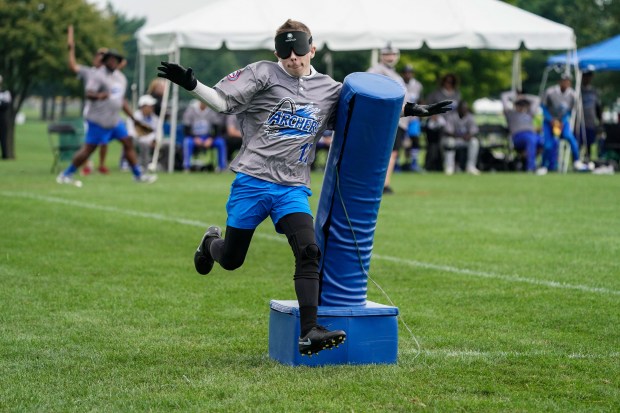
The silence is the first thing that stands out at a Beep Baseball game. All sideline discussions stop. The only noise is the consistent beeping from a ball tossed by a pitcher. The pitcher calls out a cue for the blindfolded batter to swing. The crack of the bat follows, and the batter takes off in a sprint toward a buzzing base 100 feet away. A ‘spotter’ in the field calls out the zone where the ball heads. Otherwise, silence prevails.
Players, unable to see, dive across the field to find the ball. The hitter charges toward the padded base, colliding with it at full speed and tumbling down. To newcomers, the sport appears as controlled chaos. After observing a Beep Baseball match at Aurora’s Stuart Sports Complex, it became evident this adaptive sport blends athleticism, trust, and communication.
The DuPage Sports Commission collaborated with the Aurora Area Convention & Visitors Bureau and Aurora city to host the 50th National Beep Baseball Association (NBBA) World Series. This five-day event, which started Tuesday, welcomed over 500 visually-impaired athletes nationwide to Aurora. The tournament concludes Saturday morning at 9 a.m., as the top teams compete for the national championship.
“Everybody here has a good story,” says Michael Finn.
Finn, who lost 85% of his eyesight due to a medical error at age 3, never let vision impairment stop him. He became a Paralympian in track and field and has been an avid Beep Baseball player for 30 years. Formerly with the West Coast Dawgs, Finn now plays for the Texas Blackhawks.
The adaptive nature of Beep Baseball hinges on sound. Players listen for the ball’s beep to hit or field it. They then follow a loud buzz to reach a foam base 100 feet away, diving into it before fielders record an out.
Traditional roles differ here. Pitchers and catchers are on the batter’s team. Bases sit only on first and third baselines, and reaching them counts as a run. Blindfolds equalize players for any vision differences. Sound remains crucial, requiring silence during plays. Two spotters indicate the zone the ball lands in, guiding defensive players to dive for it.
Created by engineer Charles Fairbanks in 1964, Beep Baseball built a path for visually impaired children to play. Twelve years later, advocates from four states formed the NBBA, which has grown tremendously since. Chicago has seen consistent participation, with the current Chicago Comets achieving the title in 2003.
Producing the tournament took collaboration between the DuPage Sports Commission and Aurora, providing accommodation and a suitable venue for 100 games in a week. Igor Bakovic, upon learning about NBBA, prioritized bringing the event back to Illinois.
The series serves as a reunion aside from intense competition. Longtime players, volunteers, and friends return each year. For participants like Faith Penn, whose vision deteriorated after a retinal injury, the sport provides freedom and an opportunity to meet new people. Her favorite aspect is sprinting to the bases.
Another key figure, Darnell Booker, whose vision loss followed a BB gun accident at 15, shaped his life around Beep Baseball. Now an NBBA Hall of Famer, he leads the Indy Thunder and serves as the organization’s vice president and tournament director. Under his leadership, the sport expanded to 30 teams in 14 states and international teams in Taiwan, Canada, and the Dominican Republic.
Tournament participation relies on fundraising more than records. Costs can be high, so teams rely on yearlong efforts to attend. Volunteers play critical roles in hospitality, field operations, and officiating. As Gateway Archers fan Marge Sanders notes, the community spirit and support are unmatched.