How to Choose and Use the Most Protective N95 Masks
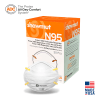
According to the Centers for Disease Control and Prevention (CDC), N95 respirators offer the highest level of protection among different types of face masks. They are designed to filter at least 95% of airborne particles, both small and large. These masks fit snugly against the face, reducing gaps around the sides, chin, and nose. In the United States, the National Institute for Occupational Safety and Health (NIOSH) regulates N95s, making them easier to purchase than international counterparts like KN95s and KF94s. Though the terms ‘mask’ and ‘respirator’ are often used interchangeably, N95s, KN95s, and KF94s specifically refer to fitted face coverings with certified filtration.
I consulted medical experts to learn how to evaluate N95 masks, differentiate them from other disposable masks, and determine when to wear them. I also rounded up highly rated NIOSH-approved N95s available online.
Top N95 Mask Picks
- Best Cup-Shaped: Available at different price points. Learn more online.
- Best Flap-Fold: Offers large quantity purchase options.
- Best Individually Wrapped: Come in convenient packs for purchase.
If you want more recommendations from NBC Selected, consider signing up for our newsletter for smart shopping tips.
Shopping for N95 Masks
While there are many NIOSH-compliant N95 options, the CDC advises reserving surgical-grade masks for medical professionals. Outside of these, you can find several NIOSH-approved N95 masks online, some packaged together and others individually wrapped. All feature an adjustable nose bridge and two headstraps.
Consider the following popular options:
- 3M’s Aura foldable N95: Features a three-panel design, crafted to be low profile around the nose and eye area, accommodating glasses, and available in packs of 10 or 20.
- Shawmut N95: Available in packs of 20 or 240, these masks include a foam lining inside the adjustable nose piece to reduce eyeglass fogging.
- Honeywell N95: These can be folded flat when not in use. They have an adjustable nose clip with a foam cushion for a tight seal and come in packs of 20.
- Pouch-design N95: Offers a large breathing chamber, making it easier to speak. Sold in packs of 50.
- DemeTech N95: Composed of five layers and fold flat when not in use, available in packs of 20.
Choosing N95 Masks
Several factors were considered in selecting these masks:
- NIOSH Approval: Look for those listed on NIOSH’s approved models. NIOSH-approved N95s meet specific performance standards, filtering out at least 95% of particles as small as 0.3 microns.
- Markings: Proper N95 masks carry specific markings, including NIOSH identifiers, filter designations, and model numbers.
- Features: Two straps and an adjustable nose bridge ensure a tight fit. Avoid masks with exhaust ports, says Dr. David Rempel from the University of California, San Francisco.
- Shape: Available in cup, flat fold, and duckbill shapes. Comfort preference dictates the choice.
- Type: Masks labeled ‘surgical’ or ‘medical’ should be reserved for healthcare workers. Standard N95s are sufficient for public use.
Proper Use of N95 Masks
Effectiveness depends on correct usage, cautions the CDC. Masks should cover the mouth and nose completely and fit snugly against the face to eliminate gaps. Dr. Stella Hines from the University of Maryland highlights the importance of a secure seal to filter air effectively.
Perform a leak test at home by wearing the mask and exhaling. If air escapes under the chin or around the eyes, adjust for a tighter fit. Eyeglasses fogging indicates leakage.
All masks fit differently; features like adjustable nose bridges and mask fitters can enhance fit, especially for those with facial hair.
When to Wear Face Masks
Without a nationwide mandate, deciding when to wear a mask can be challenging. Expert recommendations include:
- In crowded indoor spaces: Settings with prolonged contact, like concerts or public transport, warrant mask use, according to Dr. Carl Fichtenbaum from the University of Cincinnati.
- If sick: Stay home if feverish. Post-fever, or if only mildly symptomatic, wear a mask in public, advises Dr. Sharon Nachman from Stony Brook Children’s Hospital.
- If at higher risk: Older individuals or those with medical vulnerabilities should consider masks in public spaces, says Fichtenbaum.
- High illness levels: CDC trackers for Covid-19 and other illnesses can guide mask use decisions in local or travel areas.
Common Questions
The general public does not require an official fit test. However, workers needing N95s in certain settings must undergo testing, states Hines. Ensure your mask fits properly before public use.
N95s can be reused if stored correctly. Remove by head straps, storing in breathable bags. Dispose of damaged masks or those with compromised seals.
N95s are for adult use; some smaller sizes fit some children. Fit and comfort should guide mask choices for kids to ensure effective use.
N95 masks qualify for reimbursement via flexible spending, health savings, or health reimbursement accounts but not through dependent care flexible accounts.
Meet Our Experts
NBC Selected collaborates with experts, ensuring independent advice free from conflicts of interest. Our consultants include Dr. David Rempel, Dr. Stella Hines, Dr. Carl Fichtenbaum, and Dr. Sharon Nachman.
Why NBC Selected?
As a reporter at NBC Selected, my experience with writing about face masks since 2020 enhances our coverage. Interviews with four doctors, coupled with CDC and NIOSH resources, support our recommendations for NIOSH-approved N95s.
Stay informed with NBC Selected’s extensive wellness and technology coverage. Follow us on various social media platforms for updates.