Secretive Presidential Flight Highlights Security Concerns
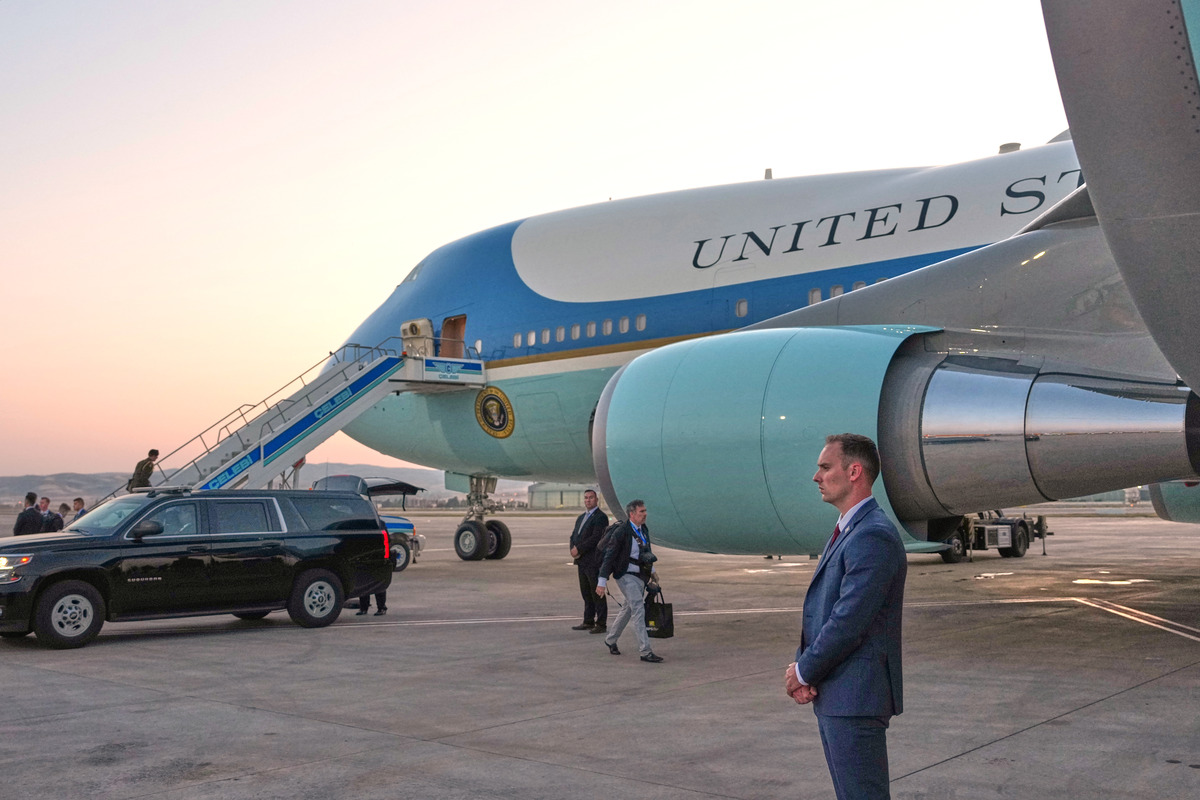
Reports suggest President Donald Trump covertly traveled on a smaller military plane due to an Iranian assassination threat. After leaving the NATO summit in Ankara, Turkey, he was discreetly moved to an Air Force C-32A through a catering truck, as reported by The Washington Post. This maneuver effectively made Air Force One a decoy, with White House staff remained alongside journalists. Newsweek has contacted the White House and Secret Service for comments.
Prior to the trip, Trump had announced his intention to fly on “former Air Force One” from the NATO summit to a U.K. airbase, instead of using a controversial Boeing 747-8 jet donated by Qatar. The security of the modified Qatari jet, unveiled by Trump in June, had been questioned, despite its touted luxury.
The Air Force’s C-32A
The C-32A is typically used by the vice-president, first lady, and senior politicians. When they travel aboard, it is known as Air Force Two. The aircraft’s interior consists of four sections. The first includes a communications center, ten seats, refreshment areas, and a toilet. The second section features a “fully-enclosed stateroom” with a changing area, entertainment system, fold-out bed, another toilet, and two first-class seats. A third segment has eight seats, while the rear holds 32 seats, a galley, and two toilets.
Comparing to Air Force One
The current Air Force One consists of two specially-configured Boeing 747-200B aircraft, known as VC-25. These have been modified into advanced flying command centers for the president. Compared to the larger VC-25s, the C-32 is a smaller military aircraft, an upgraded Boeing 757-200. Despite its size, it prioritizes security carefully.
Military sources indicate that the C-32 is designed for optimal visibility to detect threats quickly. Both the C-32 and VC-25 include numerous classified security and defense systems. The aircraft’s systems provide warnings for potential threats and have sophisticated navigation to prevent mid-air collisions. However, the $400 million jet donated by Qatar lacked some standard defense measures, like technology to counteract heat-seeking missiles.
The existing C-32s and VC-25s have been operational for years. New Boeing replacements are planned, with a timeline for delivery by 2028.
For more details on this story, contact Newsweek editors Ben Kelly and Cristina Diciu.