Brazil’s Supreme Court Tackles Cases Impacting Amazon and Indigenous Rights
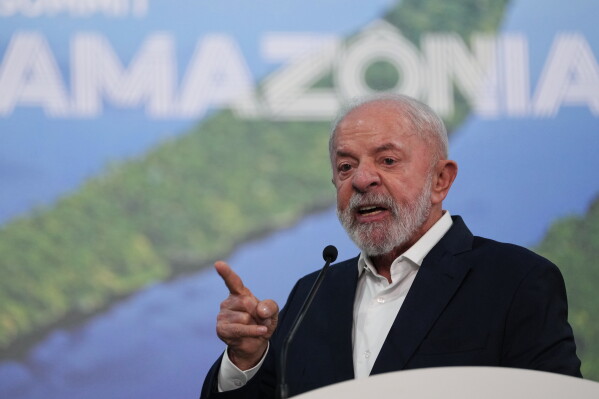
Brazil’s Supreme Court is addressing pivotal cases that could influence the Amazon rainforest and Indigenous communities relying on it. These cases involve Indigenous land rights, rollback of environmental protections, and infrastructural development. The common thread among them is reaching the court after being processed in Congress.
Recently, a largely conservative Congress passed laws that many environmentalists argue breach constitutional rights. Although President Luiz Inácio Lula da Silva’s administration, which promotes environmentalism, vetoed some laws, Congress overrode these vetoes. The Supreme Court now stands as a critical barrier against legislative moves perceived as anti-environmental.
President Lula, who has made strides in curbing deforestation and promoting eco-friendly investments, faces challenges in Congress dominated by agribusiness interests. According to Suely Araújo from the Climate Observatory, the administration often fights anti-environment bills but lacks the political clout to sway congressional votes.
Agribusiness, Brazil’s influential sector, holds sway in Congress and pushes laws diminishing environmental safeguards. This situation leaves the Supreme Court as a counterbalance, sustaining some of Lula’s environmental efforts.
Brazil’s stature as a leading soybean and beef producer underscores the tension between agriculture and forest conservation. China’s significant role as a trading partner highlights the economic stakes, with Brazil exporting considerable quantities of its agricultural products to China.
Preserving the Amazon is vital for climate stability, influencing weather patterns and carbon storage. The Supreme Court decision to eliminate the ‘time limit’ thesis significantly impacts Indigenous land claims, with discussions continuing on compensations and demarcation timelines.
On Wednesday, the court will review two additional critical cases. These include state legislation that ended the soy moratorium and a revamped environmental licensing law. The soy moratorium, important for controlling deforestation, crumbled after states removed incentives for adhering companies, prompting judicial intervention.
The licensing law fast-tracks projects posing considerable impacts, such as infrastructure or industrial endeavors. Environmental advocates expect the court to invalidate provisions allowing for inadequate self-licensing in moderate-impact projects.
The ministry of the environment has backed the soy moratorium, recognizing its role in mitigating deforestation and ensuring Brazil’s sustainable growth. The ministry continues to push for an effective environmental licensing framework aligning with economic expansion and ecological preservation.
The Associated Press (AP) climate and environmental reports enjoy private financial backing, though AP independently oversees its coverage. More details on their funding and ethics standards can be found on AP.org.