Trump Scales Back Military Drills with South Korea: Implications for U.S.-North Korea Relations
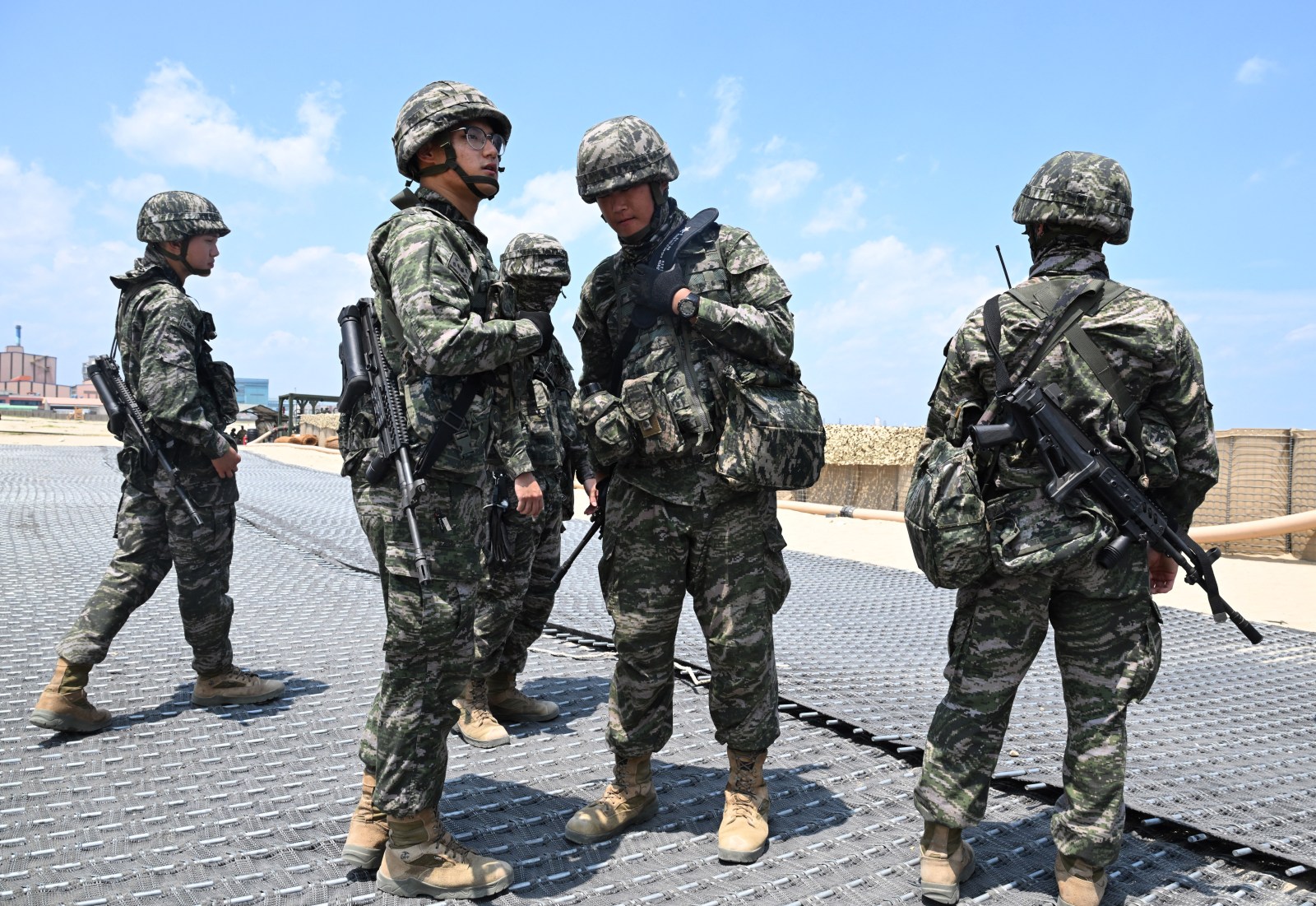
Donald Trump’s decision to reduce military exercises with South Korea raises the possibility of renewed talks with North Korea. This decision might open doors for Washington to negotiate on Pyongyang’s advancing nuclear program, as analysts suggest.
On Sunday, the U.S. president instructed Defense Secretary Pete Hegseth to cut back on annual U.S.-South Korea military exercises. Trump cited his positive relations with North Korean leader Kim Jong Un and Seoul’s lack of assistance in the war with Iran. Despite this directive, the planned military exercises began Monday.
During his first presidential term, Trump met Kim three times but failed to secure denuclearization agreements. Since then, North Korea has enhanced its nuclear capabilities, reportedly possessing around 60 nuclear weapons and sufficient material for at least 30 additional ones, according to a June 2026 report from a Stockholm-based think tank. Recently, Pyongyang conducted ballistic missile tests, violating United Nations bans.
Reactions to Trump’s Announcement
Trump’s statement on the social media platform Truth Social triggered concern among Democrats, Republicans, and South Korean officials. They worry this move may embolden North Korea and question the reliability of the U.S. as an ally in a complex geopolitical environment.
Evan Sankey, a policy analyst at the Cato Institute, speculated that scaled-back exercises might pave the way for new U.S.-North Korea negotiations. “Convincing Kim to relinquish nuclear weapons seems unlikely, yet talks could help cap his missile arsenal and fissile stockpile,” Sankey told Newsweek.
Jennifer Kavanagh of Defense Priorities described Trump’s order as both “necessary and strategically wise,” believing it aligns with U.S. interests. Newsweek sought comments from the White House and South Korean foreign ministry.
U.S. and South Korea Military Cooperation
South Korea houses America’s largest overseas military base, Camp Humphreys. Both nations regularly conduct joint military drills. The Ulchi Freedom Shield exercises began as planned, focusing on countering new threats like drones, GPS disruptions, and cyberattacks. Local authorities reported involvement of 18,000 South Korean troops.
North Korea has persistently criticized these exercises, labeling them a preparation for war. Trump claimed on Truth Social that these drills project “hostility” toward a supposedly “unthreatening and respectful” North Korea.
Senator Jack Reed, leading Democrat on the Senate Armed Services Committee, accused Trump of “flattering a dictator” by cutting back on drills. Republican Senator Thom Tillis argued Trump’s action “frees up North Korean troops” to aid Russia’s war effort.
South Korea’s Security Efforts
South Korean media criticized Trump’s move, suggesting it reflects weakened Korea-U.S. relations. Evan Sankey from CATO noted similarities to Trump’s prior cancellation of drills during 2018-2019 negotiations with Kim. While no current U.S.-DPRK talks exist, Sankey views scaled-back exercises as a potential precursor to diplomatic efforts.
Kavanagh noted joint drills with South Korea fail to deter North Korean and Chinese aggression. Instead, these exercises provoke military buildups and regional activities, including North Korean and Chinese drills or weapon tests. She advocated for South Korea taking full security responsibility amid U.S. resource constraints from the Iran conflict.
South Korea’s president, Lee Jae Myung, renewed his call for transferring wartime operational control from the U.S. to South Korea. This issue dates to the Korean War, which ended in 1953 with an armistice, not a peace treaty. Sankey suggested U.S.-North Korea talks could lead to a formal Korean War conclusion declaration beneficial to U.S. interests.