Tensions Rise as Russian Frigate with Hypersonic Missiles Moves Near German Coast
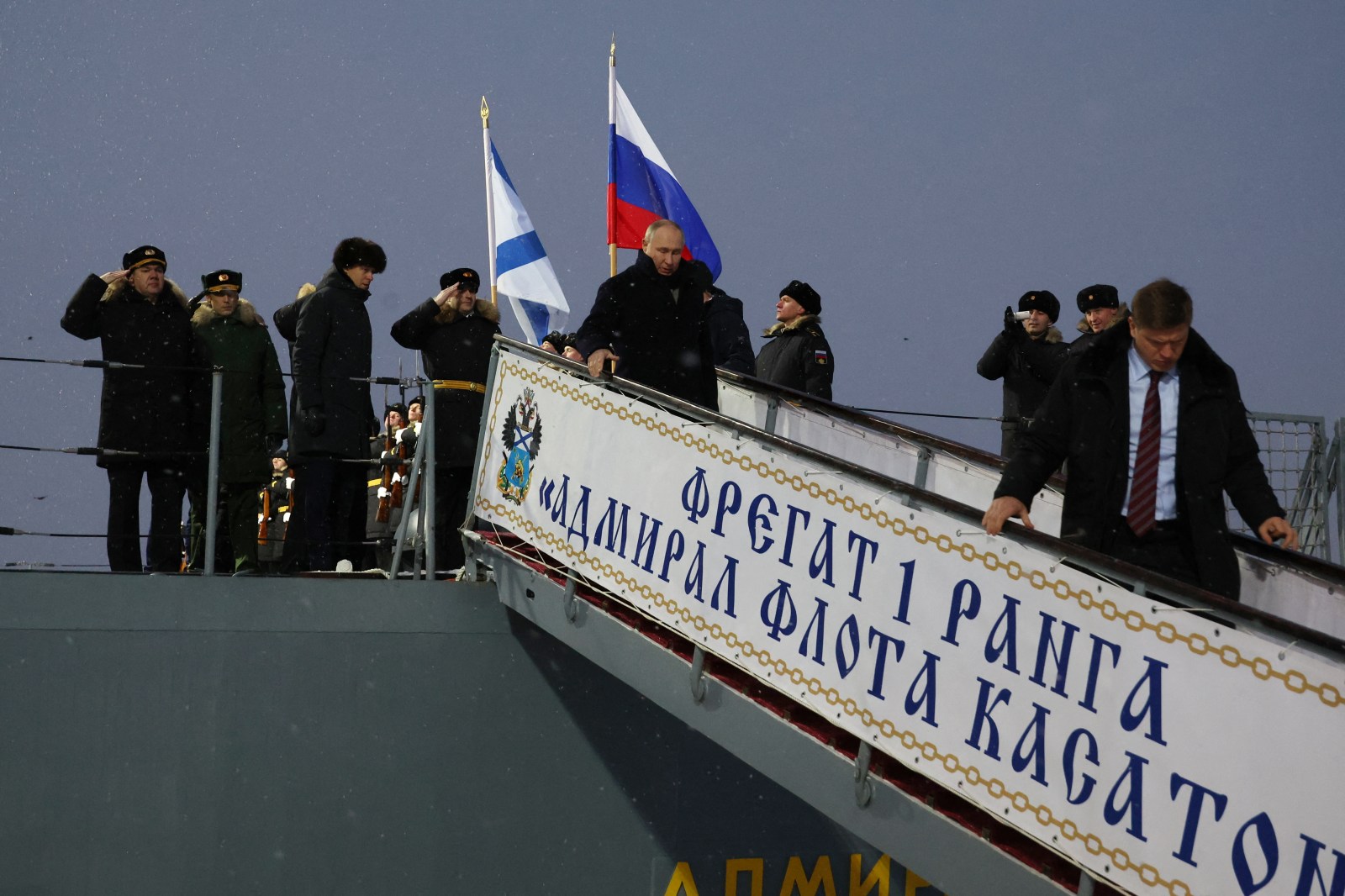
Russian Frigate’s Deployment
A Russian frigate, Admiral Kasatonov, has been deployed near the German coast, as reported by The Daily Telegraph. This movement follows Russian President Vladimir Putin’s warning of a retaliatory attack on British and EU vessels. The frigate, located off the coast of the island of Fehmarn, reportedly has Zircon hypersonic missiles on board.
The Zircon missiles, also known as 3M22 Zircon, are notable for their high speed, making it difficult for air defense systems to intercept them. These missiles have previously been used by Moscow to strike targets in Ukraine.
Admiral Kasatonov’s Capabilities and Movement
The vessel may have been operating with its location tracker turned off, creating uncertainty about its current position. According to German newspaper Kieler Nachrichten, Admiral Kasatonov was deployed to the Baltic Sea days after the arrival of the destroyer Admiral Levchenko in the region.
Newsweek has reached out to the German and Russian defense ministries for comments on the frigate’s movements and deployments.
Specifications of Admiral Kasatonov
Admiral Kasatonov was built in 2020 and is part of Russia’s Northern Fleet. It is one of the country’s most advanced vessels, capable of executing long-range strikes and engaging in anti-submarine warfare. Russian state media have shown images of President Putin visiting the vessel and its crew in Severodvinsk in December 2023.
According to Newsweek, the Zircon missiles on board have a range of approximately 660 miles. This puts NATO members like Germany, Denmark, Sweden, and Poland within reach, escalating tensions between Russia and NATO.
Potential Threats and Responses
A report cited by The Wall Street Journal warns of a potential attack by Moscow on NATO within weeks. This could involve a small-scale assault on Poland or a Baltic state to test NATO’s resolve. U.S. and NATO officials perceive a risk of escalation by Russia, possibly through a cyberattack or a small-scale incursion to challenge NATO’s unity and its Article 5 mutual defense commitment.
Putin’s Retaliation Threats
During recent exercises by Russia’s Pacific Fleet, President Putin expressed readiness to retaliate against British and EU ships that attempt to seize vessels linked to Russia, known as the ‘shadow fleet’. These ships are used by Moscow to circumvent oil sanctions.
Putin referred to such actions as ‘piracy and robbery’ and warned of a potential response. Additionally, Dmitry Medvedev, deputy chairman of Russia’s Security Council, stated that Russia reserves the right to attack any merchant ship belonging to an enemy state.
For further information, contact Newsweek editors Matthew Robinson and Shakeema Edwards.