China’s Strategic Move in the Arctic: A New Trade Route
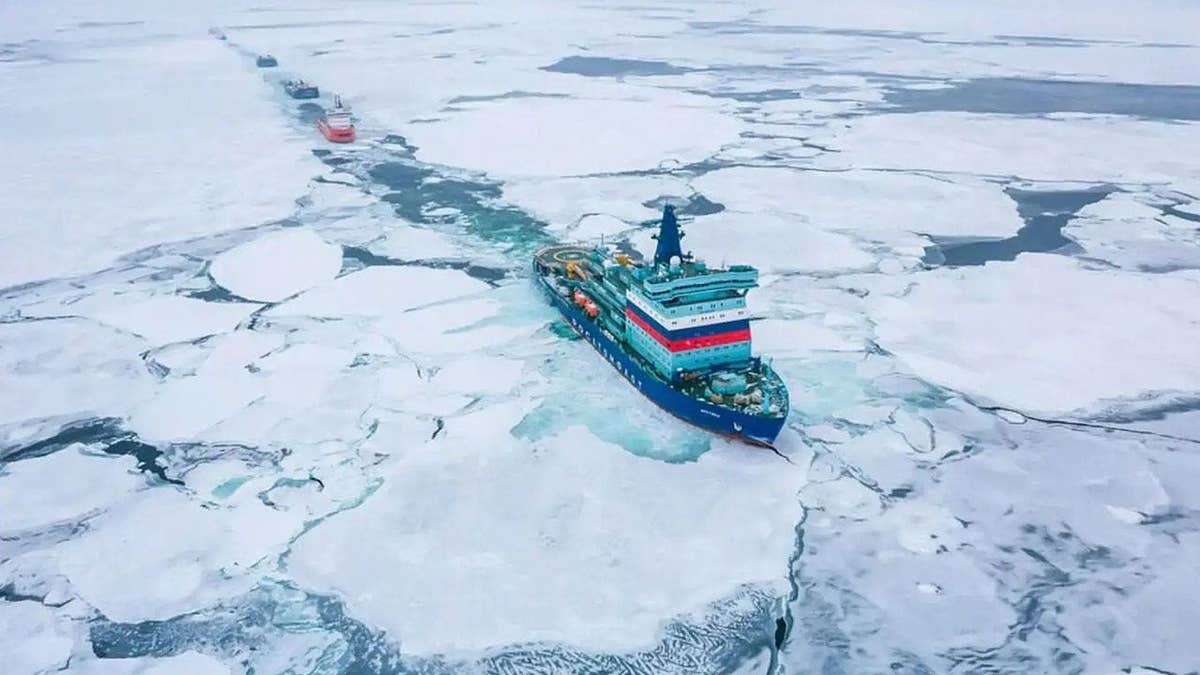
China is exploring the possibility of transforming the Arctic into a strategic trade corridor. This initiative involves launching regular seasonal container services to Europe through Russia’s Arctic region.
The scale of this service is currently modest, with over eight voyages planned this season. Despite this, expert analyst Gordon Chang emphasized that its strategic importance surpasses the number of containers making the trip.
China has a major strategic push on the Arctic for various reasons,Chang explained.The melting Arctic ice makes the Northern Sea Route along Russia’s north coast viable during summer months.
A Dubai-based Sea Legend Shipping vessel embarked on its journey from Ningbo-Zhoushan Port on August 15, destined for Europe via Russia’s Northern Sea Route. The trip to Felixstowe, England is expected to last approximately 20 days, as reported by China Daily on August 17.
This development coincides with concerns raised in a U.S. congressional commission staff report. It highlights that Russia’s growing dependency on Beijing, due to increased isolation from the West, provides China with increased leverage, including access to the Arctic region.
Chang stressed the need for a stronger U.S. presence in response to these developments. The U.S. needs more icebreakers to ensure our presence in the Arctic,
he stated.
An official from the White House noted the Arctic’s critical importance to U.S. national security and the economy. As an Arctic nation, the U.S. remains committed to pursuing its security and economic interests in the region amid growing competition from China and Russia.
A fact sheet released on August 20 by the U.S.-China Economic and Security Review Commission described the pressure on Russia to consent to greater Chinese presence in the Arctic. China and Russia are working together on the Arctic LNG 2 project, in which Chinese enterprises hold a 20% stake. Furthermore, both nations are developing commercial shipping along the Northern Sea Route and have a joint venture to manufacture ice-class vessels.
According to the Pentagon’s 2024 Arctic Strategy, climate change is boosting accessibility in the region, attracting increased interest from China. The strategy warned that collaboration between China and Russia could alter Arctic stability.
The Northern Sea Route offers a significant deviation from traditional shipping paths for China-Europe trade, bypassing key bottlenecks like the Strait of Malacca and the Suez Canal, according to Chang.
The recent U.S. commission report highlighted the asymmetric relationship between China and Russia, with Russia increasingly reliant on China since its invasion of Ukraine. This dependence provides China with leverage for securing discounted energy and access to military technology without a formal alliance.
Energy factors heavily in this dynamic. The report noted that China accounts for about half of Russia’s crude oil exports, while Russian oil represents merely one-fifth of China’s oil imports. Since the Ukraine invasion, China has spent roughly $372 billion on Russian fossil fuels.
Russia is increasingly deploying the Arctic route to transport oil east. By August 11, it had dispatched seven crude shipments, totaling nearly 6 million barrels, to Asia via the Northern Sea Route, half the total transported during the entire 2025 season. China stands as the primary recipient of these shipments.
The enhanced Arctic activity raises concerns in Washington about Chinese and Russian collaboration near Alaska. Chang identified the Bering Strait, a point of vulnerability on the Arctic route, as strategically important.
Military relations between China and Russia are expanding as well. The U.S.-China commission fact sheet reported over 119 joint military exercises involving the two nations by April 2026. In July, their naval operations covered various domains, including submarines and drones. Significantly, Chinese bombers entered the Alaskan Air Defense Identification Zone during a joint patrol with Russia in 2024.
Chang emphasized the importance of responding to Chinese and Russian pressures in the Arctic, asserting that a strategic presence in the region is unavoidable.