Potential Coastal Flooding in California Due to El Niño and Tidal Convergence
Concerns of Coastal Flooding
A powerful El Niño, combined with super king tides and sea level rise driven by climate change, could lead to unprecedented coastal flooding in California this winter. Officials are already witnessing unusually high tides. These swells are causing erosion on beaches, damaging infrastructure like parking lots and bathrooms, and even uncovering long-hidden coastal structures. This is occurring before the full impact of El Niño takes hold.
El Niño’s warmer offshore waters can elevate sea levels by up to a foot or more, which poses a significant threat to low-lying areas,
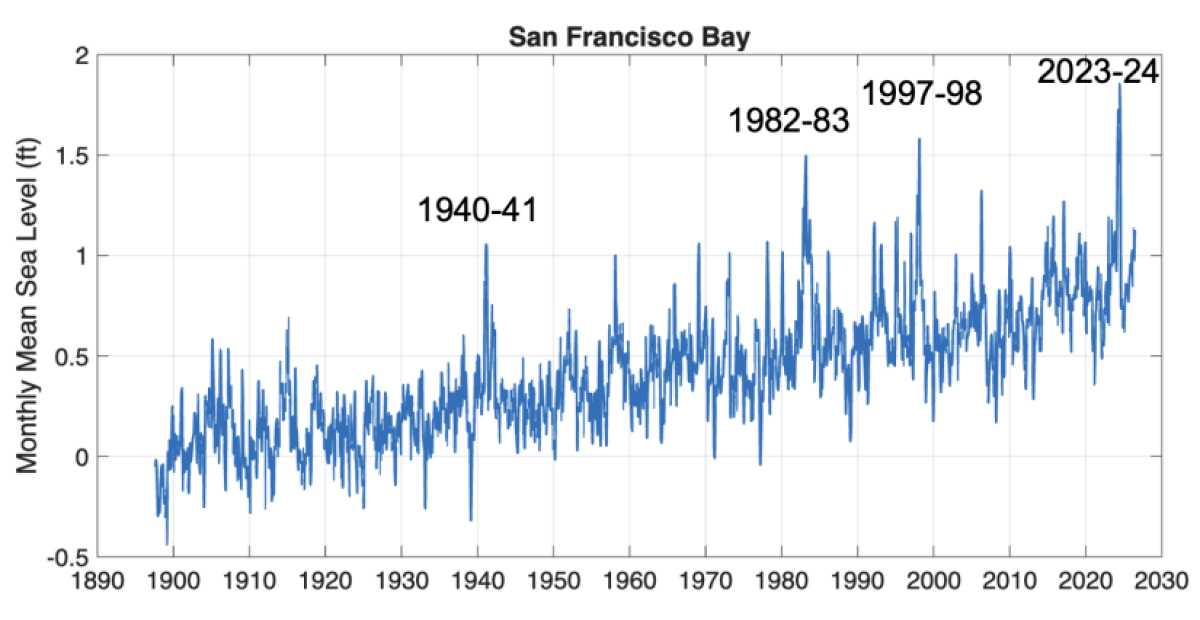
explained Jonathan Warrick, a research geologist from the U.S. Geological Survey. San Francisco Bay, for instance, has seen a 1-foot increase over 125 years, a change attributed to human-caused climate change.
Historical Patterns
Daniel Swain, a climate scientist at UC, expressed concern about potentially record-high sea levels in California. Past El Niño events in 1982-83, 1997-98, and 2023-24 have seen San Francisco Bay reach record monthly sea levels.
El Niño could exacerbate coastal erosion and flooding due to increased rainfall. Water on land struggles to drain when ocean levels rise, warned Warrick. The warming trend in the central and eastern tropical Pacific Ocean, notably affecting Latin America’s coast, results from ocean water expanding as temperatures rise. NASA’s June visualization showed sea levels more than half a foot above baseline, particularly off the Pacific coast of countries like Peru and Ecuador.
Tidal Cycles and Predictions
California has experienced a marine heatwave independent of El Niño. However, the National Oceanic and Atmospheric Administration suggests recent heating in Southern California may partly be due to El Niño.
Recent highs in tides have been reported along California’s coast, with Humboldt County’s North Spit experiencing tides 9 inches above forecasts. The timing of El Niño’s influence coinciding with peak king tides creates risk. King tides occur around summer and winter solstices. Longer cycles like the 18.6-year lunar node and 4.4-year lunar perigee tidal cycles also affect tidal forces.
According to Mark Merrifield from the Scripps Institution of Oceanography, strong king tides near Christmastime will compound the high sea levels from El Niño. The 1982-83 El Niño, coinciding with the 4.4-year cycle, led to significant coastal flooding in California.
Timing and Impact
Thanksgiving Day, Christmas Eve, and January 22 are when the highest tides are expected. These tides, if paired with winter storms, could lead to coastal erosion, flooding, and infrastructure damage.
Jeremy Smith, a coastal engineer, noted potential extreme flooding in coastal areas like Mission Beach in San Diego and Newport Beach. El Niño’s climate pattern elevates the likelihood of above-average precipitation, with the 1982-83 winter being California’s wettest recorded season.
The National Weather Service forecasts above-average rainfall this winter for California and much of the southern U.S. This prediction covers January to March based on data from the Climate Prediction Center.