Courtroom Battle Intensifies in Lindsay Clancy Murder Trial
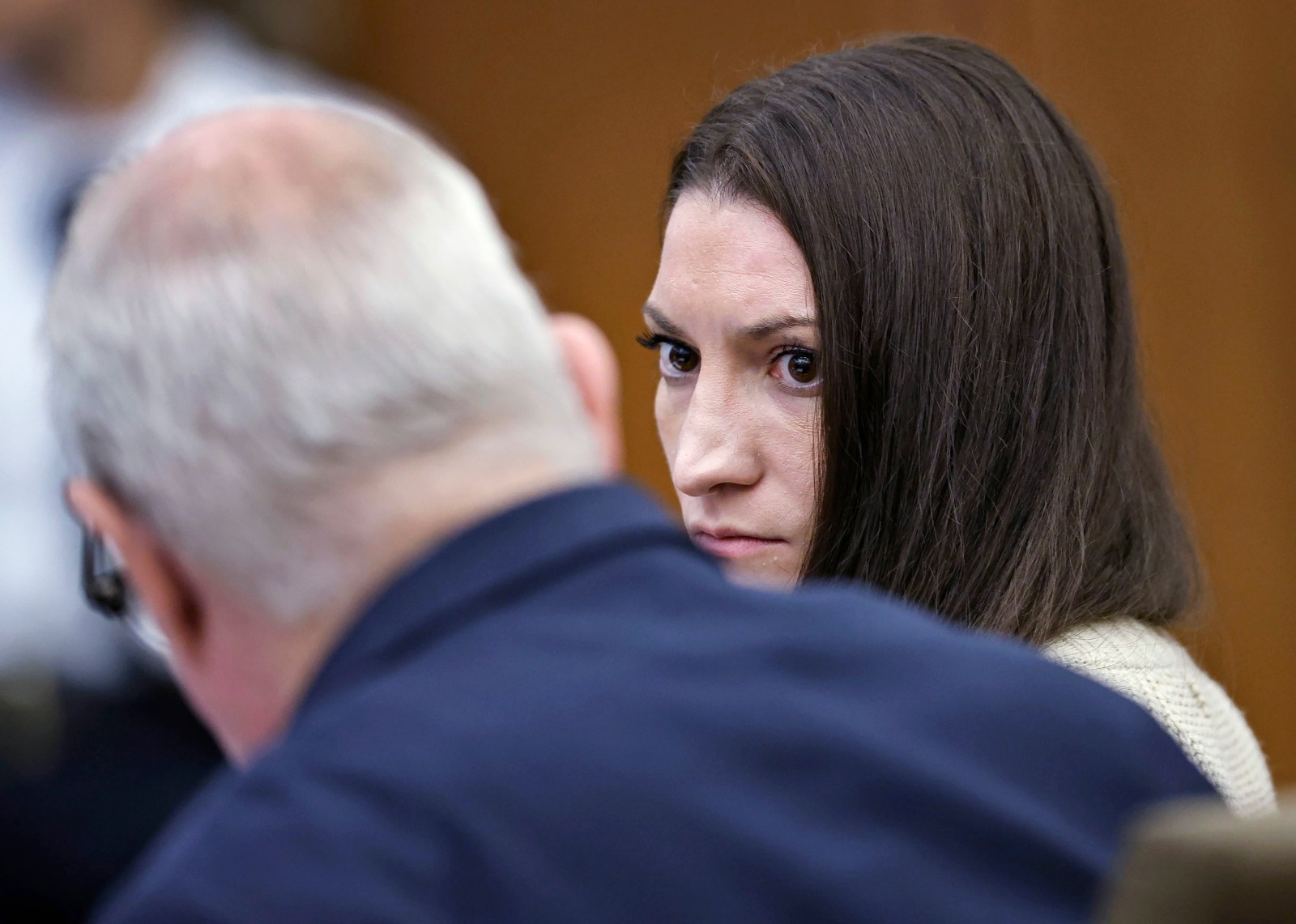
Heated Defense Challenge in Clancy Trial
The murder trial of Lindsay Clancy witnessed a fierce exchange as defense attorney Kevin Reddington challenged prosecution psychiatrist Dr. Avram Mack’s assessment of Clancy’s mental state. Mack contended that Clancy was severely depressed, yet not psychotic, when she killed her three children. Reddington’s cross-examination aimed to dispute this claim, focusing on whether Clancy was experiencing postpartum psychosis, including a command hallucination, absolving her of criminal responsibility.
During the trial, Mack testified that Clancy had a major depressive disorder. He found no evidence of psychosis during the killings. Mack explained to jurors that psychosis doesn’t inherently hinder one’s capacity to recognize right from wrong. This statement became a focal point of Reddington’s scrutiny.
“There’s no reason why psychosis in and of itself inhibits a person from knowing right from wrong,” Mack testified.
Defense’s Examination of Dr. Mack
Reddington scrutinized Mack’s qualifications, his prior testimonies in criminal cases, and the methods used to evaluate Clancy. He referenced previous instances where Mack’s testimony faced criticism or rejection in courts across Pennsylvania, New Jersey, and Florida. This approach aimed to undermine the credibility of Mack’s opinion.
During the interrogation, Reddington confronted Mack regarding disagreements over case assessments. Mack disagreed with Reddington’s portrayal.
Reddington steered the questioning towards postpartum psychosis. He challenged Mack’s understanding of the disorder and his approach post-childbirth. Intense exchanges ensued, occasionally requiring judicial intervention, with Mack delivering detailed responses to Reddington’s pointed inquiries. Court observers noted jurors actively engaged, taking notes throughout the discussion.
Religious Testimony Sparks Mistrial Request
Dr. Kirk Heilbrun, another prosecution expert, introduced a religious element, discussing Clancy’s Catholic faith. He speculated on her belief about ascending to heaven with her children. Following this, Heilbrun queried Clancy about suicide being a “mortal sin.” Reddington objected, accusing the prosecution of misconduct, and demanded a mistrial.
Judge William Sullivan dismissed the mistrial plea, condemning the religious testimony, instructing jurors to ignore it.
“The religion that the defendant was raised with is absolutely an inappropriate area of testimony,” Sullivan instructed the jury.
Religion was a contentious issue before, adding complexity as the trial neared closing arguments.
Disparate Diagnoses Among Prosecution Experts
Clancy’s diagnosis varied among prosecution experts. Heilbrun diagnosed bipolar II disorder, while Mack identified major depressive disorder, without evidence of psychosis. Despite joint interviews, independent report preparation led to differing conclusions.
The key agreement among prosecution experts remained; neither believed Clancy was psychotic during the killings. Heilbrun suggested Clancy attempted suicide, fearing her children would suffer if left alone.
Heilbrun pointed to Clancy’s response to her husband, following the event, as inconsistent with external command-induced actions.
He described severe symptoms, distinguishing them from acute psychosis, emphasizing her coherent behavior upon hospital discharge.
Exploring Medication Effects
Edward L. Jones III proposed alternative explanations in Newsweek, linking psychiatric medications to Clancy’s mental state changes. Jones compared Clancy’s case with David Crespi’s, who faced similar charges after medication use.
Jones highlighted Clancy’s distressing symptoms post-medication initiation, referencing her feedback on Remeron effects. Clancy was prescribed various medications including Zoloft, Prozac, and others. Jones noted Canadian drug warnings and FDA adverse-event data illustrating behavioral changes during medication phases.
Jones urged further scrutiny of medication history alongside psychiatric diagnoses. He noted symptomatic parallels, advocating for deeper exploration as the trial approached conclusion. Although asserting no direct causation, Jones suggested medication effects could be pivotal to understanding Clancy’s behavior alteration before the tragedy.
The defense argued Clancy’s break from reality, yet prosecution experts disagreed on psychosis presence.
Trial Conclusion Approaching
As the trial reaches its final phase, Heilbrun’s testimony will continue alongside additional prosecution rebuttals. Following Monday’s controversy, Judge Sullivan expects closing arguments on Wednesday.
The jury faces contrasting accounts. Weeks of testimony lead them to evaluate: Did Clancy experience a psychotic break or a severely depressive suicidal crisis?