Rebuilding American Pharmaceutical Independence
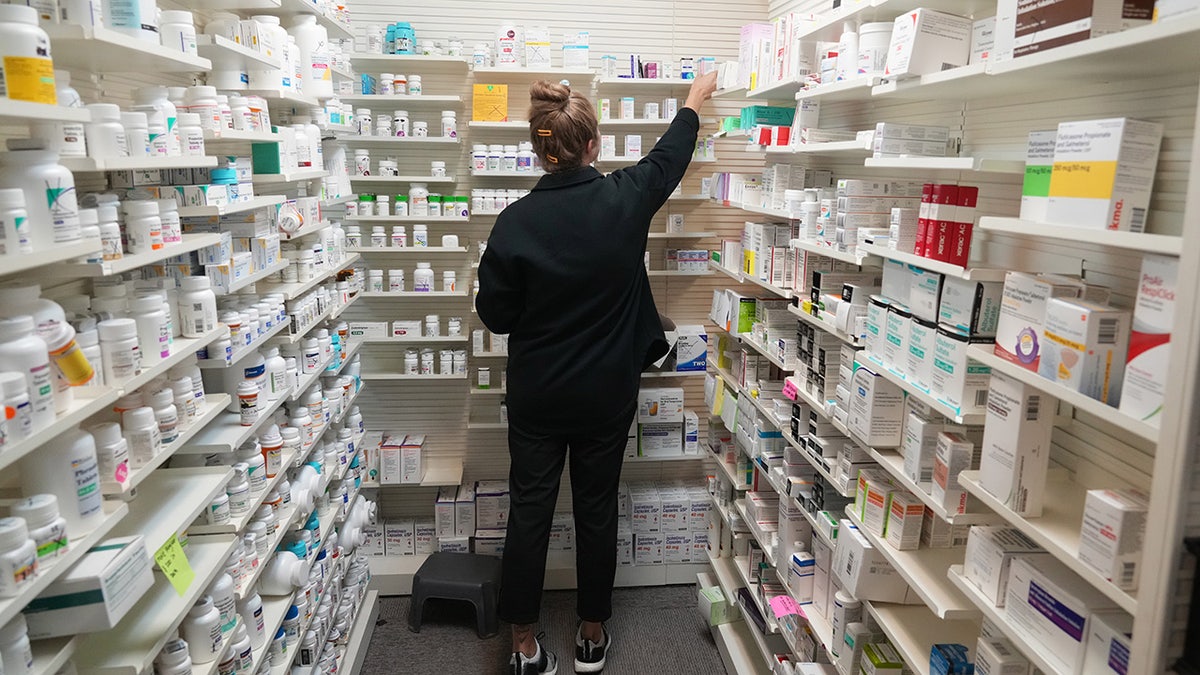
The United States currently produces about 3% of the world’s active pharmaceutical ingredients, while China accounts for 45%. A Johns Hopkins study reveals that China supplies over 60% of the essential components for American antibiotic manufacturers. This reliance reflects more than a trade imbalance; it compromises sovereignty. The health of military personnel, leaders, children, and citizens depends on an adversary that could control the availability, access, and safety of essential medications.
Decades of offshoring weakened the U.S. industrial base, exporting key manufacturing jobs. Until 1981, the U.S. produced 25% of the world’s pharmaceutical ingredients. Now, China dominates nearly half of the global market. Lacking domestic production of antibiotics and facing unregulated chemical imports from adversaries, a nation loses its ability to self-govern. The Council on Foreign Relations describes this dependency as a ‘pharma choke point,’ with reliance spreading from generics to advanced biologics.
China has demonstrated a willingness to weaponize supply chains, affecting rare earths and semiconductor inputs. There is no reason to assume the Chinese Communist Party would act differently with medicine, especially with the capability to harm entire populations. The networks providing Chinese precursors to American pharmacies are also linked to the fentanyl distribution chain through Mexico. The University of Virginia’s National Security Data and Policy Institute depicts Chinese suppliers and Mexican cartels as a cohesive supply chain, sending bulk chemicals, converting them into pills, and pushing them across the U.S. border.
The impact of chemical trafficking is evident in afflicted Midwestern communities. Congress has responded with the BIOSECURE Act, enacted in December 2025, restricting federal procurement of biotech products tied to foreign adversaries. Also, former President Donald Trump implemented tariffs targeting synthetic opioid supply chains. These measures are significant but do not rebuild manufacturing.
Legislation cannot construct factories, create jobs, or secure the nation. To reduce China’s hold on supply chains, investment in domestic manufacturing is crucial. Building facilities in the U.S. is vital, as demonstrated by Ohio. The state is becoming a U.S. semiconductor manufacturing hub, integrating investment, infrastructure, and skilled labor. Ohio’s business environment could similarly foster pharmaceutical production, as CNBC recently ranked it first for business and infrastructure.
Encouraging American companies to establish advanced manufacturing in the Midwest achieves two goals: promoting secure employment and closing a defense gap. The choice is straightforward—enhance U.S. pharmaceutical production now or face severe consequences if Beijing leverages medicine supplies as a weapon.
The border remains insecure while Chinese chemical suppliers assist cartels. The military remains unprepared if battlefield antibiotics come from potential adversaries. American safety is compromised if medicine supply chains depend on a rival’s goodwill.
Building domestic plants, bringing jobs back, and prioritizing medical independence must be a national focus.
Tricia McLaughlin served as assistant secretary for Public Affairs at the Department of Homeland Security under the Trump administration.