United Russia Wins Record Seats Amid Election Speculation and War Concerns
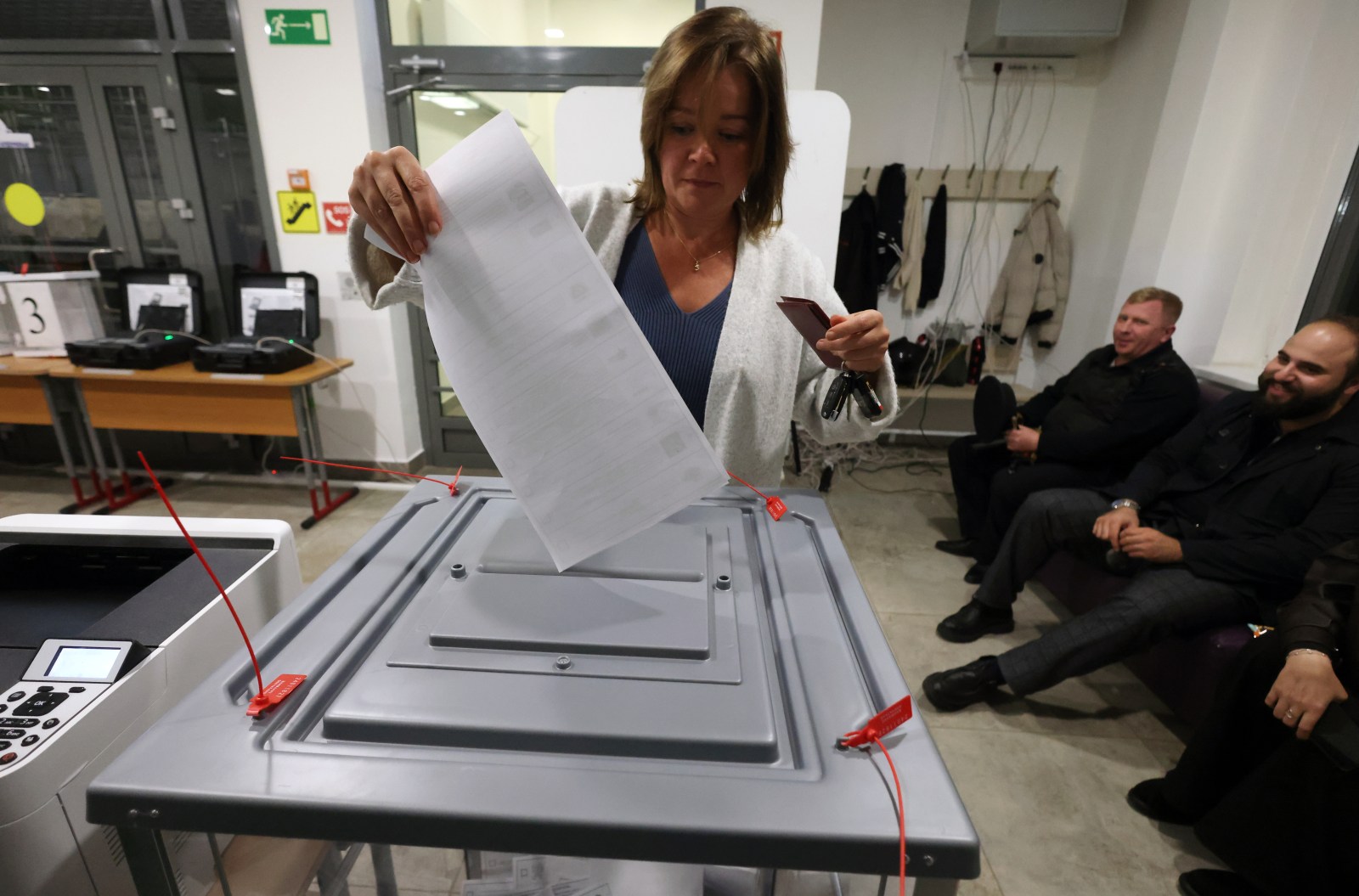
The United Russia party has secured an unprecedented number of seats in the Russian parliament after an election marked by reports of manipulation. President Vladimir Putin may view this outcome as support to continue his military actions in Ukraine. The Central Election Commission reported that United Russia, linked to Putin, is slated to claim 355 of the 450 available seats in the State Duma. This surpasses the party’s previous high of 343 seats in 2016, achieved with nearly 58% of the party-list vote and a strong presence in single-member districts.
The election, conducted over three days, was marred by allegations of ballot stuffing and technical malfunctions. Analysts observed an inflated voter turnout, against a backdrop of ongoing inflation, new U.S. sanctions, and a wartime economy affecting many Russians. Newsweek reached out to the Central Election Commission for comment.
Sergei Guriev, a former rector of Moscow’s New Economic School and now a critic based in London, expressed concern that Putin might interpret the election results as a sign that Russians are resilient enough to endure economic hardship as he pursues his objectives in Ukraine. Putin’s statement acknowledging the war’s expense supports this notion.
“Putin already said that the war is not free; it is costly,” Guriev remarked. “He will use this result as confirmation that Russians are happy to tighten their belts.”.
Potential for Mass Mobilization
Questions loom about whether this election might lead to a new mass mobilization of Russian troops. Kyiv has cautioned against such a development, suggesting it could be a response to Russian losses in Ukraine. Estimates indicate up to 1,000 casualties daily. The Kremlin denies any forthcoming draft, yet it has made preparations for a streamlined call-up process, reinforcing efforts to limit escape options for potential draftees.
Reports surfaced of Russian elites taking measures to secure assets abroad and encourage exits from the country. Guriev noted that faced with increasing military expenditures and deficits, Putin might consider forced conscription a necessary measure despite the political ramifications.
“There is a political cost to the mobilization and then there is economic cost in hiring a mercenary army,” Guriev said, adding that Putin “needs to compare the political cost, and he may actually interpret this vote as saying actually Russians are OK [with a draft].”
Elections Reflect on Putin’s War
The anti-war party Yabloko was barred from participating due to alleged election law violations, casting doubt on the fairness of the elections. United Russia’s vote share increased by 8% from 2021, with official turnout hitting nearly 60%, the highest since 2003. Elections analyst Farida Rustamova criticized this data as “unrealistic,” attributing it to the nonexistence of competitive campaigns. The Kremlin, she suggests, desires a compliant parliament to navigate any unpredictable shifts, possibly related to the war’s progress.
Alongside United Russia, four other parties are projected to gain seats, with the Communist Party potentially taking 40. The nationalistic Liberal Democratic Party, New People, and A Just Russia are also likely to secure representation. Russia’s Foreign Minister, Sergey Lavrov, claimed the results endorse support for Putin’s foreign policy. Dmitry Medvedev, now deputy chair of the Security Council, emphasized United Russia’s backing of Putin’s strategic aims.
Tatiana Stanovaya noted the election results might bolster Putin’s perception of war support, despite rising calls for its conclusion. This sentiment has not translated into increased support for any major opposing parties.
Economic Challenges Facing Putin
The war’s economic demands appear to be a growing challenge for Putin. Sergey Gref of Sberbank warned of economic stagnation. Andrei Klepach from VEB was removed from his role after noting Russia’s lagging economy relative to global powers. Ukrainian drone attacks and supply issues are making the war more palpable to Russians.
“Russians are asking a lot of questions, and of course the objective of Ukrainians now is to deliver this message that this is not just a distant war,” Guriev explained. “That of course reduces support for the war, and that eventually creates openings for people around Putin to be more concerned about the war and less afraid to speak publicly about this.”
Public criticism from Russian officials might signal a shift, positioning themselves for a potential political change, though the outcome remains uncertain. Guriev added, “This is, as Churchill would say, ‘like bulldogs fighting under a rug.'”