FBI Investigation and Alleged Political Corruption Involving Sen. Susan Collins
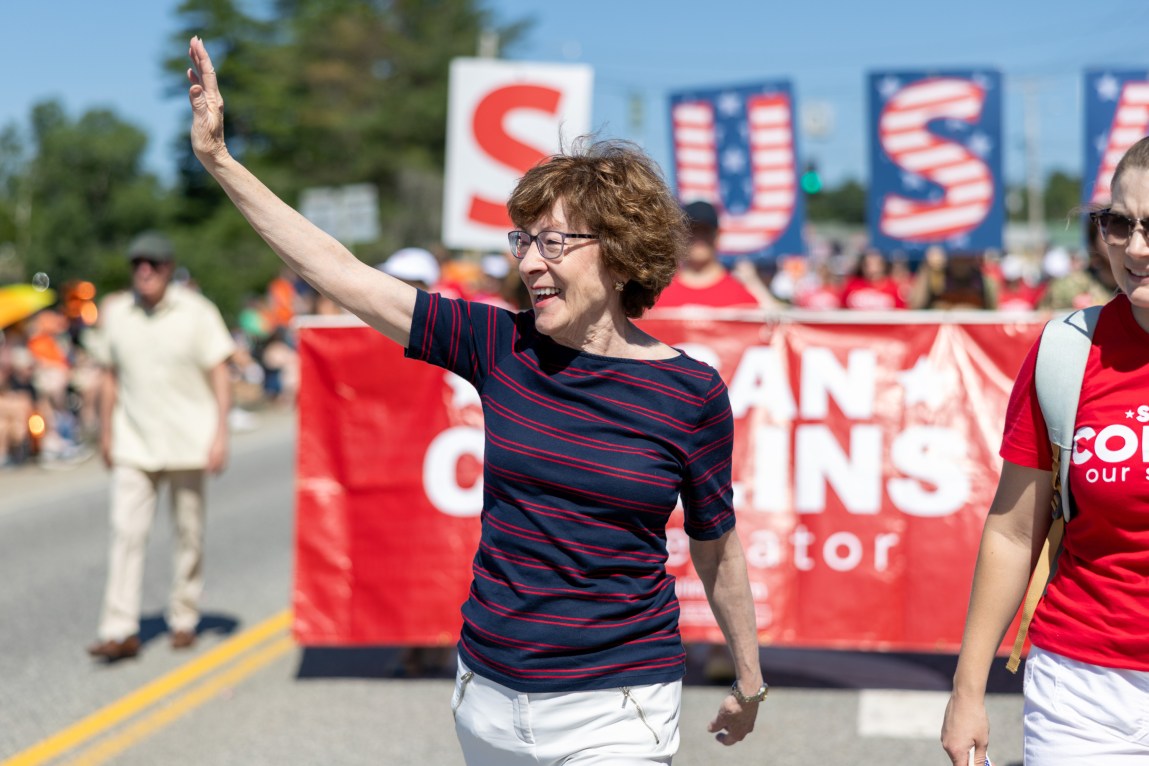
In 2024, the FBI attempted to initiate a comprehensive investigation into alleged pay-to-play activities between Senator Susan Collins and a major donor, according to records and emails. The donor, a former defense contractor, admitted that his company secured millions in federal contracts by financially backing powerful politicians. However, when Donald Trump returned to office, the investigation faltered due to his sweeping overhaul of the FBI, leaving a gap in understanding the machinations of Washington politics.
In late 2019, a prominent fundraiser for Senator Collins faced a crucial meeting at a Corner Bakery in Washington, D.C. For the first time in her extensive Senate career, the Republican senator from Maine risked losing her seat. Collins was struggling in the polls due to President Trump’s low approval ratings, and her fundraising lagged behind her expected Democratic opponent. Scott Reed, head of Collins’ super PAC, sought to bridge this fundraising gap by meeting with three executives from Navatek, a Hawaiian defense contractor. A year prior, Collins had assisted Navatek in obtaining a substantial Navy research contract in Maine.
During the meeting, Reed reportedly requested a $500,000 donation. For the company to offer or Collins to accept donations for official actions would be criminal bribery. Nonetheless, Navatek aimed for more government contracts in Maine and proposed a large contribution in exchange for assured federal funding. Navatek planned to obscure the donation source using a shell company, reassuring the CEO that Collins would know the money’s origin. Following this meeting, Navatek’s CEO, Martin Kao, sent an initial $150,000 to Collins’ super PAC using the shell company. Emails revealed Collins committed to securing $32 million in naval contracts for Navatek.
Kao later discussed the Corner Bakery meeting with FBI agents and federal prosecutors, unveiling a more extensive pay-to-play operation involving influential Congressional figures.
Over a series of interviews, Kao explained his operations in detail, naming numerous lobbyists, staffers, and Congress members involved in trading cash for contracts, and admitted Navatek’s government work held little real value. Despite credibility issues, the FBI found his accounts corroborated by thousands of seized records.
By the end of 2024, investigative agents possessed enough evidence to pursue a far-reaching bribery probe involving key lawmakers across party lines. Nonetheless, Trump’s re-election led to a Justice Department purge, halting the investigation due to massive personnel losses.
The ProPublica investigation independently verified much of Kao’s revelations, which suggested that Collins remained a significant benefactor to Navatek. Collins secured multimillion-dollar contracts for the company while requesting donor support, corroborated by ProPublica’s examination of emails.
Senator Collins did not specifically respond to inquiries regarding the Corner Bakery meeting, her ties to Kao, or appropriations for Navatek. Her deputy chief of staff labeled Kao’s allegations as baseless. Collins’ campaign was not involved in discussions between Kao and the super PAC, and her office cooperated with the FBI inquiry. Collins’ campaign returned the illegal donations Kao had made.
On the campaign trail, Collins often highlights the funding she garnered for Maine while presiding over the appropriations committee, a strategy that Collin helped secure contracts for Navatek. Her office influenced Navy officials to grant specific contracts to Navatek, bypassing the standard competitive awarding process.
Emails revealed her staff informed the Navy about the intended contractor shortly after securing funding in the budget. Reed, aware of Kao’s $150,000 anonymous donation, assured the donation’s recognition, with evidence showing someone conveyed the donation information to Collins.
Navatek’s notoriety grew under Kao’s management. Originally a small Hawaiian engineering firm founded in 1978, Navatek expanded its operations intensely under Kao’s leadership by cultivating political connections and receiving substantial federal funding. Navatek under Kao targeted congressional appropriators, managing to funnel federal money towards the company’s ventures through strategic donations and lobbying efforts.
Kao established a systematic approach involving payments to political campaigns in exchange for legislative support. Navatek documented interactions with lawmakers, lobbyists, and even employed insiders to ensure legislative pieces included favorable language for Navatek contracts. Kao and strategists perceived political contributions as essential to their operations, with insiders claiming a fundamental transactional nature to certain Congressional offices.
Despite demonstrations of support and technical prowess, Navatek’s engineering projects rarely resulted in practical military products, revealed by internal evaluations and employee insights. The FBI investigated Kao’s interactions with Collins, including a promise of $8 million in research funding following political donations.
Kao coordinated substantial donations from family members, raising funds for Collins’ campaign while leveraging Navatek proposals into defense budgets. He even improvised donations from relatives to Philip Collins when nearing legal caps, offering assistance in her campaign efforts.
Navatek’s tactics and expansion plans hit a critical juncture in 2020 amid investigations and financial scrutiny. The Campaign Legal Center noticed questionable entries in Collins’ super PAC financial reports, suspecting the Society of Young Women Scientist and Engineers to be a façade for undisclosed major donations, with subsequent investigations confirming it as linked to Kao.
As the situation unfolded, Kao allegedly devised cover-up strategies attempting to legitimize the society by distributing scholarships, with internal communications exposed during civil litigation.
Meanwhile, Kao encountered legal challenges related to Paycheck Protection Program frauds. His actions drew criticism and exposure, ultimately leading Navatek into federal investigation after he was reported for infractions. The company underwent management restructuring, severing ties to its founder’s practices, reinstating its reputation with governmental compliance.
Kao faced multiple charges, later pleading guilty, seeking leniency through comprehensive cooperation with investigators. Although incarcerated, Kao cooperated with agents and prosecutors, exposing the mechanics of donations and political favoritism he orchestrated.
As Kao’s revelations remained largely unexplored due to political reshuffling, the broader investigation stalled under changing Justice Department directives.
Investigations pursued potential collusion in Congressional settings, yet proactive agency efforts were obstructed under Trump’s administrative overhaul, silencing potential inquiries into his revelations.