Concerns Over Federal Agents at Polling Places Spark Legal Action
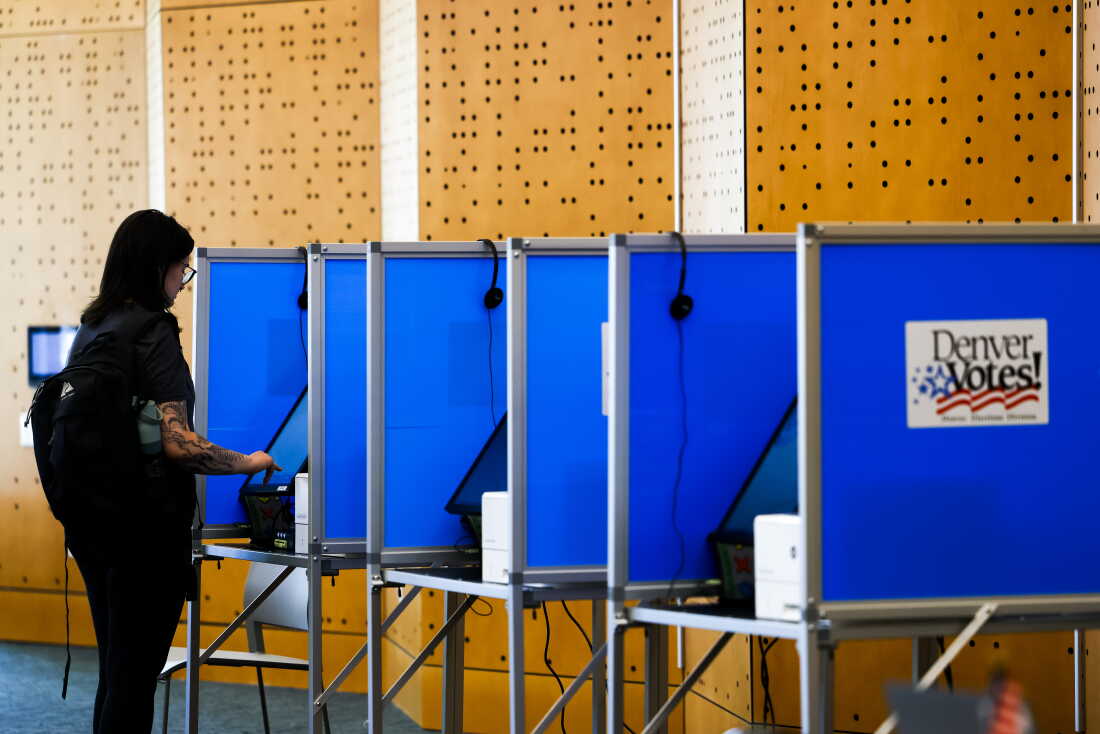
During Colorado’s primary election, a voter cast her ballot at the Central Library in Denver. Paul López, the clerk and recorder in Denver responsible for overseeing elections, has observed a rising worry among voters this year. Many ask at meetings, ‘What should we do if federal agents appear at the polls?’
Federal interference at polling locations is illegal, yet López and other election officials, along with civil rights groups, are vigilant in addressing such a possibility. Members of the Trump administration have suggested that federal officers might be present at polling places.
Last week, López joined a coalition that filed a lawsuit to block federal agents from being deployed to polling locations under various federal laws. Civil rights groups and unions launched another lawsuit, reported first by NPR, targeting this issue.
Asked about deploying federal agents to polling places, President Trump expressed he would do ‘anything necessary’ to ensure honest elections. Markwayne Mullin, Secretary of the Department of Homeland Security, mentioned that Immigration and Customs Enforcement (ICE) agents could serve warrants at polling sites. Tom Homan, border czar, informed Fox News that agents wouldn’t be conducting raids at polling locations. ICE, DHS stated, ‘is not planning operations targeting polling locations.’
‘ICE conducts intelligence-driven targeted enforcement, and if an active public safety threat endangered a polling location, arrests may result from targeted action,’ noted DHS. Legal residents adhering to laws should not fear such enforcement.
In a congressional hearing, FBI Director Kash Patel didn’t explicitly dismiss the presence of FBI agents at polls. He emphasized adherence to the law, though. Reports emerged during primary elections in several states concerning federal law enforcement activity near or inside polling places.
DHS has escalated efforts to identify non-U.S. citizens on state voter rolls, despite prior audits indicating rare cases of noncitizen voting. Their actions and communication tactics are impacting voter sentiment. A University of California San Diego poll showed that roughly 40% of voters now think ICE agents are likely at their voting locations. Voters of color expressed more fear about potential questioning by immigration authorities, affecting voter turnout.
López informed voters that any intimidation by federal officers would lead to arrests. ‘We have a plan for such scenarios, and it won’t be favorable for ICE or other agents,’ he stated.
The federal lawsuit, which López supports, argues against armed federal officers at polling places, citing laws dating back to the Civil War. Brian Netter of Democracy Forward described the administration’s statements as a ‘striking departure from established U.S. law.’
Filed in Washington, D.C., the latest lawsuit argues the administration’s statements violate the Voting Rights Act of 1965, which prohibits voting intimidation. The lawsuit claims flawed methodologies and inaccurate data may lead to the unlawful detainment of citizens, especially from minority communities.
A whistleblower report exposed DHS’s Unlawful Voter Initiative’s haste and unreliable data, flagging citizens wrongly. DHS defended its efforts as ‘conducted diligently.’
Recent charges brought against several individuals for alleged illegal voting also concern the lawsuit. It claims the rhetoric and immigration enforcement targeting communities cause voter intimidation, specifically among minority groups.
DHS responded to profiling allegations with dismissal, considering them ‘disgusting.’ The White House clarified the president hasn’t deliberated on deploying ICE at polling places.
Bethany Li from the Asian American Legal Defense and Education Fund highlighted that the fears echo similar civil rights concerns during the Voting Rights Act’s inception. ‘These actions aim to deter voter intimidation,’ Li emphasized.
Groups advocating the latest legal steps, including Mi Familia en Acción and NAACP, affirm voters should not be discouraged. Héctor Sánchez Barba of Mi Familia en Acción advised, ‘Know your rights, plan your vote, and speak up.’