Diplomatic Tensions at the National Archives Museum: Trump and Xi’s Visit
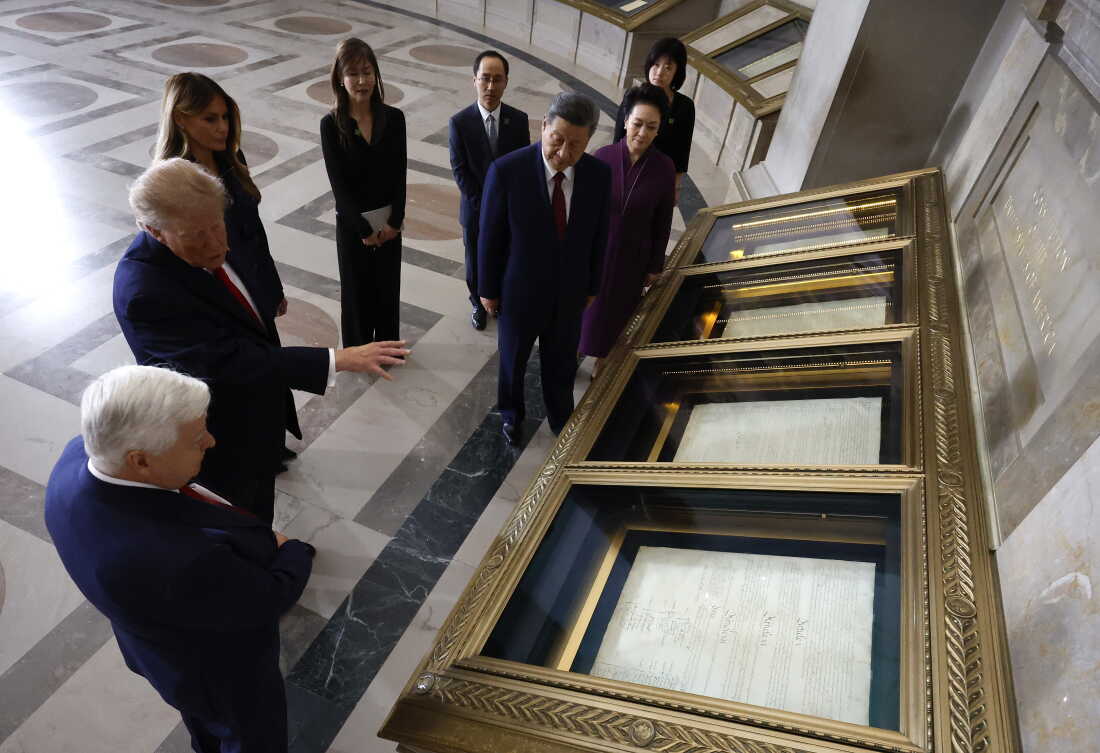
President Donald Trump and China’s President Xi Jinping visited the National Archives Museum in Washington, D.C., on September 25, 2026. The visit included viewing significant American documents like the Constitution and the Declaration of Independence. However, the event faced unexpected diplomatic challenges.
Originally, the museum planned to display a variety of artifacts, including a brick from the Great Wall of China and a 19th-century scroll from a Qing emperor. These items were removed due to a last-minute change prompted by Chinese dissatisfaction with the inclusion of the Treaty of San Francisco from 1951, which Beijing found contentious.
The Treaty of San Francisco concluded World War II hostilities but did not include China among the signatories. Additionally, it left Taiwan’s status undetermined, which is a highly sensitive topic in U.S.-China relations.
Ryan Hass, an expert on Taiwan and China at the Brookings Institution, noted that the absence of China’s signature on the treaty and the unresolved status of Taiwan remain points of contention for Beijing.
An administration official emphasized the significance of viewing documents that lay the foundation of American history during the visit. The event provided an opportunity for discussions between Trump and Xi concerning the historical ties between the United States and China.
The inclusion or exclusion of documents like the Six Assurances and Three Communiques, related to Taiwan, highlights ongoing complexities in U.S.-China negotiations. These documents serve as the basis for the U.S. position as Taiwan’s main security guarantor without formal relations.
During the visit, Xi lauded the spirit of 250 years of U.S. history, while President Trump underscored the historical depth of Chinese civilization. The visit mirrored President Trump’s tour in Beijing, seeking reciprocity in hospitality and symbolic exchanges.
This incident underscores the sensitivity surrounding Taiwan within U.S.-China diplomacy and the implications of historical interpretations on foreign policy. Diplomatic interactions remain colored by concerns over the status quo and shifts in stance toward Taiwan.