Debate over Reparations for Black Descendants of American Slavery Intensifies
Advocates for reparations are urging the federal government to deliver direct cash payments to Black descendants of American slavery. They warn that broadening the eligibility criteria could weaken the movement, especially as opposition grows from conservatives and the Trump administration.
Rev. Phyllis Coachman, a supporter of the U.S. Freedmen Project, highlighted the importance of these payments. “Cash payments are a significant part of reparations,” she stated. Coachman also noted historical challenges faced by Black Americans post-slavery, including the collapse of Reconstruction, Jim Crow laws, and ongoing racial discrimination.
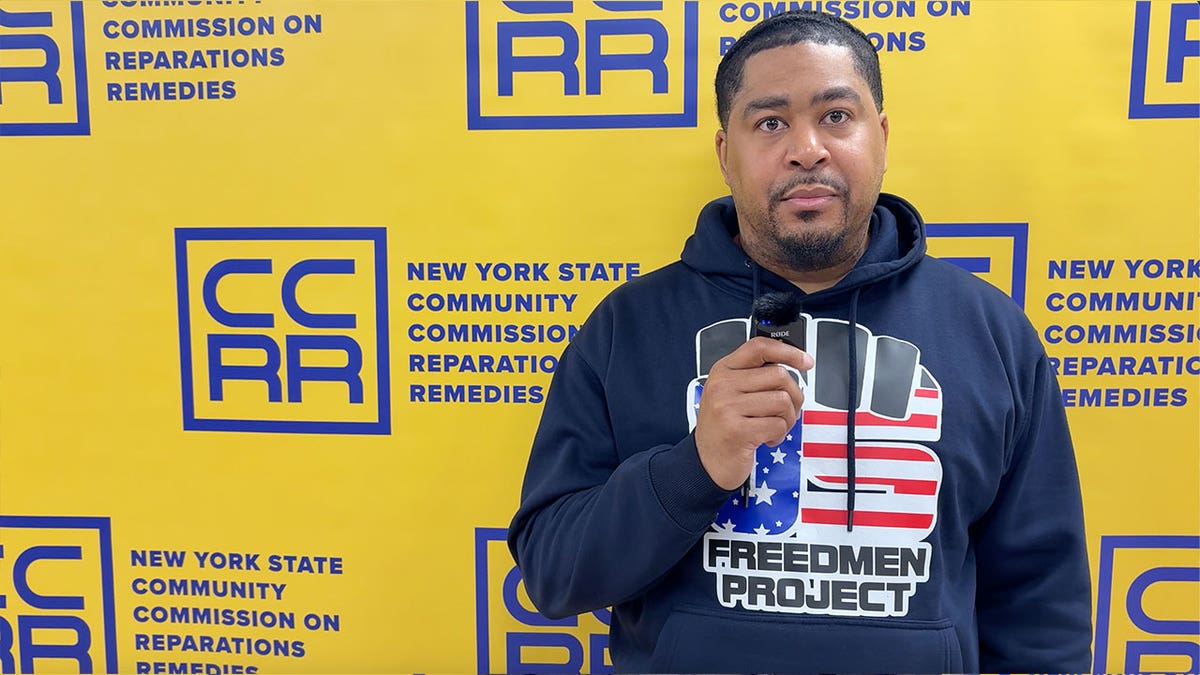
In New York, Black citizens are demanding financial reparations as state officials explore compensation for past racial injustices. The U.S. Freedmen Project seeks to educate on distinctions between Black Americans descended from enslaved individuals and those who immigrated voluntarily. The group emphasizes lineage-based criteria for reparations to prevent violating constitutional principles.
The discussion arises as various local governments consider reparations initiatives. Evanston, Illinois, has already acted by offering homeownership grants and cash to rectify historical housing discrimination.
Annette Wilcox, another advocate, countered claims that cash payments equate to governmental handouts, pointing out instances where the government has provided financial reparations to other groups. According to Wilcox, it’s essential for the government to acknowledge its historical actions against Black citizens, much like it has done with other communities.
Reparations discussions include addressing broader systemic issues like the racial wealth gap, policing practices, and educational inequalities. During a New York State Commission hearing, some attendees warned against expanding reparation definitions to other marginalized groups.
At this hearing, Aubrey Muhammad, a supporter of the U.S. Freedmen movement, proposed a specific sum of $800,000 for each eligible individual. President of the U.S. Freedmen Project, Devine Prince, supported the idea of direct financial compensation, framing it as essential to addressing national wealth disparities. Prince argued that if one identifies as a true American, they should support monetary reparations for American freedmen.
The debate on reparations continues to be a central issue across the United States, with various proposals and discussions ongoing.