Efforts to End Child Marriage in the U.S. and Worldwide
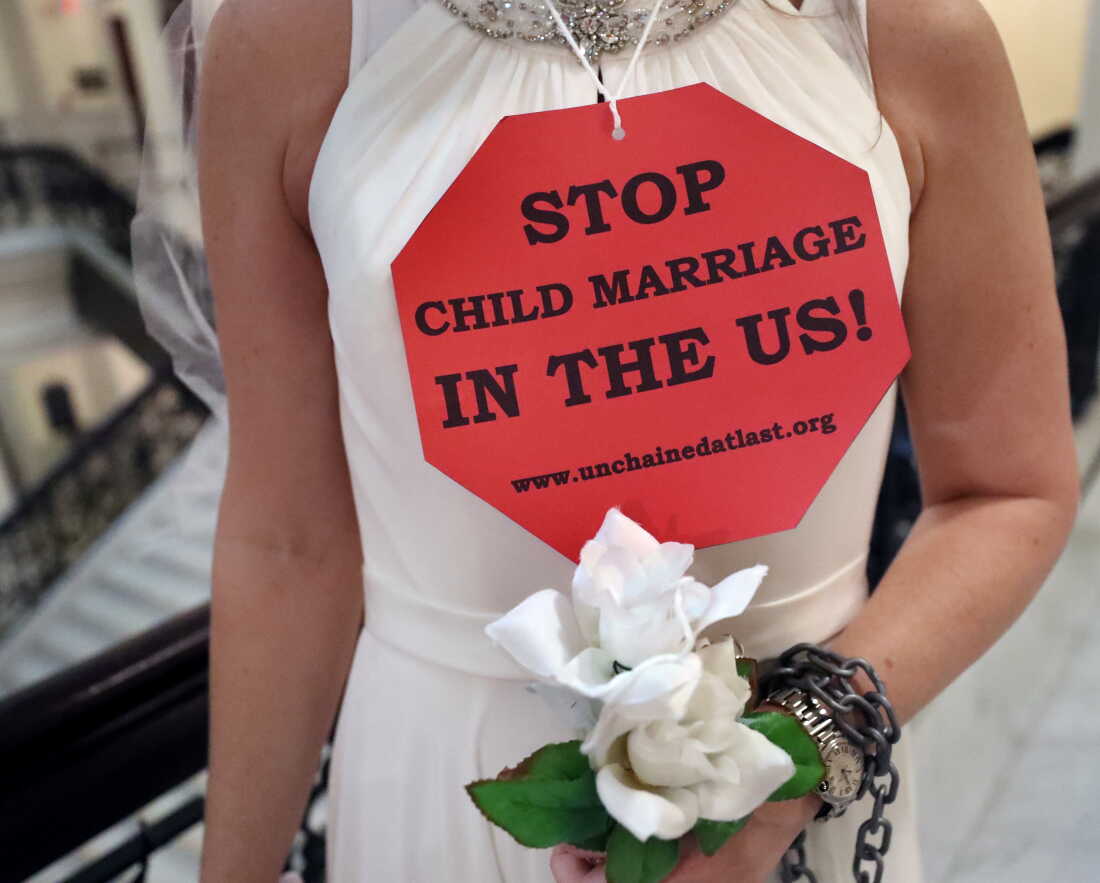
In Massachusetts, a demonstrator wore a bridal gown as part of a protest urging legislators to end child marriage. This landmark year for activists culminated on September 30 when California Governor Gavin Newsom signed Bill AB 1267. This law stipulates 18 as the minimum age for marriage without exceptions. California now joins 18 other states with similar bans, ending a system where minors could marry with parental and judicial consent. This change was championed by Unchained at Last and the California Commission on the Status of Women and Girls, and authored by Assemblymember Gail Pellerin. Newsom’s signing ceremony included Courtney Stodden, an advocate who was married at 16 to a much older man, highlighting the voices of survivors in this cause.
“The heart of this effort has always been the survivors,” Pellerin remarked, emphasizing the challenges faced by minors in unwanted marriages.
Globally, child marriage, involving at least one partner under 18, is declared a human rights violation by the United Nations. The U.N. reports 12 million child brides annually, noting impacts such as interrupted education and increased vulnerability to domestic violence. Efforts to eliminate child marriage by 2030 have led countries like Sierra Leone, England, the Philippines, and the Dominican Republic to enact laws banning such marriages. In contrast, the effectiveness of new legislation varies worldwide due to enforcement challenges and cultural factors.
The United States faces ongoing debates about a national legislation to set a minimum marriage age at 18. In July, U.S. lawmakers introduced the Child Marriage Prevention Act to urge states to enforce this minimum age. Those pushing for reform highlight the thousands of minors, as young as 10, who married between 2000 and 2021—many to adults. The Tahirih Justice Center, involved in creating this legislation, argues that apparent consent from a child is often coerced, not freely given.
Despite broad support, some criticize the federal bill for not being aggressive enough. Activists suggest it should include stricter provisions, like financial incentives for states that ban child marriage outright, and express concerns over sections allowing minors to qualify for spousal visas. While opposition exists, as seen in Missouri where lawmakers cited overreach, discussions continue on achieving effective, comprehensive solutions.
Comparing globally, countries like Sierra Leone and Colombia have adopted stringent prohibitions on child marriage, voiding exceptions and penalizing facilitators. In nations with strong cultural adherence to early marriage, such as India, robust laws require grassroots changes in societal perceptions and practices to be effective. Research by Young Lives India reveals cultural and social drivers behind child marriages, complicating solutions even in regions with established laws.
For meaningful change in the U.S., experts stress changing attitudes alongside new laws. They advocate for community-level conversations and services that reshape societal views on early marriage as detrimental. This aligns with a broader international movement, reinforced by U.N. resolutions, to prioritize the end of child marriage globally by 2030.
Efforts by figures like Bhuwan Ribhu focus on child rights and legal protections, framing child marriage as a form of child abuse. These initiatives aim for international accountability and a unified message that views child marriage as a crime.