Byron Donalds Targets Black Voter Outreach in Florida Governor Race
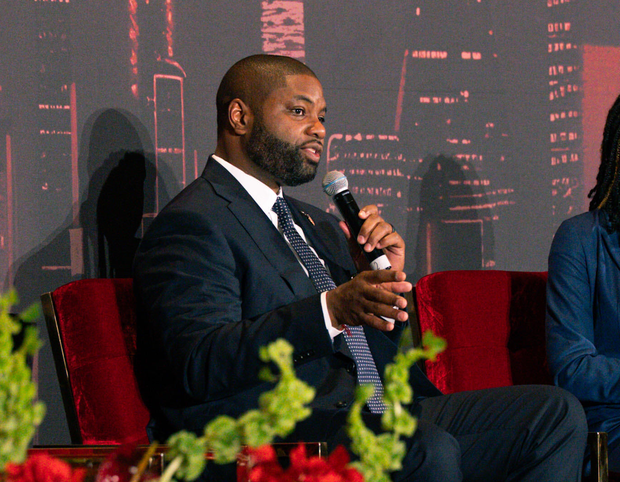
For the majority of his time in Congress, Republican Representative Byron Donalds from Florida rarely focused on his race as part of his political strategy. Yet, over the past weekend, through a series of events aimed at Black voters in Miami, he shifted this approach. He did so in a careful manner, choosing to address his race on his own terms.
In an interview, the Republican candidate for Florida governor stated his goal is to secure more than 20% of the Black vote. Donalds commented, “I think there’s a lot of Black voters examining my campaign as they look for who will best lead Florida forward.” He believes Black voters are increasingly open to options beyond the Democratic Party. In comparison, only about 13% of the Black vote supported Governor Ron DeSantis in his 2022 reelection. President Trump had a slightly higher backing of 15% among Black voters in Florida during his 2024 campaign.
In 2024, Donalds was a notable figure supporting Trump, especially visible in efforts targeting Black voters nationwide. He co-headlined a tour with Representative Wesley Hunt of Texas, engaging in informal dialogues aimed at advocating for Trump. Now, Donalds is applying a similar strategy for his own campaign, positioning himself as the main candidate.
A potential victory for Donalds could place him in the exclusive group of Black state leaders. Historically, only three elected governors in the U.S. have been Black, and Donalds is among three Republican nominees who could become the first Black governors elected from their party.
Asked about the historical significance of his campaign, Donalds admitted it’s “wild.” He has generally avoided discussing race during his campaign, focusing more on Florida’s merit-based principles. During an appearance at the Black Professionals Summit’s Legacy Con, he emphasized that voters care most about capability in getting the job done.
However, Legacy Con organizers noted that Democratic nominee David Jolly did not attend, citing scheduling issues. As the campaign nears its end, Donalds countered criticism regarding his minority outreach efforts. He emphasized a broad voter outreach strategy, with efforts targeting Black voters in North Miami and Broward County, and Hispanic voters in Doral and Hialeah.
Some voters remain skeptical due to Donalds’ association with the former president. At Lorna’s Caribbean Restaurant, Jermaine Woodside expressed initial reluctance due to Donalds’ ties to Trump. Nevertheless, after a conversation with Donalds, Woodside was more receptive but cautioned that the Trump association might hinder Donalds’ campaign.
Donalds insisted that voters focus on his policies and ideas, rather than solely on his past endorsement of Trump. “I’m running to be governor of Florida,” he emphasized.
Not all attendees were convinced. Miami resident Kalyn James quietly protested a meeting hosted by Donalds by holding a sign that read “Vote Blue” beside Donalds’ crossed-out name. James doubted the depth of Donalds’ support.
Jasmine Burney-Clark, who leads the nonpartisan voting rights organization Equal Ground, critiqued Donalds for not signing their pledge to back a Democratic state voting rights bill, which his opponent Jolly supported. Burney-Clark questioned the sincerity of Donalds’ outreach efforts.
Current polling suggests a tight race for an office that has been difficult for Democrats to win since the 1990s. For Donalds, increasing support among Black voters is crucial, as it could complicate Democrats’ chances of reclaiming the governor’s position.