School Safety Innovations and the Ongoing Debate on Gun Control
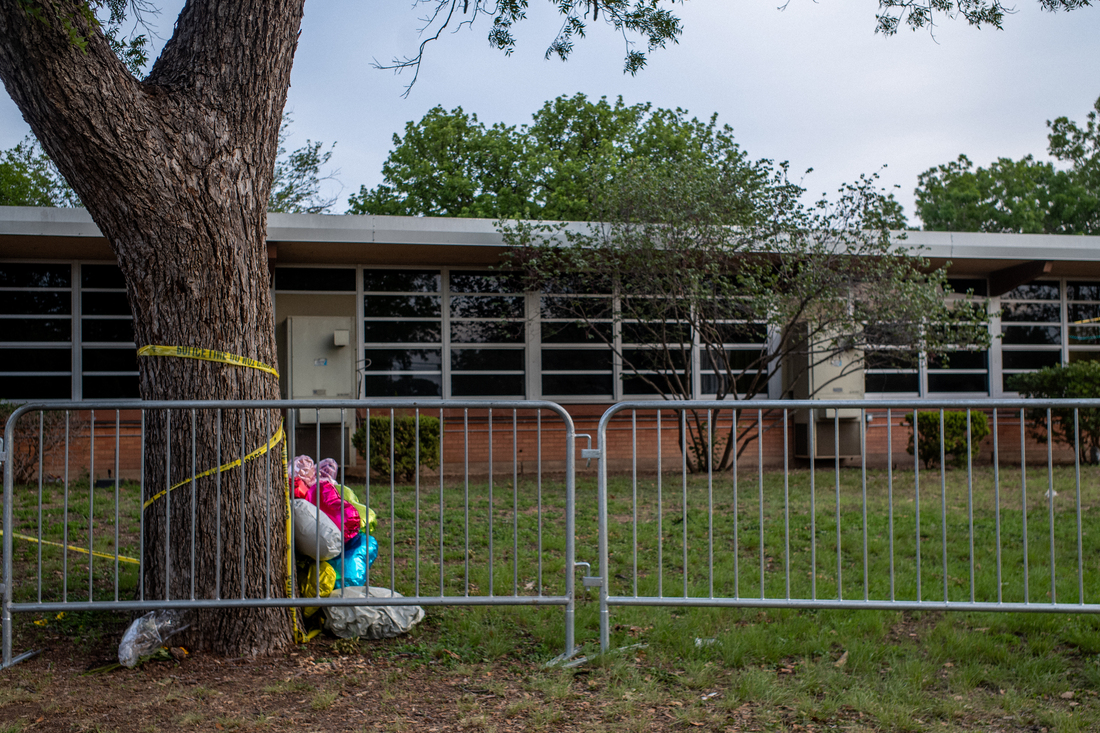
Balloons were seen around a tree covered with caution tape at Robb Elementary School in Uvalde, Texas, a week following a school shooting on May 31, 2022. Pastor Julián Moreno, who lost his great granddaughter Lexi Rubio in the tragedy, faced school safety measures when metal detectors kept him from entering his grandson’s school event due to a pocket knife. ”They were just trying to do a better job,” Moreno reflected.
Across the U.S., in response to school shootings, many schools have increased security by adding metal detectors and strengthening entrances. Some, like Fruitport High School in Michigan, chose to redesign their architecture, utilizing $48 million for features like curved hallways and hiding spaces. Moreno emphasized the necessity for architecture to prioritize security, reflecting the pain communities endure.
Evolution of School Safety Measures
For over fifty years, schools have addressed safety differently, noted Gregory Saville from CPTED (International Crime Prevention Through Environmental Design Association). Schools used to be simple, with limited oversight alongside teachers and principals. But changes arose with innovations such as cameras and strategic urban planning to combat crime.
Experts now advocate a holistic approach, merging safety with mental health support. Architect Rene Berndt of CPTED seeks to foster social cohesion by designing spaces where students feel they belong, countering alienation.
Innovative School Designs
Architectural firms like TowerPinkster in Michigan apply CPTED principles, having worked with 50-60 districts on $500 million worth of K-12 designs each year. Community investments prioritize safety, often incorporating common areas, winged walls, and secure spaces as requested features. COVID-19’s emotional impacts highlight the need for secluded student spaces, explains Matt Slagle of TowerPinkster.
Judith Hoskens from the American Institute of Architects underscores the benefits of learning communities that enable emergency flexibility, unlike single exits. Such strategies mirror the Panopticon design in prisons, where visibility is key, reducing danger.
Financial and Perceptual Challenges
Although safety innovations appeal, financial and community apprehensions, like concerns over instilling fear, hinder widespread adoption. Many schools continue to opt for hardened security measures over more comprehensive design changes. As Saville from CPTED states, schools face funding limitations, impacting their ability to implement sweeping redesigns consistently.
Balancing Architecture and Legislative Solutions
March For Our Lives, a student-led initiative, argues stricter gun laws are essential for long-term safety. In alignment with President Biden’s executive order, which targets tighter background check enforcement, legislative action remains under Congress’s jurisdiction.
Concerns linger; Pew Research revealed a third of parents worry about school shootings. However, mental health screenings and treatments are seen as pivotal preventive measures. Meanwhile, half of the young individuals surveyed by March For Our Lives fear the threat of mass shootings.
Saville stresses immediate action, balancing gun control aspirations with the reality that many guns are already accessible. Addressing immediate threats is crucial in the short term, requiring proactive safety strategies alongside legislative discussions.