Jet Crash Investigation in South Florida Focuses on Weather
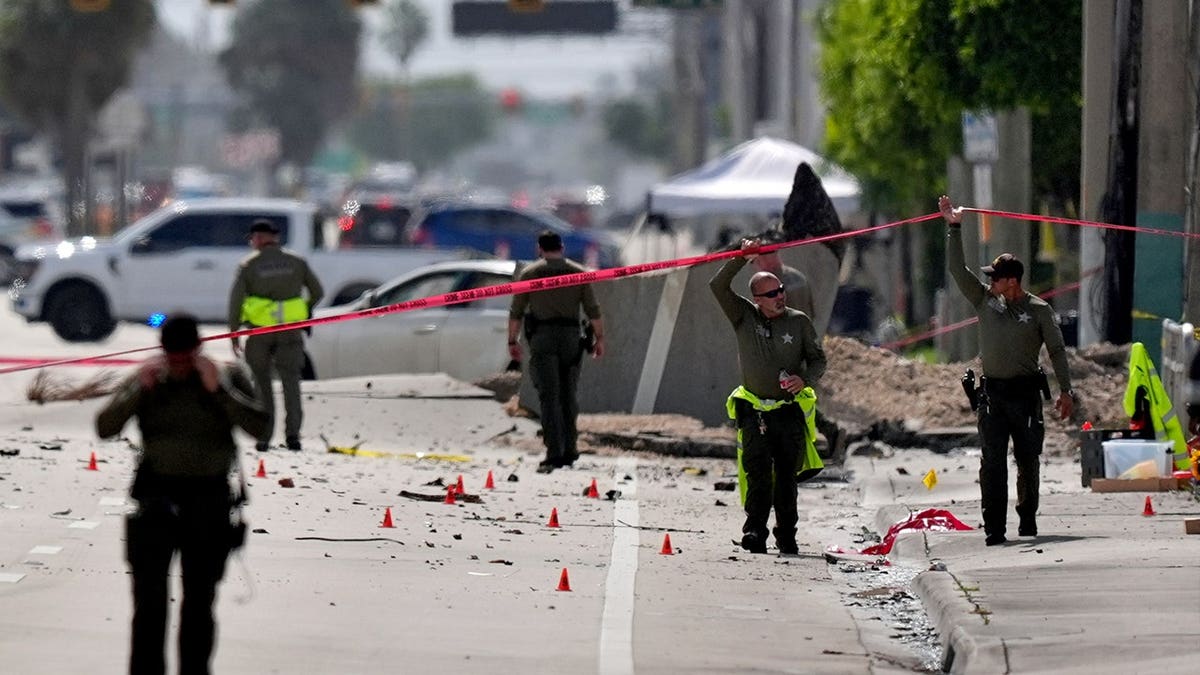
Federal investigators are concentrating on weather conditions as a key aspect of their probe into the fatal private jet crash in South Florida. The incident, which claimed the lives of nine people, occurred when a Learjet 60 came down in a Palm Beach County neighborhood.
National Transportation Safety Board (NTSB) member Tom Chapman shared that initial findings suggest the aircraft may have started breaking apart before its descent concluded. “We have indications that the aircraft was in the process of disintegration before impact,” Chapman stated during a news conference.
Investigators are delving into the weather conditions the jet encountered flying at approximately 35,000 feet, noting reported icing and moderate turbulence before the crash.
“The weather conditions are a major focus of the investigation,” Chapman emphasized, highlighting the need to understand the situation at higher altitudes.
The Learjet 60 had taken off from Austin-Bergstrom International Airport in Texas towards North Eleuthera in the Bahamas. It was carrying two crew members and seven passengers.
At 12:47 p.m., the crew faced clear ice and moderate turbulence, experiencing altitude changes of about 700 feet while flying at 35,000 feet. They reported an external temperature of minus 47 degrees Celsius (minus 53 degrees Fahrenheit) and sought to ascend to 37,000 feet after facing precipitation. Permission was granted, but 30 seconds later, the crew reported an overspeed condition and began descending, sending out a mayday call.
The jet rapidly lost altitude and crashed around 12:50 p.m. in a residential area near Cresthaven, Florida, resulting in the deaths of all on board. Dashcam footage shows the aircraft plunging nose-first and bursting into flames.
The crash necessitated evacuating around 600 individuals from a nearby mobile home community. Florida Governor Ron DeSantis described the crash as catastrophic, likening the aircraft’s descent to that of a missile, with a large crater left on the roadway.
Timothy Manville, NTSB investigator-in-charge, mentioned that the on-site investigation will take days, especially due to the challenge of retrieving wreckage from the crater. The Federal Aviation Administration (FAA) is supporting the NTSB investigation. The exact cause of the accident remains undetermined.