Historic Mississippi Senate Race Highlights Racial Struggles and Hopes
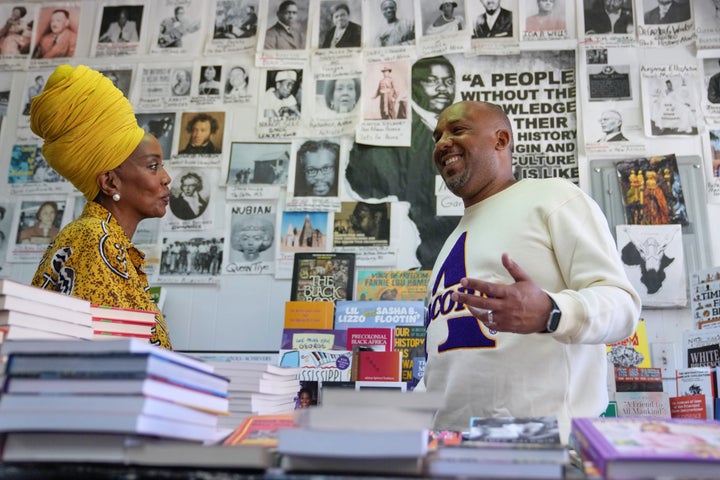
In Jackson, Mississippi, local prosecutor and Democrat Scott Colom is recognized as a potential historic figure as he walks through the Farish Street business district. This area was once a hub for civil rights leaders. As votes are still being counted, Colom stands to become the first Black U.S. senator from Mississippi since the Reconstruction era after the Civil War. The prospect of him defeating Republican incumbent Sen. Cindy Hyde-Smith elicits a mix of cautious optimism and celebration among Black voters in a state with nearly 40% Black population but historically white representation.
Maati Jone Primm, owner of Marshall’s Music & Bookstore in Jackson, praised Colom, saying, “It’s so wonderful to have Scott Colom as our representative.” Sorie Tarawally, an attorney who has long known Colom’s father, referred to Colom as “the man, our messiah, our savior.”
The count is ongoing, and the Associated Press has yet to call the contest. The outcome depends on examining absentee and provisional (affidavit) ballots in Mississippi’s 82 counties. Both absentee ballots, which must be received by five business days after the election, and affidavit ballots, cast when voters face discrepancies such as identity issues, are being considered. Colom is optimistic about his prospects as votes counted since the election tend to favor him.
Colom criticized Hyde-Smith for her lack of public engagement, questioning why she hasn’t presented her path to success. Despite the tight race, Hyde-Smith declared victory on election night. On social media, she insisted on monitoring the remaining votes to ensure election integrity.
Maryland Sen. Angela Alsobrooks supported Colom’s campaign, highlighting the energizing effect of Colom’s candidacy on voters. Despite past electoral defeats, she noted a newfound belief among voters that their votes matter.
The number of outstanding ballots remains uncertain. Local officials help voters with identification issues address these concerns by the deadline. Officials must certify the results by Friday. Mississippi law doesn’t allow for a statewide recount, although campaigns might request court orders to review ballots county by county.
The significance of this election lies more in Mississippi than in Washington, as Democrats have already won Senate control. The election represents a potential shift in a state where white conservatives have dominated politics for over a century. Historically, leaders have been mostly Democrats, but they shifted to Republicans after the Civil Rights Movement, leaving Black Mississippians with insufficient representation at both state and national levels.
Initially seen as a long shot, Colom gained significant support only in late October as Senate Democrats increased their campaign contributions. The midterms were marked by backlash against redistricting efforts aimed at boosting Republican influence and reducing Black representation.
Primm’s bookstore, where Colom made a campaign stop, remains a cultural symbol of Black migration and history. Primm expressed pride in seeing Colom as a potential senator: “Our youth need to see the possibilities for their lives.” Colom aims to represent all Mississippians, criticizing policies like tariffs and international conflicts for their wide impact.
Despite celebrating potential electoral success, Colom and his supporters recognize the racial significance of his candidacy. Tarawally, originally from Sierra Leone, emphasized wanting leadership that benefits minority communities, noting long-standing societal inequalities.
Colom concluded his campaign with an ad set in the home of Medgar Evers, honoring the civil rights martyr’s sacrifice. Colom said his goal was to remind Mississippi residents of the sacrifices made for voting rights. “I wanted that to be the last message that the people of Mississippi heard,” he stated.