Impact of AI Data Centers on Energy Costs: Who Pays the Price?
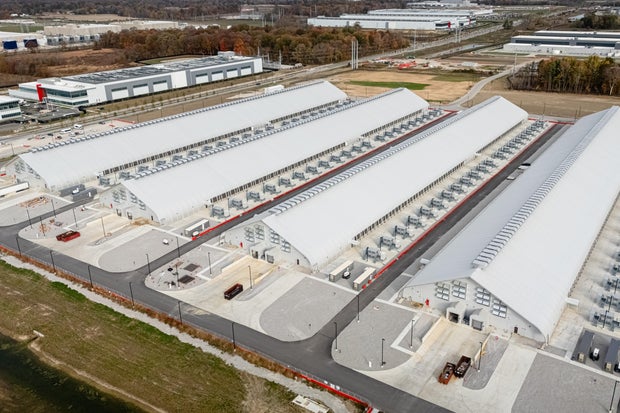
The emergence of data centers across the United States raises significant economic and political questions concerning energy costs and their distribution. A study from Cornell University, published in Nature Energy, provides insight into these issues, revealing that lower-income, rural households shoulder a disproportionate share of the energy costs linked to AI data centers.
Energy Demand and Cost Distribution
This research studied the growing energy demand and infrastructure projects across four major U.S. power grids between 2020 and 2025. It incorporated data from 4,000 existing and proposed data centers nationwide. Findings indicated that the proliferation of AI data centers led to increased energy costs, placing significant economic pressure on those who benefit least from such technology.
The study revealed that data centers raised wholesale power prices unevenly. These prices emerge from an open marketplace where electricity is bought and sold in bulk before reaching consumers. Areas with already strained power grids experienced the highest price increases. For example, data centers in California’s Southern Bay Area pushed wholesale energy prices up by nearly 20% last year. In Texas’ Dallas-Fort Worth area, the increase was estimated at 17% in 2025.
Impact on Residential Consumers
Higher wholesale prices adversely affected energy consumers. Residential customers bore substantial costs for transmission built for data centers. From 2020 to 2025, spending across the four power grids surged from $2 billion to $34.2 billion. Data centers contributed $8.25 billion to energy infrastructure costs last year, while residential users were billed more than $16 billion despite being responsible for about $3.5 billion.
Researchers attributed this imbalance to outdated formulas that allocate energy costs based on historical, not current, consumption patterns. Consequently, households share much of the cost for new power infrastructure.
Regional Discrepancies and Policy Implications
Households in rural and lower-income areas faced energy cost increases up to 76% higher than urban counterparts. Despite the concentration of data centers near metropolitan hubs, the financial burden often extended to suburban and rural regions due to energy cost-sharing policies.
The study highlighted a “paradoxical mismatch” where states like West Virginia and Ohio faced significant price increases linked to AI data centers, yet reported minimal use of generative AI technology. Cases where states funded infrastructure upgrades for distant data centers were also noted. For instance, New Jersey and Pennsylvania contributed to power grid updates in Virginia.
“You do not have to live next to a data center to help pay for its power infrastructure,” stated Fengqi You, study author. “The grid connects communities across states, and cost-sharing rules connect them financially.”
Proposals and Future Directions
Authors suggested that data centers limit energy use during peak demand hours or directly finance the additional energy demand they impose. As regulating data centers was a crucial topic in recent midterm elections, researchers hope their findings guide legislative decisions.
“This is an issue connected to debates in many states and in Congress,” said You. “We aim to provide science-based evidence and concrete data so stakeholders can better understand the situation and consider their options.”
Topics: Data Centers, Artificial Intelligence