Supreme Court Divided on Federal Agency Authority in Fines Case
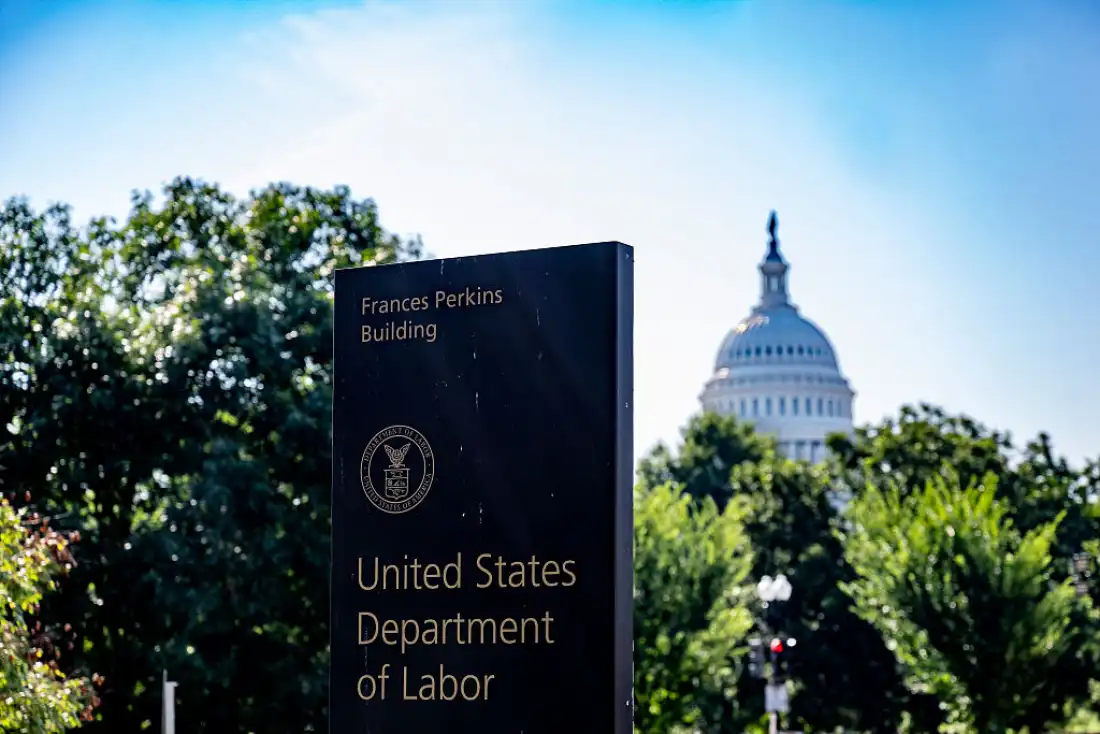
The U.S. Capitol with signage for the U.S. Department of Labor was visible in Washington, D.C., in August 2025. A case at the Supreme Court revealed a division among the justices regarding federal regulatory agency power to fine businesses that breach federal laws.
For many years, farmers have relied on a federal immigration program to hire migrant workers temporarily for crop production. As part of this, farm owners must provide essentials like housing, meals, and water. The Department of Labor oversees these conditions, ensuring foreign workers do not take jobs from domestic laborers unfairly.
Sun Valley Orchards, based in New Jersey, received a fine from the Department of Labor for unsanitary conditions, including unsafe drinking water and overcrowded housing. Sun Valley disputes the $500,000 fine, arguing that the Department’s power to issue fines violates constitutional provisions as they believe it bypasses the right to a jury trial if appealed in a federal court.
In Tuesday’s session, Chief Justice John Roberts voiced strong concerns that administrations, including Trump’s, have overstretched executive power. Addressing Deputy Solicitor General Sarah Harris, representing the Labor Department, Roberts questioned whether their authority extends into the judiciary’s domain.
Justice Sonia Sotomayor inquired about the impact of shifting enforcement to federal courts instead of agencies like the Department of Labor. Harris pointed out that this approach would cause significant disruption, affecting numerous programs such as Medicare and federal student loans.
Justice Elena Kagan queried why not always use the court system. Harris argued this method would drastically reduce law enforcement due to resource constraints.
Representing Sun Valley Orchards, lawyer Robert Johnson argued that while penalties were anticipated, the law does not specify where they should be imposed. In response, Justice Ketanji Brown Jackson indicated Congress intended for administrative agencies to maintain worker protections.
Justice Brett Kavanaugh criticized the proposal as unclear and inefficient, while Justice Samuel Alito commented on the inconsistencies it might bring, with Justice Kagan humorously affirming her court does not write such opinions.
Deputy Solicitor General Harris warned of chaos if the government loses and suggested potential legislative action might be necessary, underlining the urgency for a resolution.