Egg Freezing: A Modern Solution to Fertility Decline?
Fertility Rates in the U.S.
Fertility rates in the United States have reached near historic lows, partly due to a significant drop over the past three decades in the number of women having babies in their 20s. Despite this decline, there has been no shift in women’s biology or the age at which fertility decreases. Enter egg freezing.
The Development of Egg Freezing
Freezing embryos for in vitro fertilization (IVF) has been available for decades, but the scientific challenge of freezing unfertilized eggs was initially reserved for patients with medical conditions like cancer. In the last 13 years, egg freezing for non-medical reasons has gained acceptance, leading to a dramatic rise in demand. Hundreds of thousands of eggs are now frozen, promising new possibilities for women facing the ticking biological clock.
Experiences of Egg Freezing Patients
Kate Sonderegger visited a fertility clinic in Manhattan to undergo a procedure to harvest and freeze her eggs. Katherine Schneider completed the same procedure at another center, supported by Dr. Tomer Singer, head of Northwell Health’s fertility practice. The process involves daily hormone injections for nearly two weeks to ripen multiple follicles before egg retrieval.
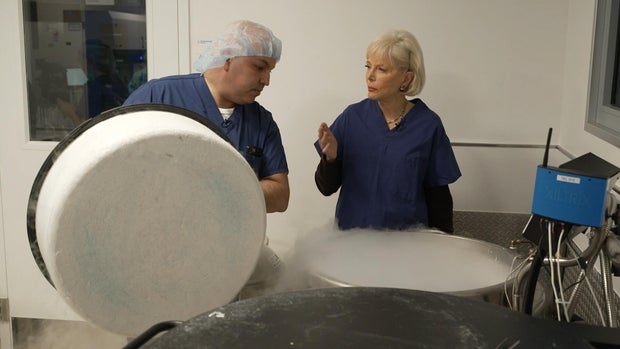
Critics caution against heavy reliance on egg freezing, yet embryologists carefully maneuver pipettes under microscopes to isolate egg cells, which are then stored in liquid nitrogen.
Dr. Singer’s View on Egg Freezing
Dr. Singer compares the revolutionary impact of egg freezing to that of the birth control pill in the 1960s and 70s, allowing women to delay childbearing without compromising opportunities. Women can now choose to have children in their late 40s using eggs frozen earlier in life.
Case Studies: Decision to Freeze Eggs
Yasmine Higbee, 30, and Nameetha Jacob, 38, are among women who have chosen to freeze their eggs for various personal reasons. Their decisions have delayed the pressures of dating and family planning, offering more freedom.
Dr. Lucky Sekhon of RMA New York highlights the reality of the biological clock, explaining that women are born with all the eggs they will ever have and cannot produce new ones. Freezing eggs halts their aging process, preserving them at the age they were frozen.
Age and Egg Quality
As women age, the quality and quantity of their eggs diminish, impacting the likelihood of creating healthy embryos. Dr. Sekhon provides statistics showing increasing rates of genetic abnormalities in embryos as women age.
For optimal results, egg freezing in your 20s is recommended, when genetic errors are minimal. Women like Kate Sonderegger, 22, plan for their future while pursuing careers or education.
The Changing Stigma and Costs
Previously stigmatized, egg freezing is now viewed as empowering. The procedure is costly, averaging $12,000 to $15,000 per cycle, plus storage fees. Some companies offer coverage as part of benefits to attract top talent. However, the motives behind such offers have faced criticism.
Challenges and Criticisms
Not all egg freezing stories end happily; risks and odds of a good outcome remain. Evelyn Gosnell, who froze 30 eggs, experienced a poor thawing result and faced difficulties. Her story highlights the inadequacy of egg banking as a guarantee.
While business in fertility is booming, experts caution against the profit-driven incentives in the industry. Dr. Marcelle Cedars worries about the implications of private equity-backed companies focusing on revenue generation over patient well-being.
Diverse Perspectives on Egg Freezing
Vardit Ravitsky, president of the Hastings Center, cautions that egg freezing is a gamble with no guaranteed outcome. Instead, policies like paid parental leave and workplace childcare could facilitate earlier parenthood without the need for egg freezing.
Conclusion: Egg Freezing as a Choice
Despite concerns, many women accept the risks and are empowered by the choices egg freezing offers. Continuous education on fertility options can benefit future generations.
Ultimately, each woman must weigh the costs, benefits, and personal circumstances in deciding whether egg freezing is the right option. As technology advances, conversations about reproductive choices will remain pivotal.