The Rise of Corporate Jargon in Sports Management
The sports world recently saw a controversy involving goaltender Connor Hellebuyck and the New Jersey Devils. After forcing a trade to the Devils, Hellebuyck faced boos from fans during his return to Winnipeg. However, the Devils’ management opted not to play him in this significant game.
According to Devils General Manager Sunny Mehta, the decision was based on strategic calculations. He mentioned that involving Hellebuyck might decrease the team’s ‘expected win probability.’ This phrasing led to criticisms regarding the use of complex language in sports management.
This situation highlights a broader trend in athletics. Modern sports executives often use jargon that resembles corporate speak. This departure from plain language puzzles many fans. An example from baseball history is Philip K. Wrigley’s remark that sports are both too much of a business and a sport. Currently, business-oriented individuals predominantly manage sports leagues.
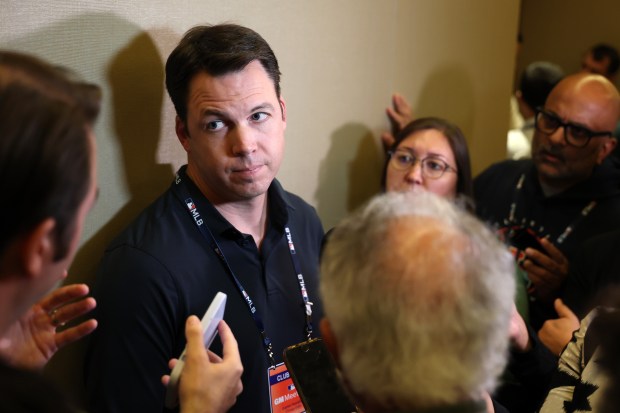
Executives often use this language to obscure their true intentions. When asked about the Chicago Cubs’ roster, GM Carter Hawkins said that ‘all scenarios are on the table.’ Such vague statements reveal little about actual strategies. Similarly, Blackhawks GM Kyle Davidson emphasized cautious decision-making without revealing specifics about potential team improvements.
In baseball, these issues extend to formal events, such as GM meetings. Many general managers now report to higher executives, complicating communication. For instance, Red Sox executive Craig Breslow discussed his change from Chief Baseball Officer to President of Baseball Operations, highlighting shifts in job titles without clear changes in responsibility.
In baseball free agency, agent Scott Boras adds another layer of complexity. He frequently uses elaborate metaphors, such as describing potential bidders as divers searching for treasure. This style persists, despite its lack of straightforwardness.
Many admire Milwaukee Brewers manager Pat Murphy for his direct communication. When celebrating a World Series win, Murphy made candid remarks about player wealth and team dynamics. While he apologized for the comments going public, many appreciate his honesty in a field dominated by jargon.
The prevalence of corporate speak raises questions about communication in sports. Simplifying language could bridge the gap between executives and fans, creating a more inclusive understanding of team strategies.