NASA Explores Unique Formations on Mars
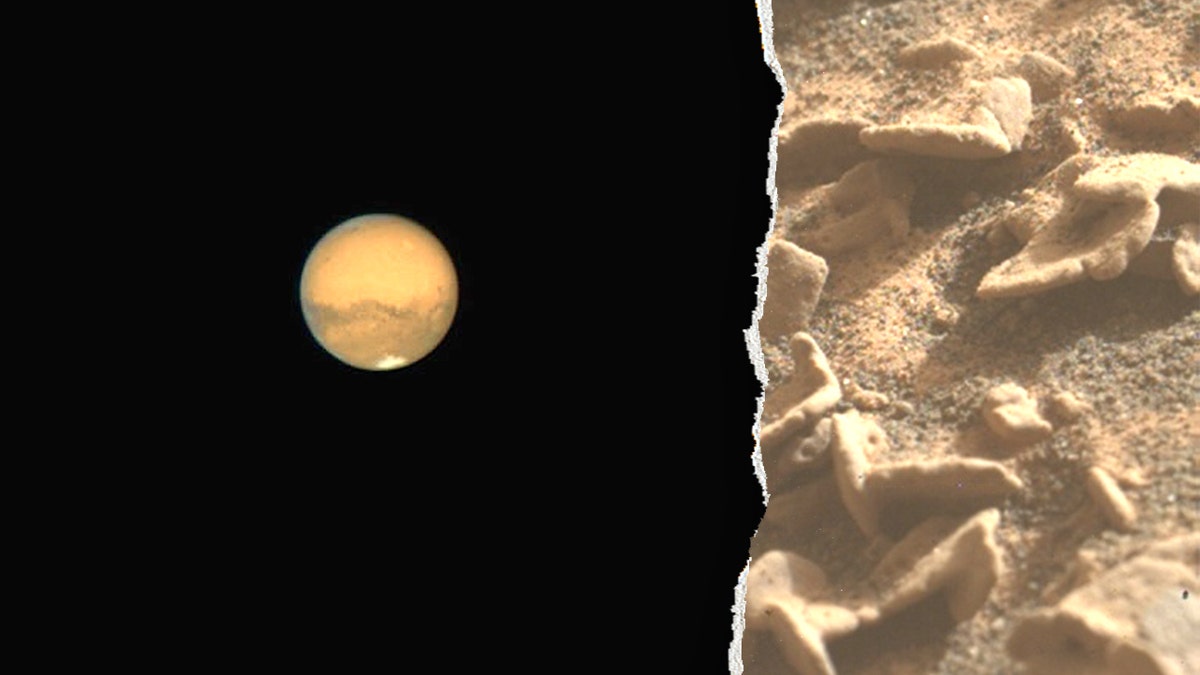
NASA scientists are currently investigating intriguing “potato chip-shaped” formations on Mars. These formations have caught the attention of researchers as they work to determine how they formed and what they consist of.
The announcement came in a blog post on NASA’s “Curiosity” series dated November 11. The Curiosity rover, a NASA project active on Mars since 2012, explored these formations during a recent drilling campaign at a location called “Nazca.” The site is particularly interesting due to the peculiar, disk-shaped crystal features present in the bedrock.
This area is characterized by bedrock containing disk-shaped crystal forms, which some interpret to look like potato chips.
Photographs of Martian bedrock reveal irregular, curled shapes embedded in the rock, some resembling potato chips. One of NASA’s primary goals is to further describe these chip-like features. Samples from the Nazca drilling were sent to Curiosity’s onboard lab, the Sample Analysis at Mars (SAM), for chemical analysis.
The Curiosity rover will also employ its ChemCam instrument, which is equipped with a laser, to analyze a crystal formation nicknamed “Colca” for its chemical properties. Additionally, the Mars Hand Lens Imager (MAHLI), a camera attached to Curiosity’s robotic arm, plans to capture images of these formations using both white-light and ultraviolet LED lamps during nighttime.
ChemCam LIBS observations were arranged for each day, including an examination of a cluster of crystal forms, a resistant layer in the Nazca area, and a distinctive dark float rock.
After completing observations at the Nazca site, the rover is set to return to its southward exploration route on Mars as part of its ongoing mission.
The unusual formations are among various Martian objects under study as scientists broaden their exploration of Mars and other regions of our solar system. This study employs several instruments aboard the Curiosity rover to gather comprehensive data.
Meanwhile, other celestial discoveries continue. For instance, a new potential dwarf planet beyond Pluto, named 2026 ED138, was spotted using the Vera C. Rubin Observatory in Chile. This object measures between 370 and 930 miles, categorizing it as one of the larger dwarf planets found so far.