Roman Fort Find and a 1,000-Year-Old Skeleton Mystery
Excavations at a newly discovered Roman fort in Wales have led to unexpected findings. Archaeologist Mark Merrony from Wolfson College, Oxford, shared that numerous artifacts such as ceramic tiles were uncovered at the site. The discovery also hinted at a link to Welsh folklore and a nearby aqueduct requiring further study.
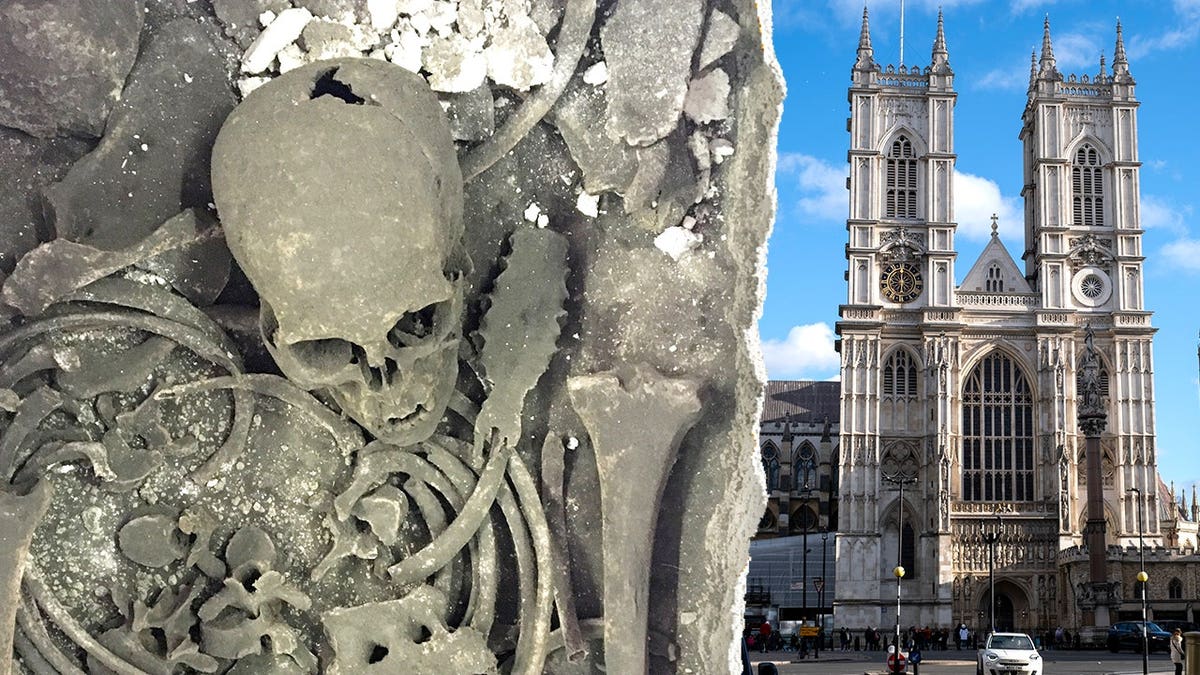
In another significant archaeological investigation, researchers may have solved a long-standing mystery about an unidentified skeleton found in 1869 on the grounds of Westminster Abbey, a famous London tourist destination. The skeleton was discovered inside a Roman limestone sarcophagus inscribed for Valerius Amandinus, a wealthy 4th-century Briton. However, the remains did not belong to Amandinus.
A recent study published by the British Archaeological Association, led by consultant archaeologist Warwick Rodwell, suggests that the remains might belong to one of two high-ranking medieval monks—Aelfwig or his successor Wulnoth—who died in the 11th century. The carbon dating of the bones places them between 987 and 1052 A.D., aligning with the life spans of both candidates.
The sarcophagus, adorned with a medieval Latin cross, puzzled experts as it did not match the Roman era of the casket. This discovery raises questions about the historical burial practices at Westminster Abbey. The skeleton’s occupant was likely a notable figure from the period, given the quality of the sarcophagus.
As further proof, researchers found white lime residue inside the casket, indicating where a wooden coffin had once been placed, though it decayed over time. The sarcophagus remains on display at Westminster Abbey in the Queen’s Diamond Jubilee Galleries.
This discovery is part of a broader series of investigations shedding light on England’s medieval history. For instance, a 2025 excavation at Westminster Abbey’s vestry, required before constructing the new King Charles III Sacristy, found similar historic artifacts. Elsewhere, at the University of Gloucestershire, archaeologists unearthed 317 skeletons and the remains of a medieval church.
Spring 2025 also marked a significant finding at the Tower of London, where a mass grave from the 14th century, possibly linked to the Black Death, was discovered amidst a major excavation project.