The Impact of Growing Up Without Siblings
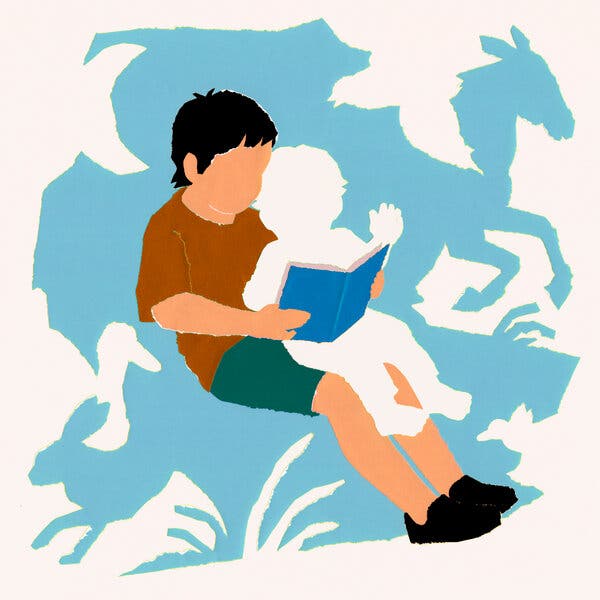
Dr. Catherine Ruth Pakaluk, author of “Hannah’s Children,” examines the implications of growing up without siblings. As the executive director of the Institute for Human Ecology at The Catholic University of America, where she is also an associate professor of economics, Dr. Pakaluk brings an informed perspective to this issue.
Traditionally, our language has terms for children without parents (orphaned) and for those who lose a spouse (widowed). Yet, there isn’t a commonly used word for individuals who grow up without siblings. This absence of terminology is indicative of past need; however, this need is becoming more relevant today.
Over the last five decades, the proportion of American mothers choosing to have only one child has almost doubled, increasing from 11 percent in 1976 to approximately 20 percent in recent years. Concurrently, the prevalence of large families has declined. In 1976, 40 percent of mothers at the end of their childbearing years had four or more children. By 2014, this dropped to merely 14 percent. The total fertility rate in the U.S. reached a historic low of 1.6 births per woman in 2024, significantly below the replacement rate of 2.1 births per woman required to maintain population stability.
This trend isn’t unique to the United States. In nearly all European Union countries, the one-child household is more common than households with two or three children. It may become the norm in America before long.
Dr. Pakaluk notes that as an economist, she was educated at a time when smaller families were celebrated as a positive development. The prevailing belief was that fewer children enabled increased investment in each child, emphasizing quality over quantity. This thinking permeated popular culture. Many parents aspire to provide extensive resources and opportunities for their children.
However, after conducting interviews with parents of large families, Dr. Pakaluk suggests that this understanding is incomplete. Some aspects of a child’s development cannot be provided by parents, irrespective of their attentiveness or resources. These elements are often supplied by siblings.
In 2019, Dr. Pakaluk traveled across America to interview mothers of large families—those with five or more children—for her book “Hannah’s Children.”
She discovered these families included a diverse range of beliefs and backgrounds, including devout Christians, observant Jews, and Latter-day Saints. Yet, they largely concurred on one point: raising children with good character is more manageable in larger families. Parents often found that the dynamics and learning opportunities provided by siblings played a vital role in shaping a child’s character.