American Heroism: The Medal of Honor’s Unwavering Legacy
In the United States of America in 2026, the topic of heroism remains contentious. Deep political divisions have shaped how Americans perceive heroes. For one group, a hero may be seen as a traitor by the other. The meaning of patriotism has split into separate narratives. Each side has its heroes and villains.
As America marks its 250th birthday, the focus is on an undeniable form of heroism: the acts of valor that earn the Medal of Honor. This is the U.S. military’s highest award. Federal law sets rigorous criteria for the medal. A service member must perform an act in direct combat that exceeds the call of duty, often risking or sacrificing their life. A detailed investigation follows, examining eyewitness accounts and documentation. The process ends with a review through the chain of command and presidential approval.
Out of the over 40 million Americans who have served, only 3,536 have been awarded the Medal of Honor. It is a narrow definition of heroism, not meant to encompass all forms. Many heroes—such as teachers, doctors, or community members in crises—do not qualify. The medal’s focus on combat roles limits its scope. Only one woman has ever received it. However, the medal honors the decision to prioritize another’s life under extreme circumstances.
It wasn’t courage that gave me the will to do what I had to do in Vietnam,said Sgt. Sammy Davis, a Medal of Honor recipient. He was recognized in 1968 for saving his fellow soldiers under enemy fire.
It was the love for my brothers.
Defining the American Experiment
The Medal of Honor captures two defining American traits. These have often been in tension but are essential to the country’s spirit. The first trait, individual liberty, is emphasized in national discourse. The Declaration of Independence enshrines this animating myth of personal freedom. Yet, the American Revolution succeeded not through individuals alone but through collective effort. Thirteen distinct colonies, despite differences, united to form the United States.
Benjamin Franklin reportedly emphasized unity’s necessity. At the signing of the Declaration, he remarked that the colonies must collaborate—including a grim jest that they would otherwise ‘hang separately’. Thomas Jefferson acknowledged this in his 1801 inaugural speech. Despite partisan divides, he urged the nation to unite, warning that without social bonds, liberty and life could feel hollow.
The Medal of Honor symbolizes both personal and collective sacrifice. It doesn’t reward individual prowess or rank. Instead, it recognizes moments when someone puts others before themselves. Such love and sacrifice have been part of America since its inception.
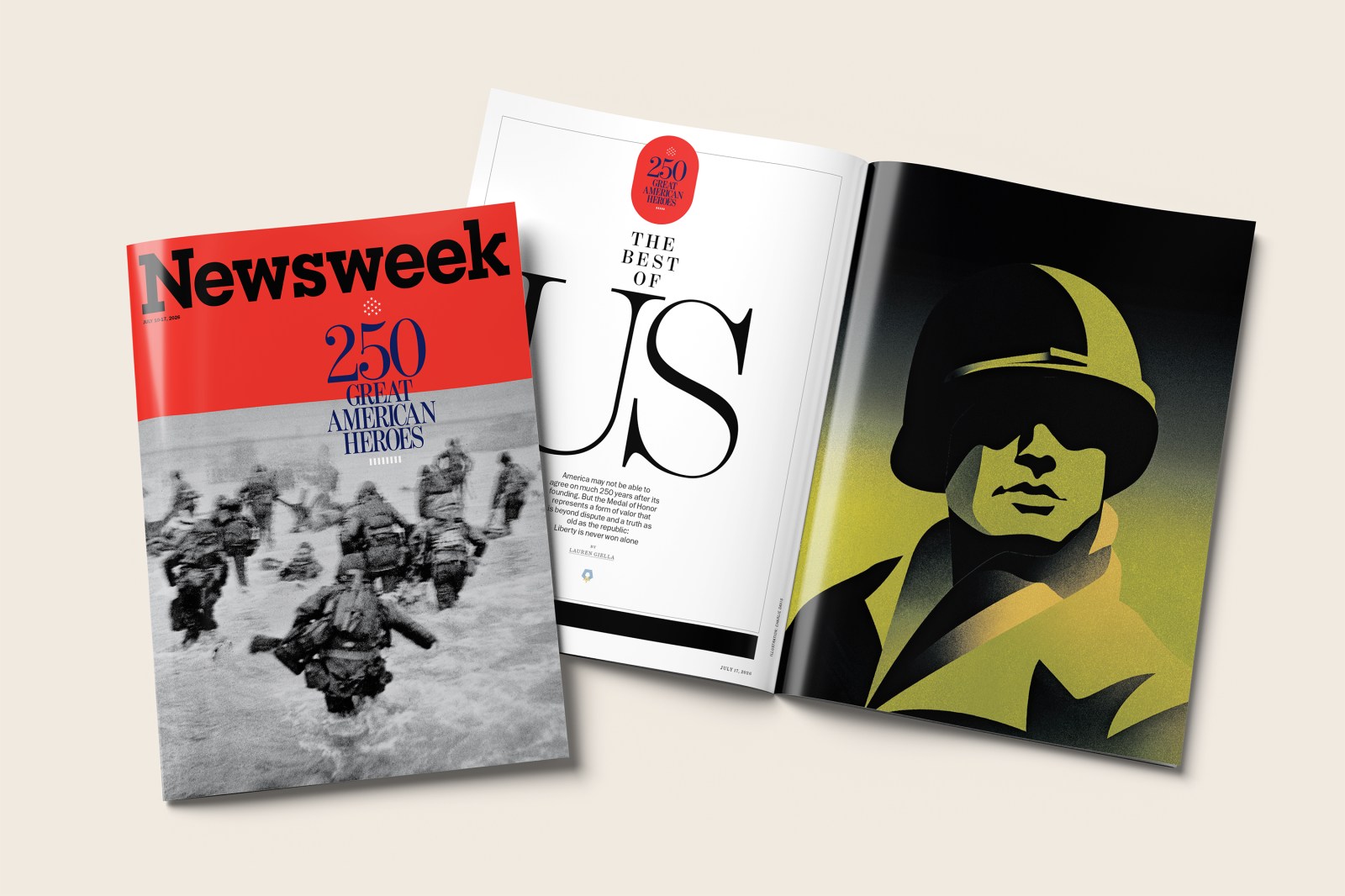
To celebrate 250 years of America, Newsweek honors those who have demonstrated this bravery. In collaboration with the National Medal of Honor Museum, the stories of 250 recipients are highlighted. While only a portion of heroic military actions, these acts reflect the sacrifices integral to building and sustaining the nation.
A Single Decision Made Under Fire
The Medal of Honor originated amid the nation’s greatest internal conflict. During the Civil War in 1861, Senator James W. Grimes proposed a medal for naval bravery. Soon after, a similar proposal for the Army emerged from Senator Henry Wilson. Today, each military branch has its own Medal of Honor variant.
The 3,536 honorees come from diverse backgrounds and historical periods. They include western figures, tribal leaders, immigrants, and former slaves. They span over 20 conflicts from the Civil War to the Global War on Terror. What unites them is their choice to act heroically under fire.
Cory Crowley from the National Medal of Honor Museum Foundation emphasizes the medal’s significance. It encourages individuals and the nation to prioritize others. You don’t need military service to embody these values. Acts of selflessness can happen within families or communities.
I thought that if somebody didn’t do something, we were all going to die,said Col. Jack Jacobs in recalling his actions during a Viet Cong ambush. Leadership and sacrifice shine strongest in combat, reflecting deep ties among soldiers.
Medal of Honor recipients are celebrated in literature and film. Their actions transcend war contexts and highlight pure selflessness and courage. Soldiers, often young and drafted or enlisted, faced fears. Their duty was to protect their comrades, ensuring a safe return.
Barrett Tillman, author and military historian, notes recipients’ unwavering loyalty to their peers. This loyalty stands apart from patriotism, yet he has never met a recipient who wasn’t “True Red, White and Blue.”
You Don’t Think About Your Own Fear
Spc. 5 Jim McCloughan received his assignment to Vietnam while preparing for a teaching career. As a medic, he attributed his college wrestling discipline to his performance under fire. During an assault on Nui Yon Hill, he repeatedly risked himself to aid others. McCloughan refused evacuation to deliver care.
I thought about what I needed to do to save that other individual.Fear exists, he explains, but focusing on others dissolves it.
Following his service, McCloughan taught and coached at South Haven High School for 40 years. He wears his medal for his fellow soldiers, augmenting his own service with their unrecognized acts of valor.
Media like the ‘Medal of Honor: Stories of Courage’ podcast captures recipient narratives. Many recipients see their actions not as bravery but as duty. They made the only decision possible in confronting life-threatening scenarios.
Most people will never experience war. Yet heroism isn’t restricted to battlefields. Protecting those around us arises in daily life. Motivated by kinship, friendship, or civic duty, anyone can act courageously without fanfare or reward.
Vietnam veterans returned to a nation fraught with divisions. McCloughan now spreads messages of peace, advocating for cooperation. True freedom requires selflessness, mirroring the spirit encoded in American origins.
The Medal of Honor’s message is achieving extraordinary actions—when circumstances demand involvement for others’ well-being. Museum leader Crowley urges that individuals seize such moments rightly.
Valor isn’t exclusive to combat; similar courage is vital daily. Leadership and moral bravery must endure for the nation’s continued success. Combat principles of loyalty and sacrifice also apply to civilian contexts.