Understanding the Declaration of Independence
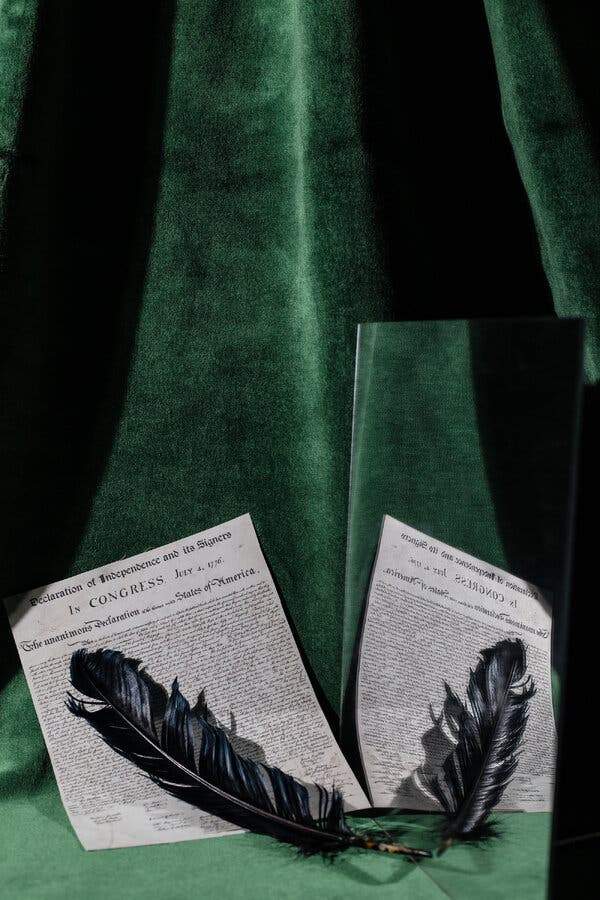
Every American encounters the Declaration of Independence at some point. For many, it serves as a sacred document in the nation’s civic tradition. The document famously begins with the assertion of human equality: “We hold these truths to be self-evident, that all men are created equal, that they are endowed by their creator with certain unalienable rights, that among these are life, liberty and the pursuit of happiness.”
These words embody a profound statement of values, emphasizing a universal desire for freedom. President Gerald Ford once described the Declaration as the guiding star of American politics, stating, “The Declaration is the Polaris of our political order — the fixed star of freedom. It is impervious to change because it states moral truths that are eternal.” This represents its significance in American civic religion.
However, the historical context of the Declaration paints a more complex picture. When Thomas Jefferson wrote it, the document was not merely an affirmation of human equality. It was a pointed claim about political authority and an assertion of the right to revolution, influenced by Enlightenment figures like John Locke and other social contract theorists. Jefferson intended it to be an argument about the role of government, not a roadmap for emancipation.
In her book, “American Scripture: Making the Declaration of Independence,” historian Pauline Maier explains, “The opening assertions of ‘self-evident’ truths concern men in a ‘state of nature’ before government was established.” Equality, in this context, meant that no one possessed authority over others by birth or divine right.
This view echoed a widespread sentiment in Revolutionary-era America. It was a political orthodoxy that did not require reading systematic political theory. As Thomas Paine articulated in “Common Sense,” published months before the Declaration, “all men being originally equals, no one by birth could have a right to set up his own family in perpetual preference to all others forever.”