Reflecting on Two National Anniversaries: A Then-and-Now Examination
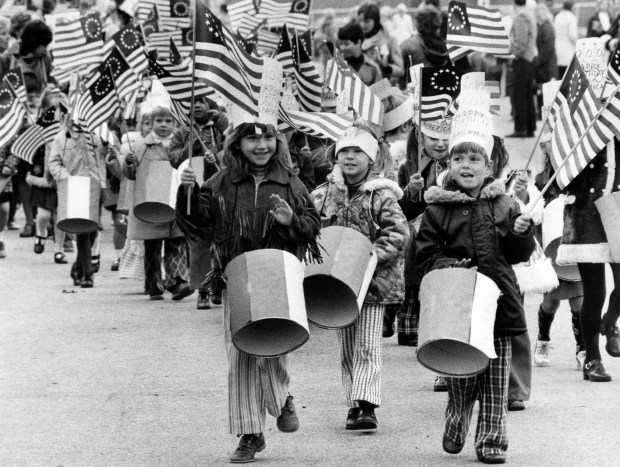
Fifty years have passed since America’s bicentennial celebration. As the nation marks its 250th anniversary this Fourth of July, there are striking similarities to observe with 1976, which do not incite national pride. Then, Americans were recovering from a war, grappling with rising prices, dealing with White House scandals, and struggling under an unpopular president. Today mirrors this landscape.
Despite the tumult of Vietnam, Watergate, and economic woes, the 1976 celebration offered a surge of patriotic joy. “Nation and Millions in City Joyously Hail Bicentennial,” headlined The New York Times. The event sparked optimism that the American experiment could endure. President Gerald Ford, not known for eloquent speeches, delivered a notable address. On July 5, at Thomas Jefferson’s Monticello estate, he spoke to around 100 newly naturalized citizens, celebrating diversity. “‘Black is beautiful’ was a motto of genius,” Ford remarked, embracing racial beauty across all colors. He reassured these new citizens of their rights and future opportunities.
In stark contrast, President Donald Trump’s rhetoric reveals disdain for diversity and hostility toward immigrants. He portrays undocumented migrants as harmful and dismisses legal Somali immigrants. Such views betray the Bicentennial promise.
In the aftermath of President Nixon’s abuses, Congress acted to prevent ethical violations, protect Americans’ rights, and uphold the Justice Department’s integrity. The Supreme Court compelled Nixon to release incriminating tapes. However, these measures did not prevent Trump from exploiting his office for personal gain, repressing protesters, initiating conflicts, and politicizing the Justice Department. Congressional Republicans’ loyalty to Trump starkly contrasts their predecessors’ demand for Nixon’s resignation. The Supreme Court allowed Trump to violate legal boundaries.
During the 1976 era, the U.S. aspired toward greater freedom and equality. Black leaders dismantled segregation, gaining voting rights; women secured protections against discrimination and access to abortion; many states repealed laws criminalizing homosexuality. Immigration policies opened to Asia, Africa, and South America. Today, those advancements are eroding. The administration, backed by the Supreme Court, undermines Black-majority voting districts mandated by the Voting Rights Act. Trump opposes racial equity policies in businesses and universities. The court overturned abortion rights, risking women’s health. The administration challenges transgender rights, enacting bans and restricting legal documentation. Republican lawmakers aim to revoke same-sex marriage. Diversity faces opposition.
Trump attempted to end Temporary Protected Status for Haitians and Syrians, with Supreme Court approval, and slashed refugee admissions, favoring white South Africans. He even sought to end birthright citizenship. Trump’s self-centered approach to the 250th anniversary eclipses the unity seen in 1976. A leftist group unsuccessfully tried to claim ownership of the 1976 celebration. Now, Trump’s efforts to politicize the occasion failed but dampened public pride in this historic milestone. This reflects the damage he has inflicted on national institutions and values over 250 years. The future of America’s heritage and celebrations remains uncertain.
Author: Steve Chapman was with the Tribune Editorial Board from 1981 to 2021. His exclusive columns for the Tribune appear monthly. He can be contacted at [email protected]. Submit letters of up to 400 words to the editor here.