Ebola Crisis Highlights Gaps in U.S. Foreign Assistance Strategy
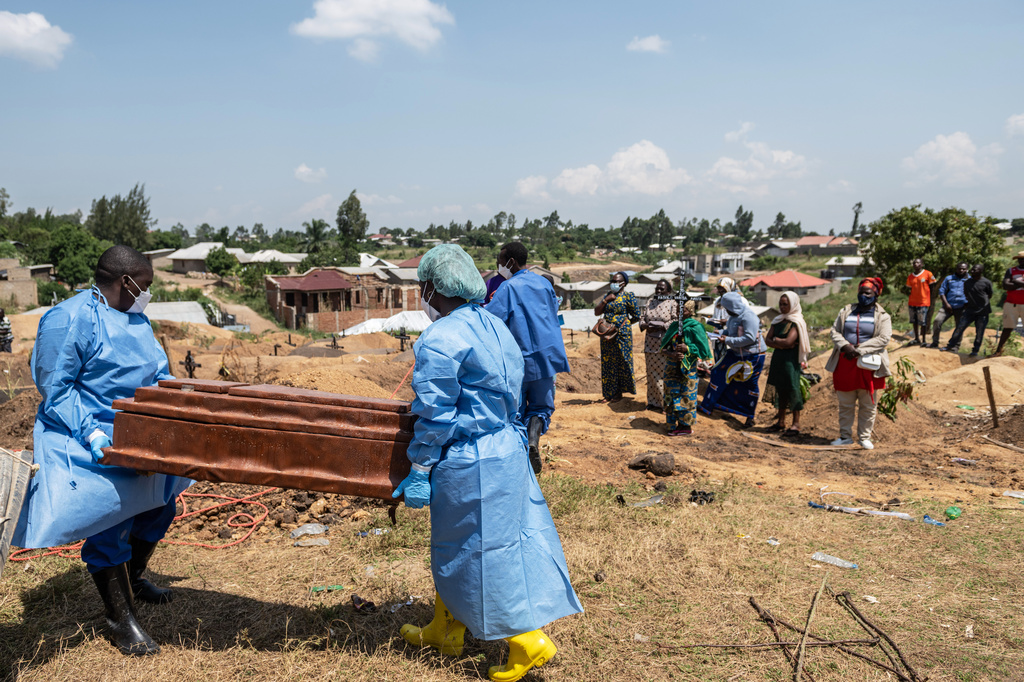
The Red Cross prepares to lay six-month-old Vanisa Anifa to rest at Bigo Cemetery in Bunia, Congo. Her life, claimed by Ebola, marks another somber chapter in the ongoing crisis that has gripped Central Africa by June 2026. The U.S. government’s response, spearheaded by the Department of Government Efficiency under Elon Musk and overseen by Secretary of State Marco Rubio, faces intense scrutiny.
The dismantling of U.S. foreign assistance initiatives has left a void in coordinated international health responses. Reports indicate increased risks without these frameworks. A University of Chicago study links reduced U.S. assistance to a sharp rise in conflicts across Africa. The data shows a 12.3% rise in conflict-related events, a 7.3% rise in battles, and a 6.8% rise in protests and riots.
Eastern Democratic Republic of the Congo battles an Ebola outbreak amid decades of conflict. This history fuels mistrust and complicates global response efforts as local health services and civil societies lie weakened. These local entities served as an early warning for conflicts and diseases, but struggles persist without adequate support.
The critical role of modest U.S. investments in conflict prevention and peacebuilding is evident. USAID shared responsibilities with the U.S. Institute for Peace, ensuring stability and preemptive actions against emerging threats. Foreign assistance efforts aimed to detect and address conflict risks, alleviating issues that might otherwise impact American interests.
Efforts focused on preventing local disputes from spiraling into violence, drawing from experiences in regions like Iraq, Afghanistan, and Southeast Asia. These actions, while low-profile, sought to ensure effective use of U.S. resources to avoid exacerbating conflicts.
Despite these benefits, investment in peacebuilding lags far behind military spending proposals. The State Department has limited means to support local initiatives that build trust and pre-empt crises. A robust military can’t replace the nuanced work of diplomacy and peacebuilding, valued by both military planners and Congress.
Persistent international health threats and instability necessitate a renewed commitment from Congress to prioritize development and humanitarian responses. Reviving a mission of peacebuilding aligns with past commitments of leaders like Sen. Rubio, who now oversees efforts to reverse those very strategies.
Elisabeth Kvitashvili, Neil Levine, Ryan McCannell, and Don Chisholm, with extensive experience in USAID’s conflict office, emphasize the importance of this task.